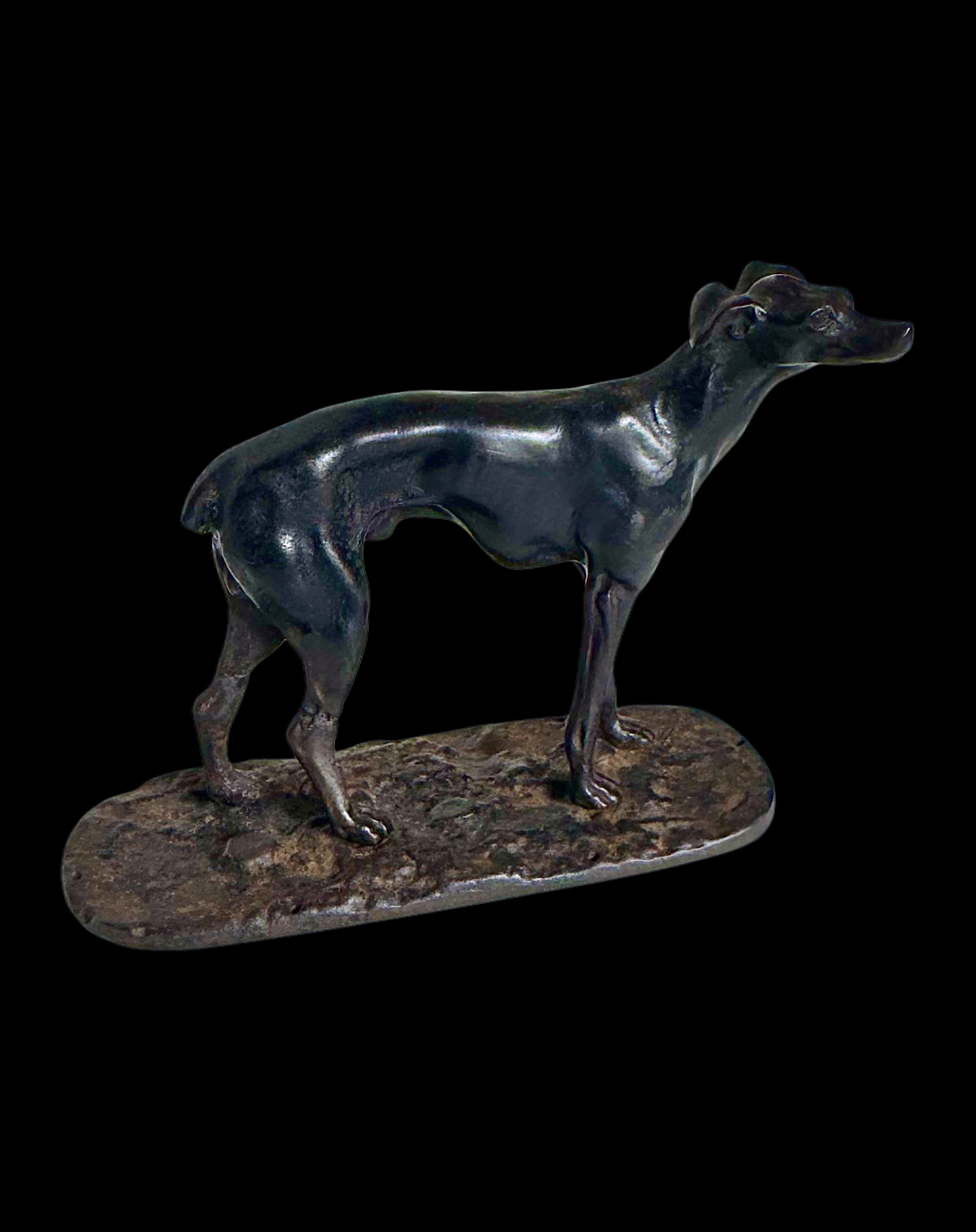


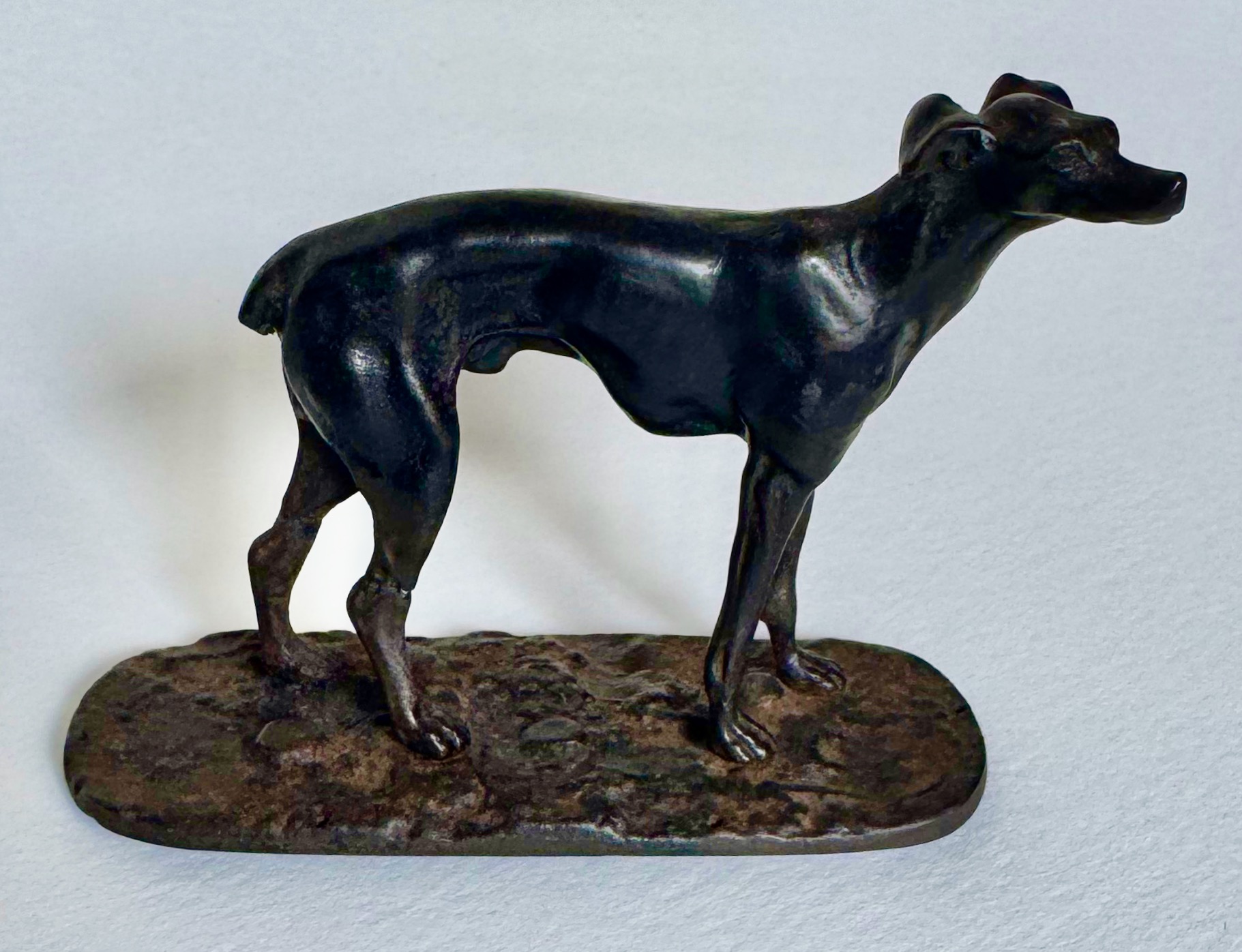
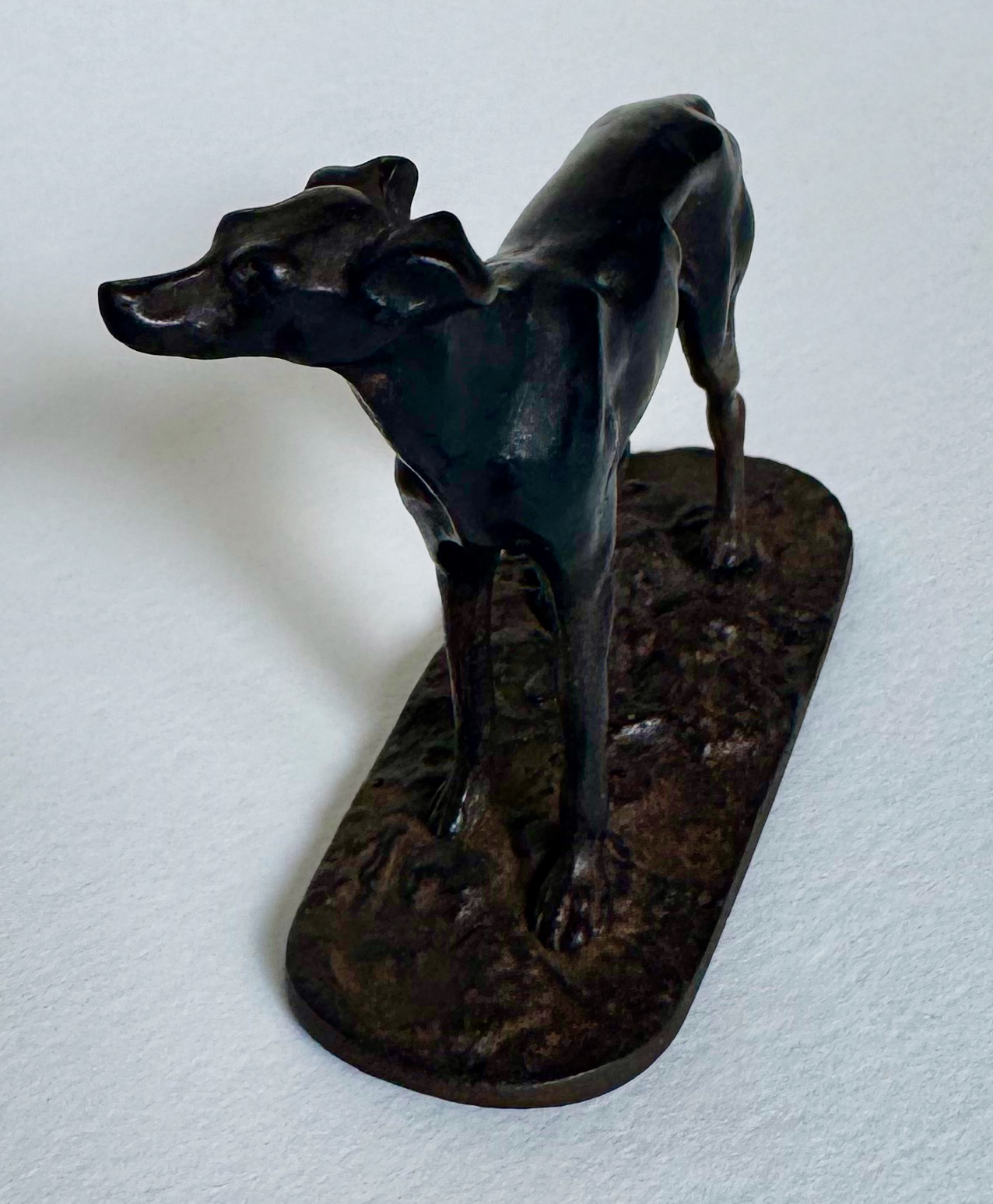
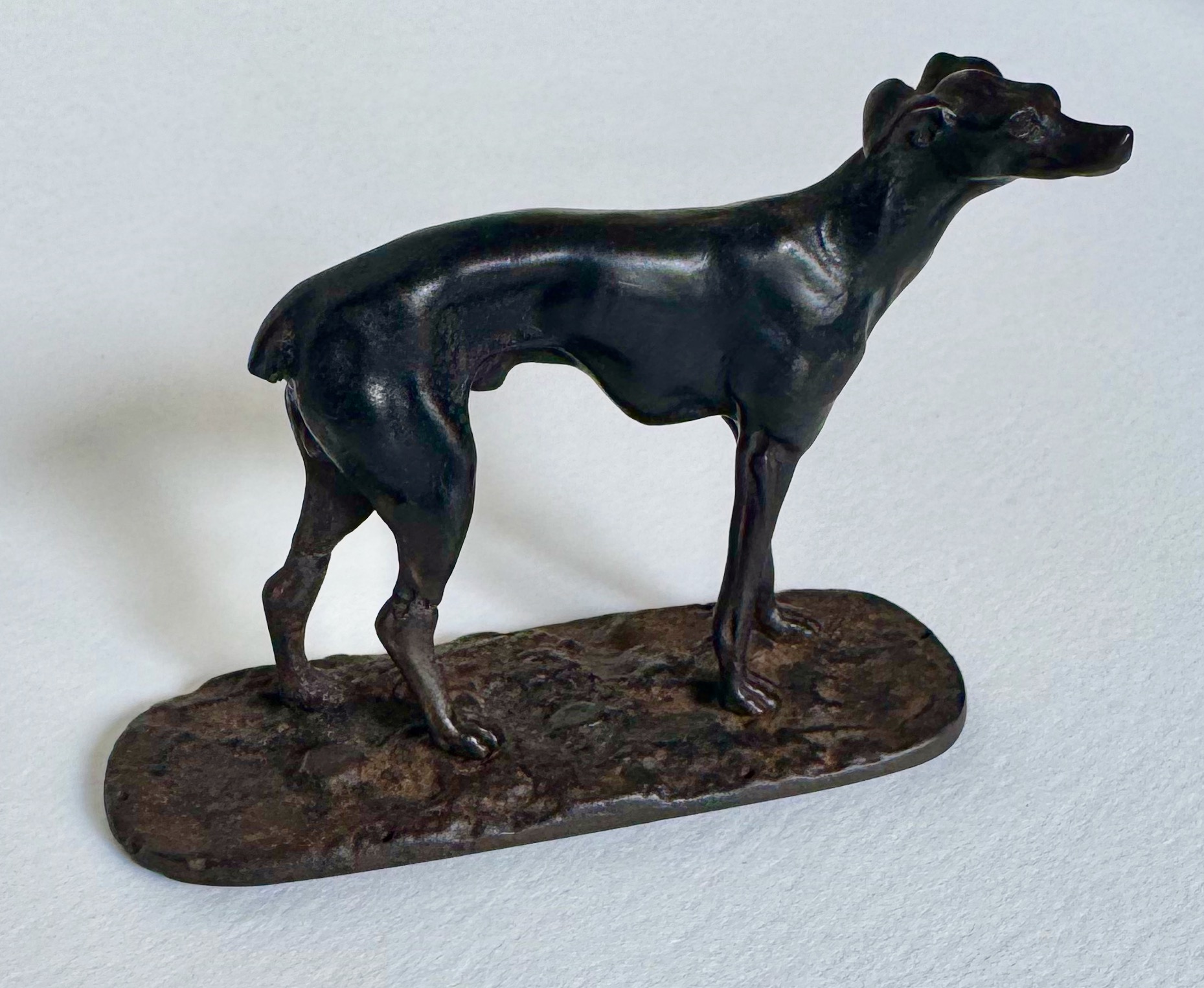
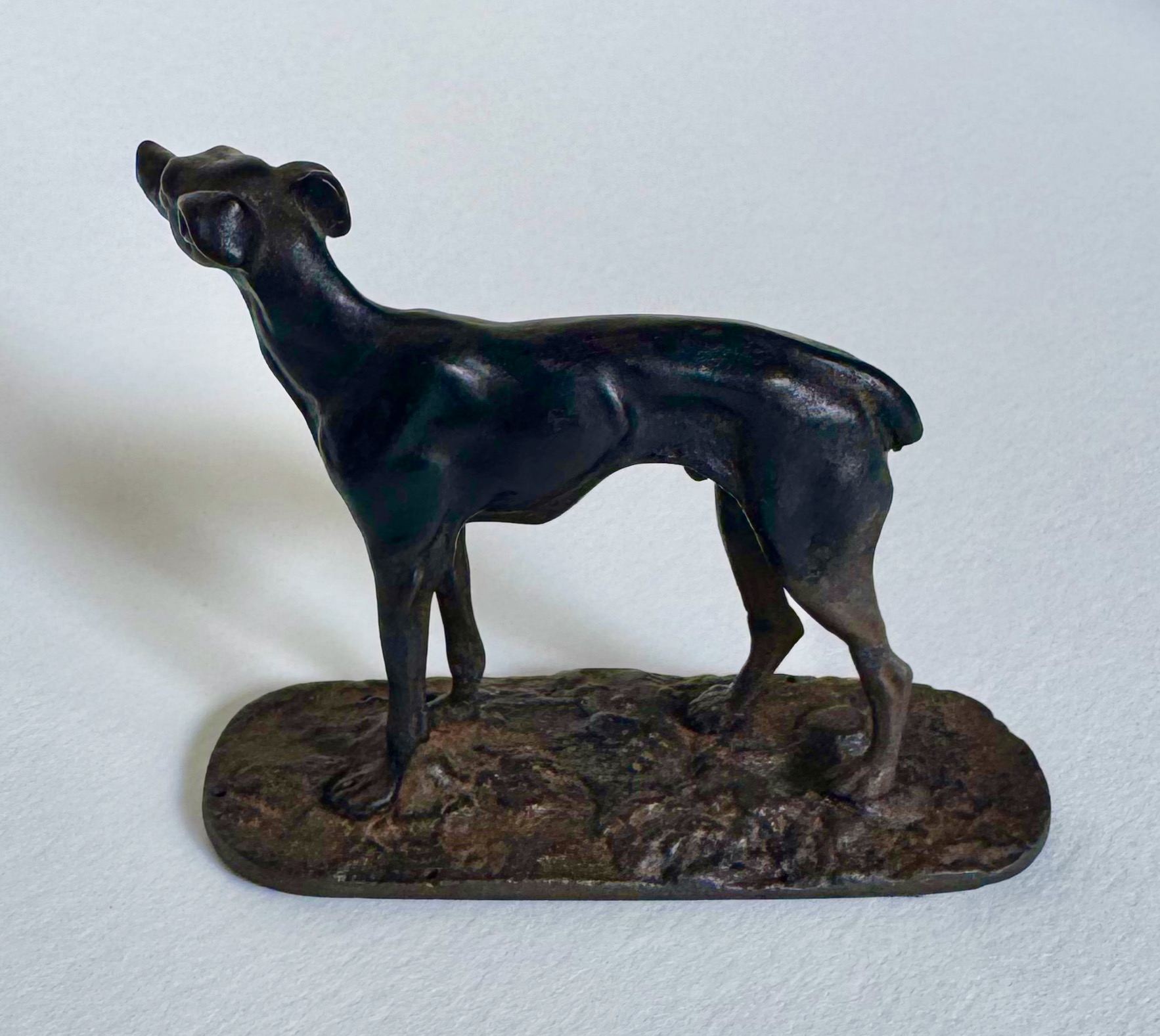
Title: Small Miniature Antique Bronze Greyhound or Whippet-type Dog
Shipping: $29.00
Artist: N/A
Period: 18th Century
History: Art
Origin: Northern Europe > England
Condition: Good
Item Date: N/A
Item ID: 5670
A wonderful antique Greyhound hunting dog miniature, believed to date from the 18th century. The craftsmanship and detail are absolutely exceptional, capturing the elegance, grace, and athletic form for which Greyhounds have long been admired. The sculptor skillfully rendered the dog's alert posture, refined features, and flowing lines, creating a charming and highly decorative work of art. Miniature animal figures have always been prized by collectors for their ability to convey remarkable character and detail on a small scale. Measuring approximately 3¼ inches wide and 2½ inches tall, this delightful piece displays beautifully and would make a fine addition to any collection of antique animal sculptures, sporting art, or early decorative objects. The figure is in poor condition, with its tail missing and evidence of repairs made over the years. Despite these condition issues, it remains an extraordinary work of art, distinguished by its remarkable quality and character. As a personal collector of miniature bronzes, I was immediately drawn to this piece when I discovered it through another dealer. Recognizing the exceptional craftsmanship and artistic merit, I purchased it without hesitation. Even with its imperfections, it stands as a wonderful example of early animal sculpture and the enduring appeal of antique miniature bronzes. In the 18th century, small bronze figures of dogs were created for several reasons. Wealthy landowners and members of the aristocracy often admired specific breeds, particularly hunting dogs such as Greyhounds, spaniels, and hounds, because they were associated with status, sport, and noble pursuits. Greyhounds, in particular, symbolized elegance, speed, loyalty, and refinement, making them popular subjects for artists and sculptors. Many of these miniature bronzes were displayed in libraries, studies, cabinets of curiosities, and drawing rooms, where they served both as decorative works of art and as tributes to prized animals owned by their patrons. Unlike modern pet memorabilia, these sculptures were rarely intended solely as sentimental portraits of household pets. Instead, they were often appreciated as fine works of art that celebrated the beauty and character of a favored breed. In some cases, a sculpture may have represented a specific hunting dog owned by a noble family, but more commonly they embodied the ideal qualities of the breed itself. Today, collectors value these miniature bronzes for their artistic merit, craftsmanship, historical significance, and the insight they provide into the culture and sporting traditions of 18th-century Europe.
this appears to be a small antique bronze Greyhound or Whippet-type dog figure mounted on an integral base. The sculpture has a wonderful, simple elegance, with a beautifully observed stance and a dark, aged patina. The missing tail and visible wear will affect value, but collectors of early animal bronzes often look beyond condition when the modeling is strong and the piece has genuine age. If this bronze is truly 18th century, its value could range from approximately $800 to $3,000+, depending on authenticity, provenance, country of origin, and whether it can be attributed to a known workshop or sculptor. If it is a 19th-century Grand Tour or Victorian bronze, a more typical retail value might be $400 to $1,500 in its current condition. Exceptional examples by recognized animal sculptors or with documented provenance can bring significantly more. What I can say is that it has the qualities collectors seek: a strong silhouette, appealing subject matter, genuine age, and a decorative presence. Even with the loss of the tail and old repairs, it remains a charming and highly collectible antique bronze. As a retail gallery piece, I could easily see it being offered in the $1,000 to $2,000 range if further examination supports an early date and period authenticity.