

Title: Antique Bronze And Silver Inlay Betel Nut Areca Nut Box
Shipping: $29.00
Artist: N/A
Period: 18th Century
History: Art
Origin: Southern Asia > Myanmar
Condition: Excellent
Item Date: N/A
Item ID: 5669
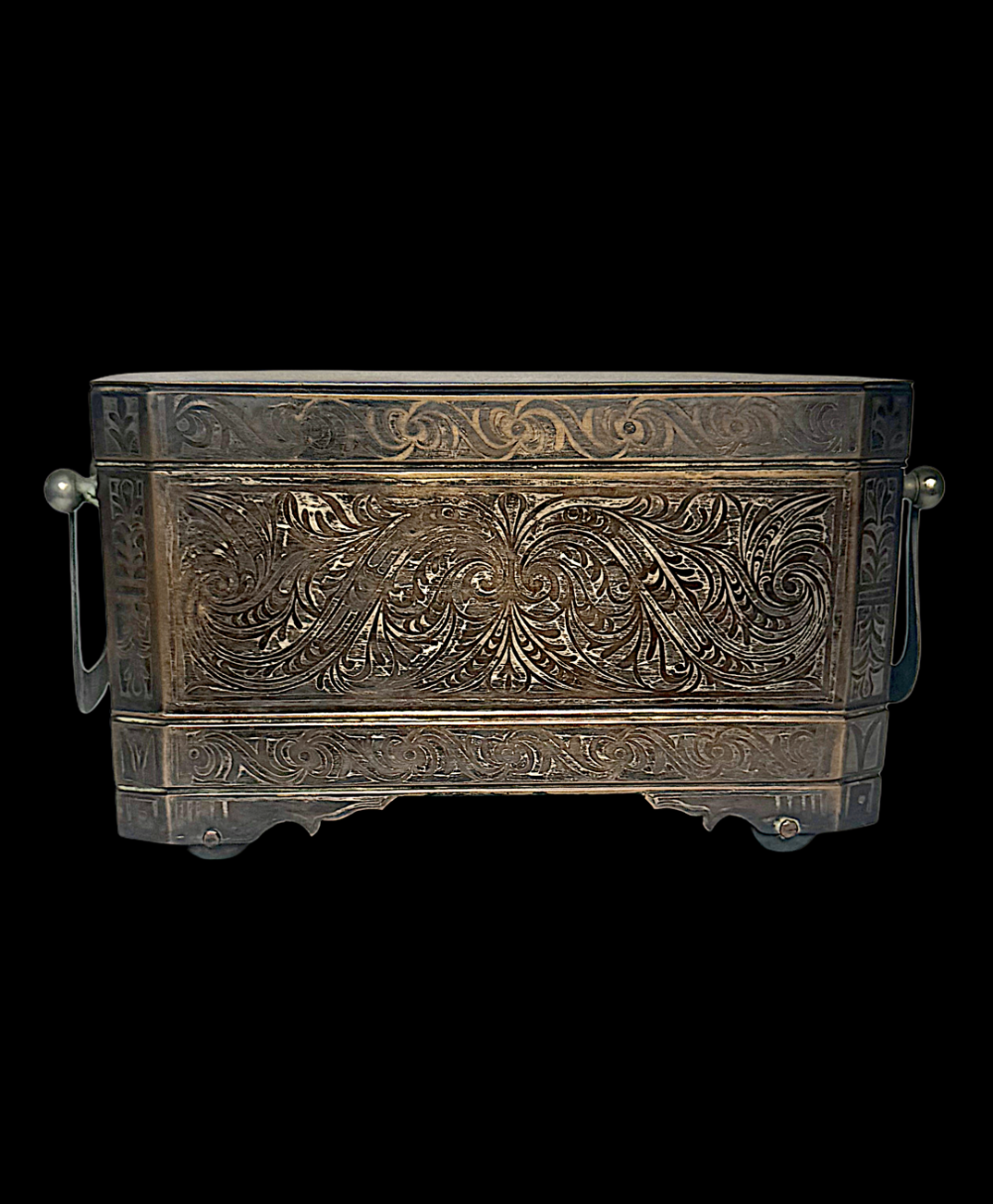
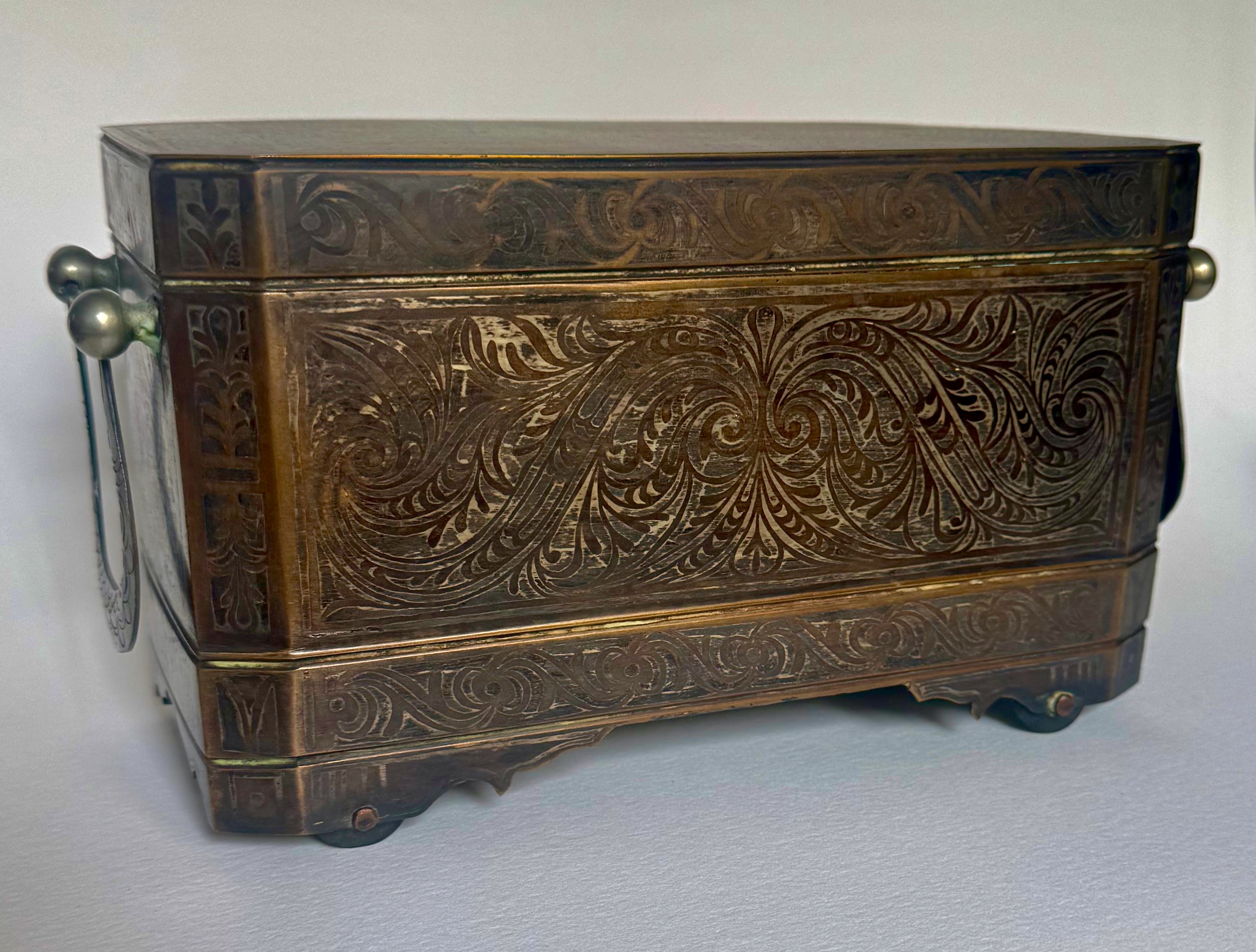
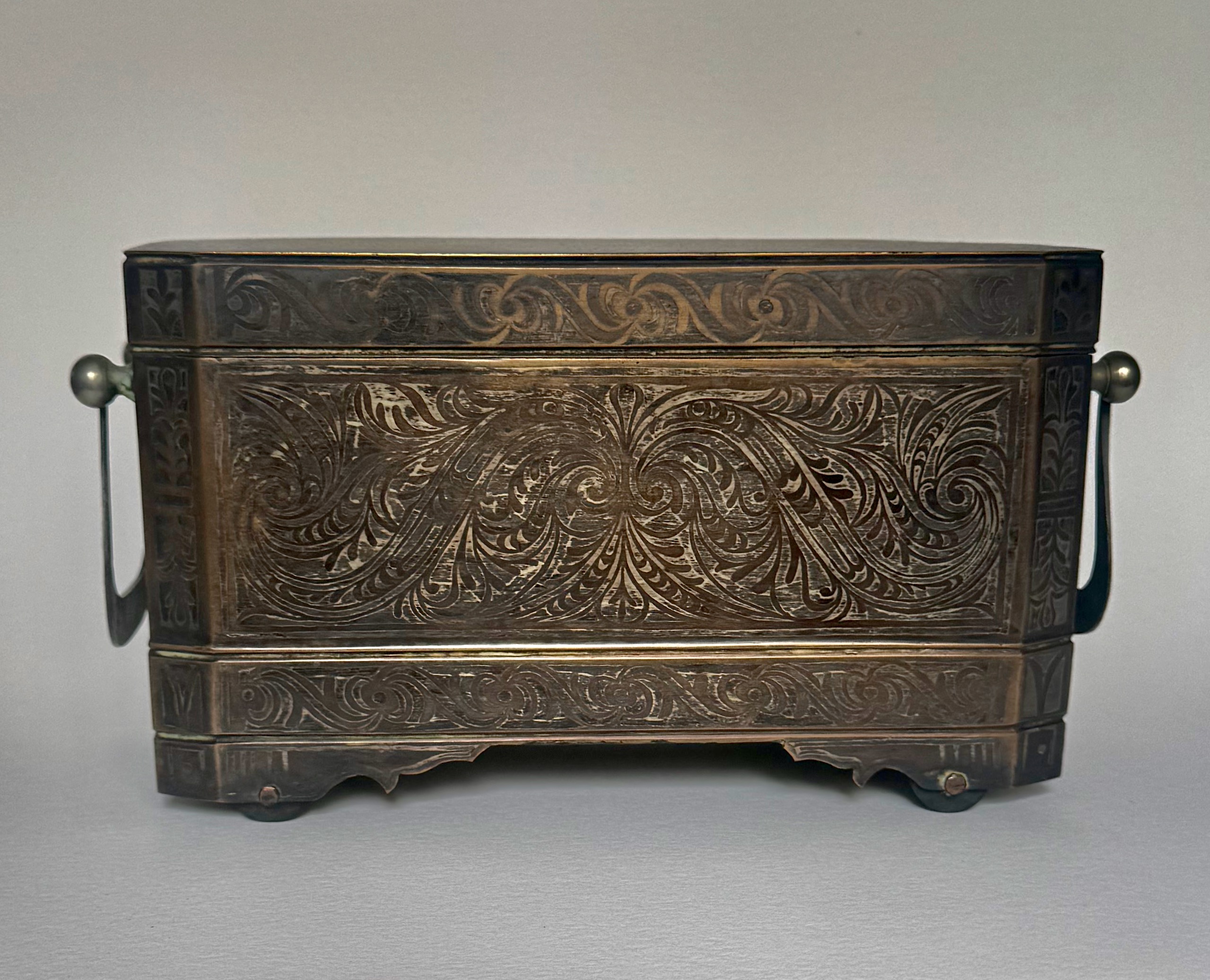
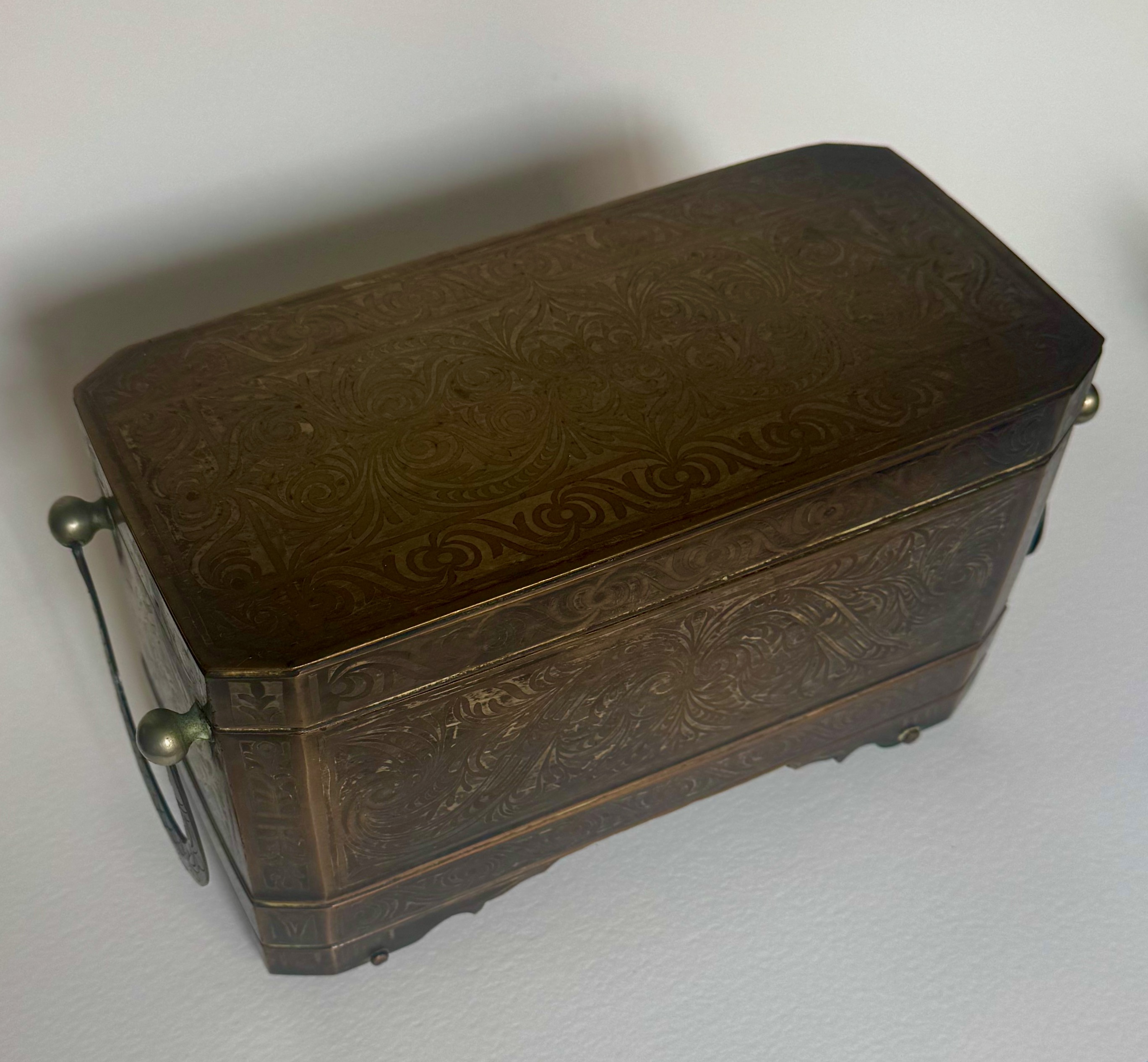
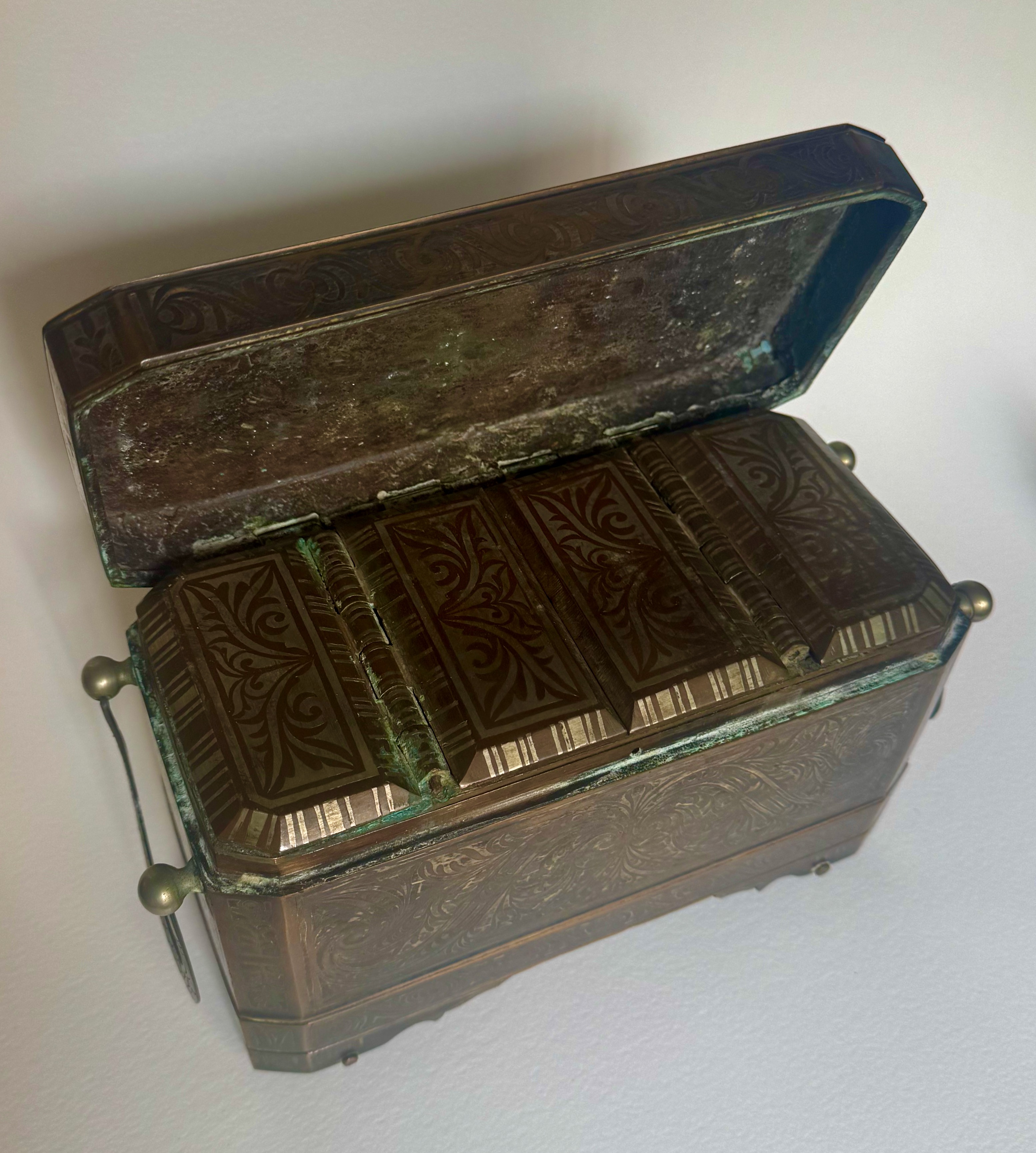
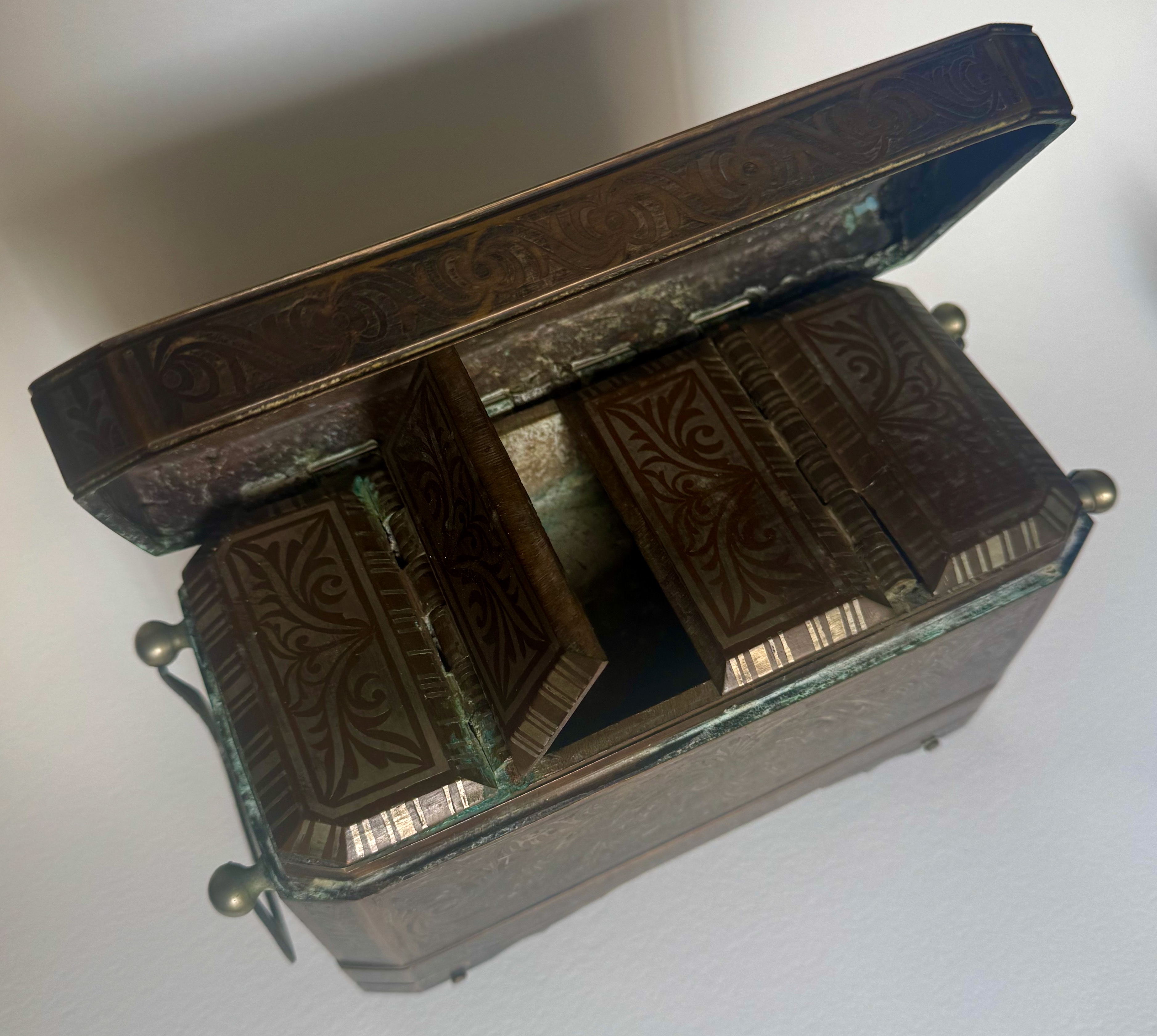
This impressive antique Betel Nut (Areca Nut) box is likely from India, Burma (Myanmar), or Southeast Asia and dates to the late 19th or early 20th century, circa 1880–1920. Measuring approximately 9 inches long, 4 inches wide, and 5 inches tall, it is an unusually large example crafted from bronze with intricate silver inlay and finely engraved floral and foliate decoration throughout. The hinged lid opens to reveal multiple interior compartments originally used to store betel nut, lime paste, spices, and other ingredients for preparing betel quid, a traditional chew that held great social and ceremonial significance throughout Asia. Pieces of this quality were often owned by affluent families and served as both functional household objects and symbols of status and refinement. The rich patina and verdigris oxidation visible around the hinges and edges are consistent with age and authenticity. Due to its large size, decorative craftsmanship, and silver inlay, the current market value of this example is estimated at approximately $2,000 to $3,500, depending on condition, provenance, and regional demand. Betel nut boxes have a long history throughout India, Burma (Myanmar), Thailand, Sri Lanka, and other parts of Southeast Asia, where the chewing of betel nut was an important social, ceremonial, and cultural tradition for centuries. These boxes were designed to hold the various ingredients needed to prepare a betel quid, including areca nut, betel leaves, lime paste, spices, and flavorings. Wealthy families, merchants, and members of royal courts often commissioned elaborate examples made from bronze, brass, silver, or even gold, as the box itself became a symbol of status, hospitality, and prosperity. Bronze and brass were favored because they were durable, resistant to tropical climates, and could be intricately engraved by skilled artisans. Silver inlay was added to enhance beauty and demonstrate the owner's wealth, while also showcasing the remarkable metalworking traditions of the region. Today, these finely crafted boxes are prized not only for their functionality but also as important examples of Asian decorative arts and cultural history.
Antique betel nut boxes are highly collectible today because they combine exceptional craftsmanship, cultural significance, and decorative appeal in a single object. Collectors are drawn to the intricate hand engraving, silver inlay work, and unique compartmentalized interiors, which showcase the remarkable skills of Asian metalworkers from the 19th and early 20th centuries. Unlike many decorative antiques, these boxes also tell an important story about daily life, hospitality, trade, and social customs throughout India and Southeast Asia. Large examples in bronze with silver inlay are especially desirable because they were expensive luxury items when originally made and were often owned by affluent families or members of the merchant class. Their rarity, artistic quality, and increasing demand among collectors of Asian art, ethnographic objects, and decorative metalwork have contributed to their rising values. Today, collectors appreciate these boxes not only as beautiful display pieces but also as tangible artifacts that preserve the rich cultural traditions and artistic heritage of a bygone era.