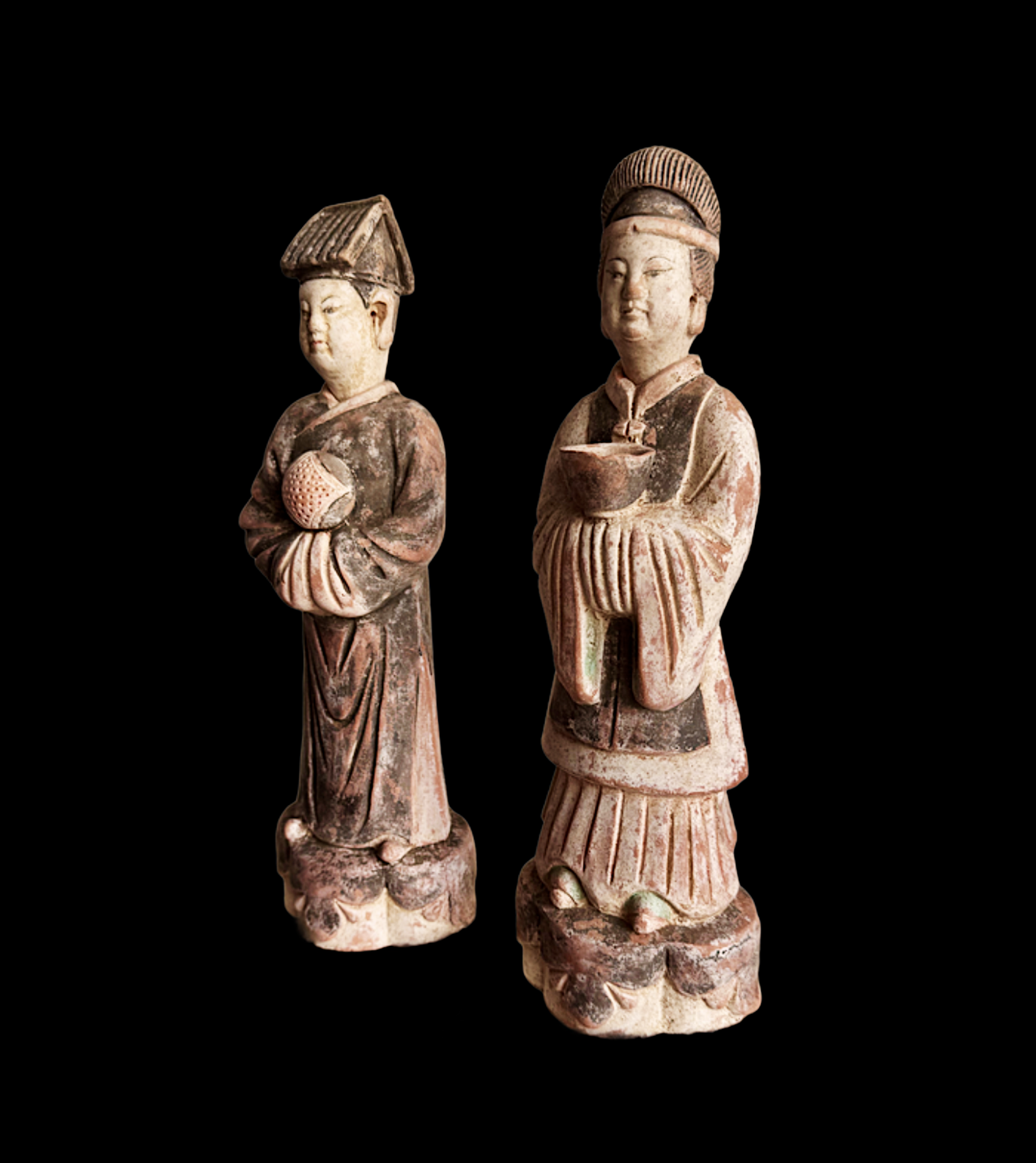


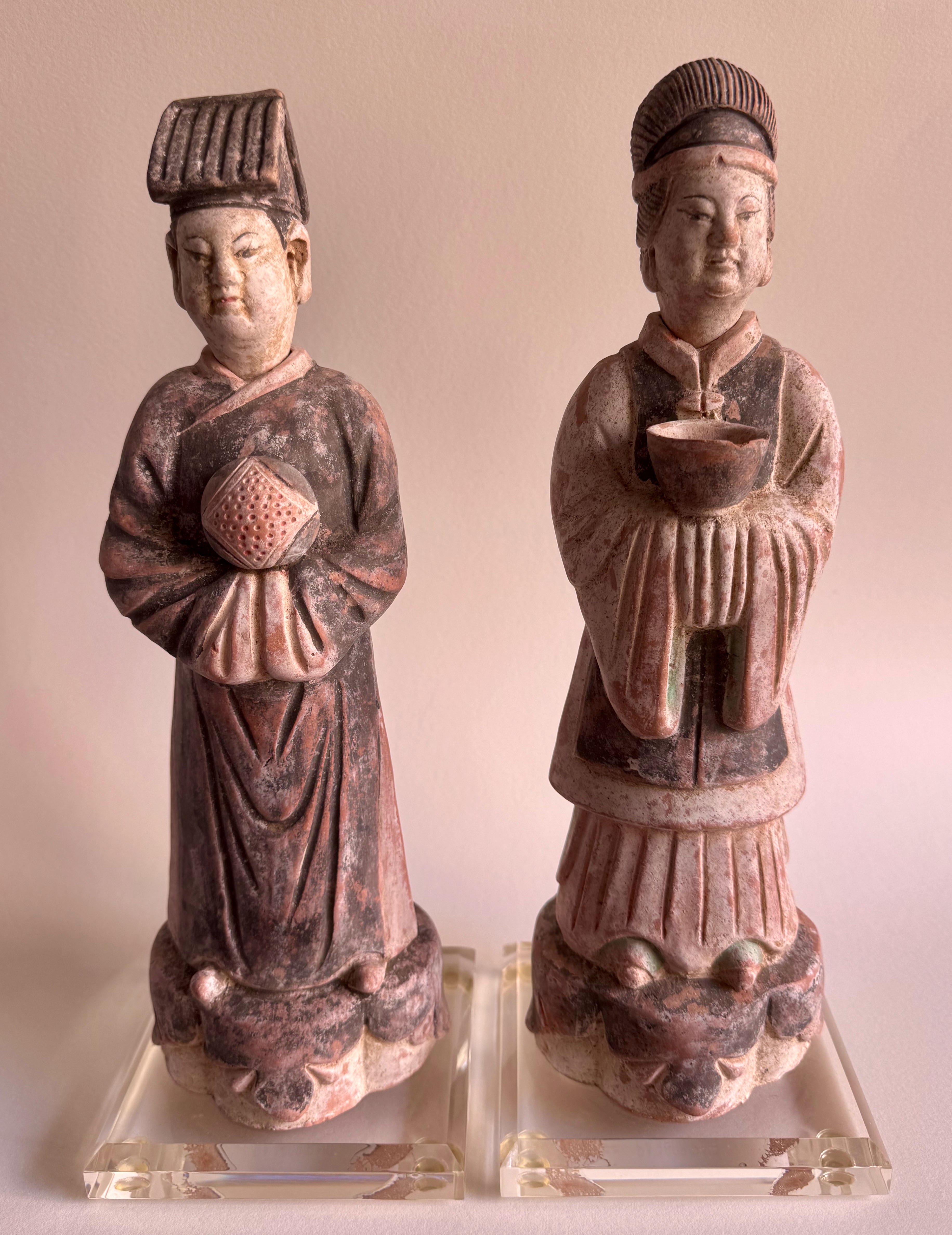
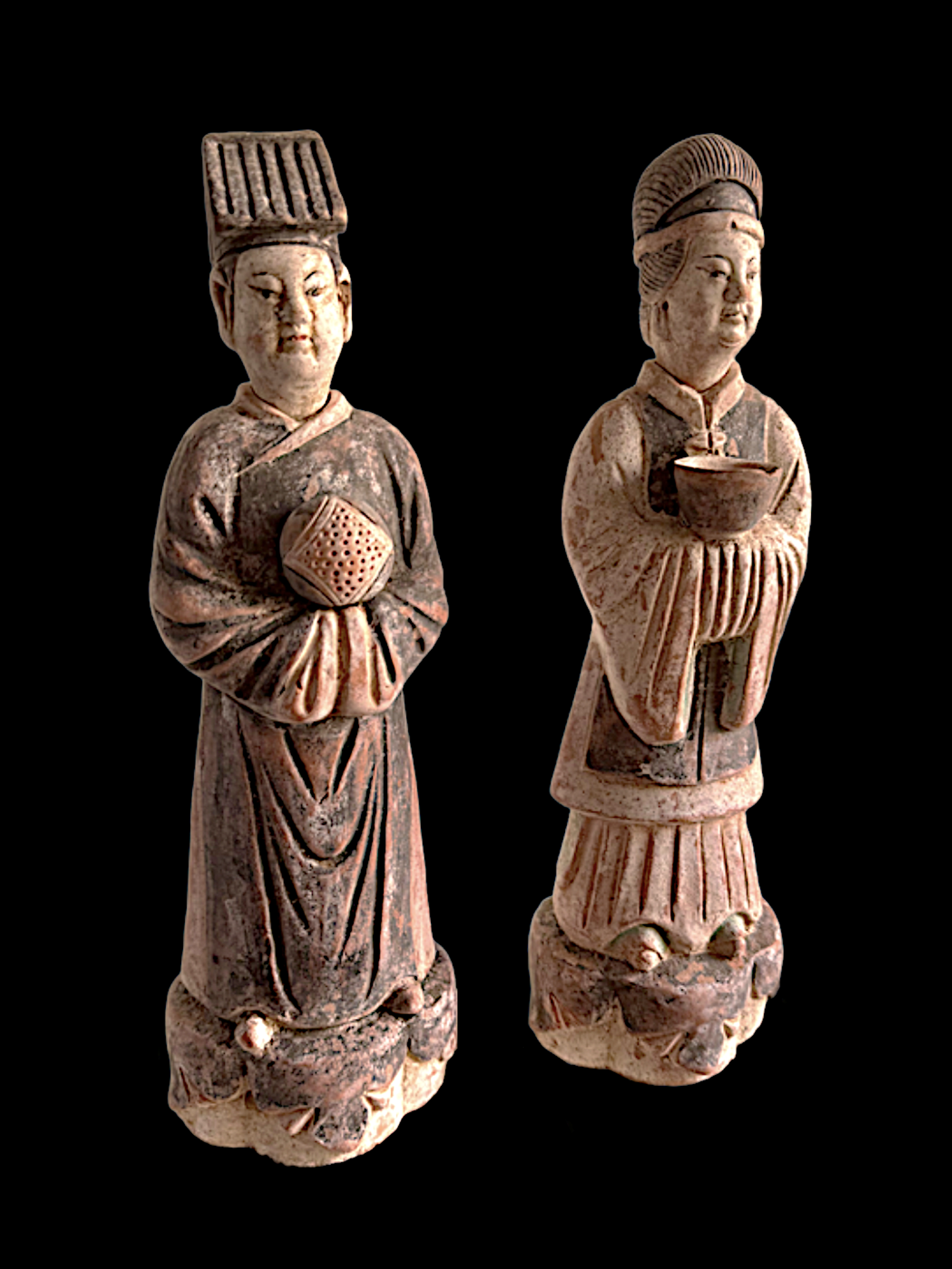
Title: A Pair of Antique Chinese Hand-painted Terracotta Scholar Figures
Shipping: $29.00
Artist: N/A
Period: 19th Century
History: Art
Origin: Central Asia > China
Condition: N/A
Item Date: N/A
Item ID: 5665
A striking pair of antique Chinese hand-painted terracotta scholar figures, embodying the elegance and intellect of traditional literati culture. Ideal for collectors of rare and unusual Chinese antiquities, these figures are believed to date from the Qing Dynasty, though they could be even older. Prized for their beauty and representation of scholarly status in Chinese culture, they make a powerful statement in any setting. Perfect as conversation pieces, they add depth, history, and character to a refined interior. If you have a moment, please watch the curated video about Chinese culture. Highly sought after by interior designers and decorators, these Imperial Court–style works offer both cultural significance and timeless visual appeal. Each figure measures approximately 14 inches tall and 4 1/2 inches wide and is displayed on a beautiful plexiglass stand. In the 1800s, terracotta scholar figures were primarily produced during the Qing Dynasty, the final imperial dynasty of China. During this period, there was a continued reverence for the literati and scholar-official class, whose ideals of learning, refinement, and moral integrity were highly esteemed. Artisans created these figures both for decorative purposes and for collectors who admired traditional Chinese culture, often hand-painting them with intricate details that reflected clothing styles and scholarly accoutrements of the era. While some pieces echoed ancient funerary traditions, most 19th-century examples were made for display in homes, gardens, or scholars’ studios, serving as symbols of intellect, cultural sophistication, and respect for classical Chinese ideals rather than for burial purposes. These types of terracotta scholar figures are rooted in the long Chinese tradition of honoring intellect, status, and the refined life of the educated elite, often associated with the scholar-official class shaped by the Imperial Examination System. Figures like these were sometimes created as part of mingqi—objects placed in tombs to serve and represent the deceased in the afterlife. During periods such as the Han Dynasty and especially the Tang Dynasty, it was common to include attendants, officials, and scholars in burial assemblages, symbolizing status, protection, and continuity of one’s earthly life beyond death. While not every scholar figure was made specifically for burial—some were created later purely for decorative or export purposes—the tradition itself is very real. These figures reflect the deep cultural reverence for learning, hierarchy, and immortality, where even in death, one was surrounded by symbols of intellect and social standing. In China, the Literati culture refers to the refined intellectual and artistic tradition of scholar-officials in imperial China, particularly those shaped by Confucius and the values of Confucian education. These individuals—known as the literati—were highly educated in poetry, calligraphy, painting, and philosophy, and they used art not for commercial purposes but as a form of personal expression, moral cultivation, and social communication among peers. Literati culture emphasized simplicity, subtlety, and symbolism over technical perfection, valuing the artist’s mind and character as much as the work itself. Their paintings, often featuring landscapes, bamboo, or scholarly retreats, reflected ideals of harmony with nature, introspection, and a withdrawal from political life, even while many served within the imperial bureaucracy.
In ancient times, these terracotta scholar figures were meticulously crafted by skilled artisans using locally sourced clay. The process began with hand-modeling the figures, often in separate parts—head, torso, arms, and base—which were then carefully joined together. Fine details, such as facial features, clothing folds, and accessories, were sculpted with precision to convey the scholar’s dignity, attire, and intellectual poise. Once shaped, the figures were left to dry slowly before being fired in a kiln at high temperatures, hardening the clay into a durable terracotta form. Many were then hand-painted with mineral-based pigments to highlight clothing, facial expressions, and symbolic motifs, creating a lifelike and culturally resonant appearance. This combination of careful modeling, kiln firing, and hand-painting ensured that each figure was both a work of art and a lasting symbol of scholarly refinement.