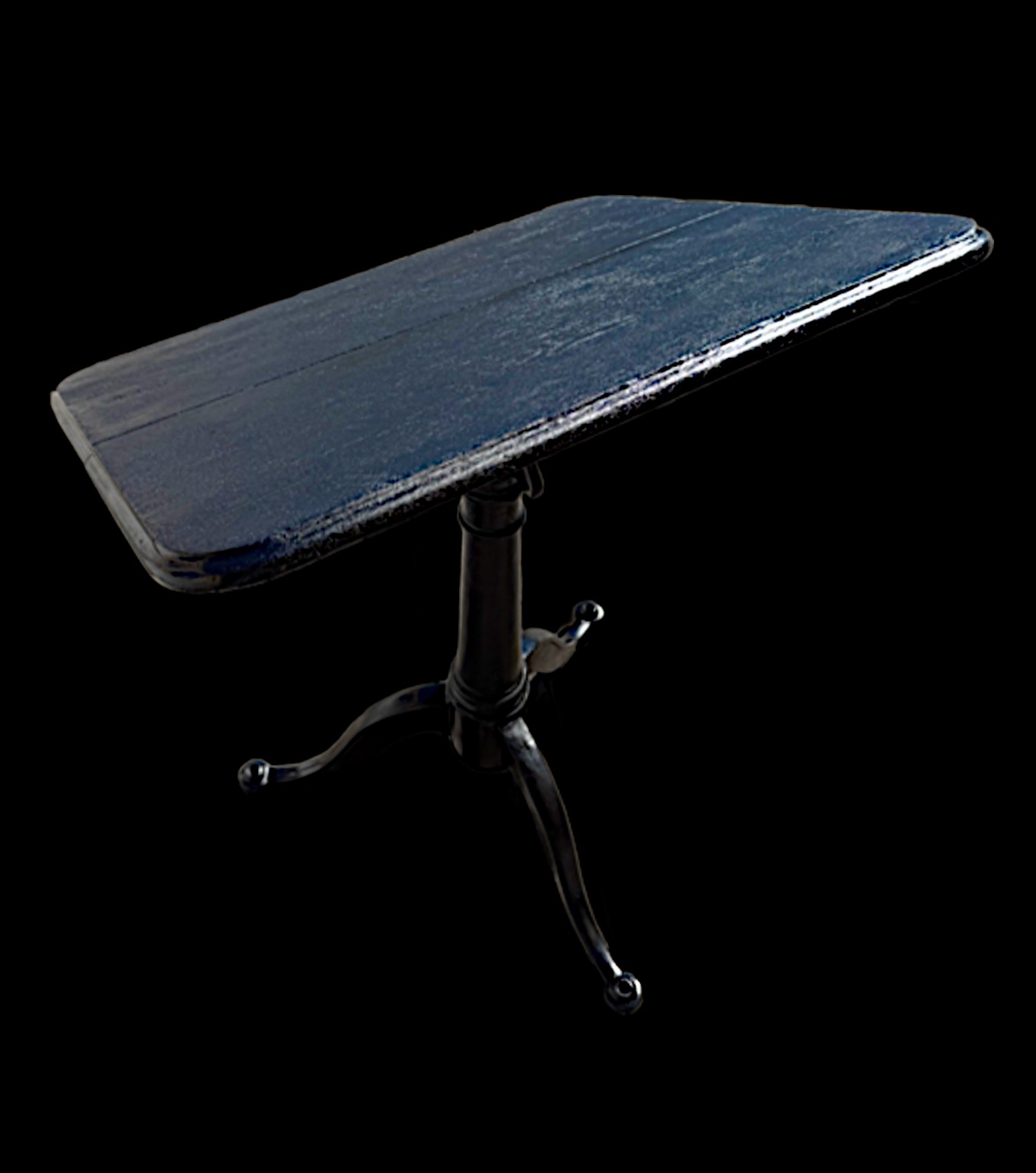


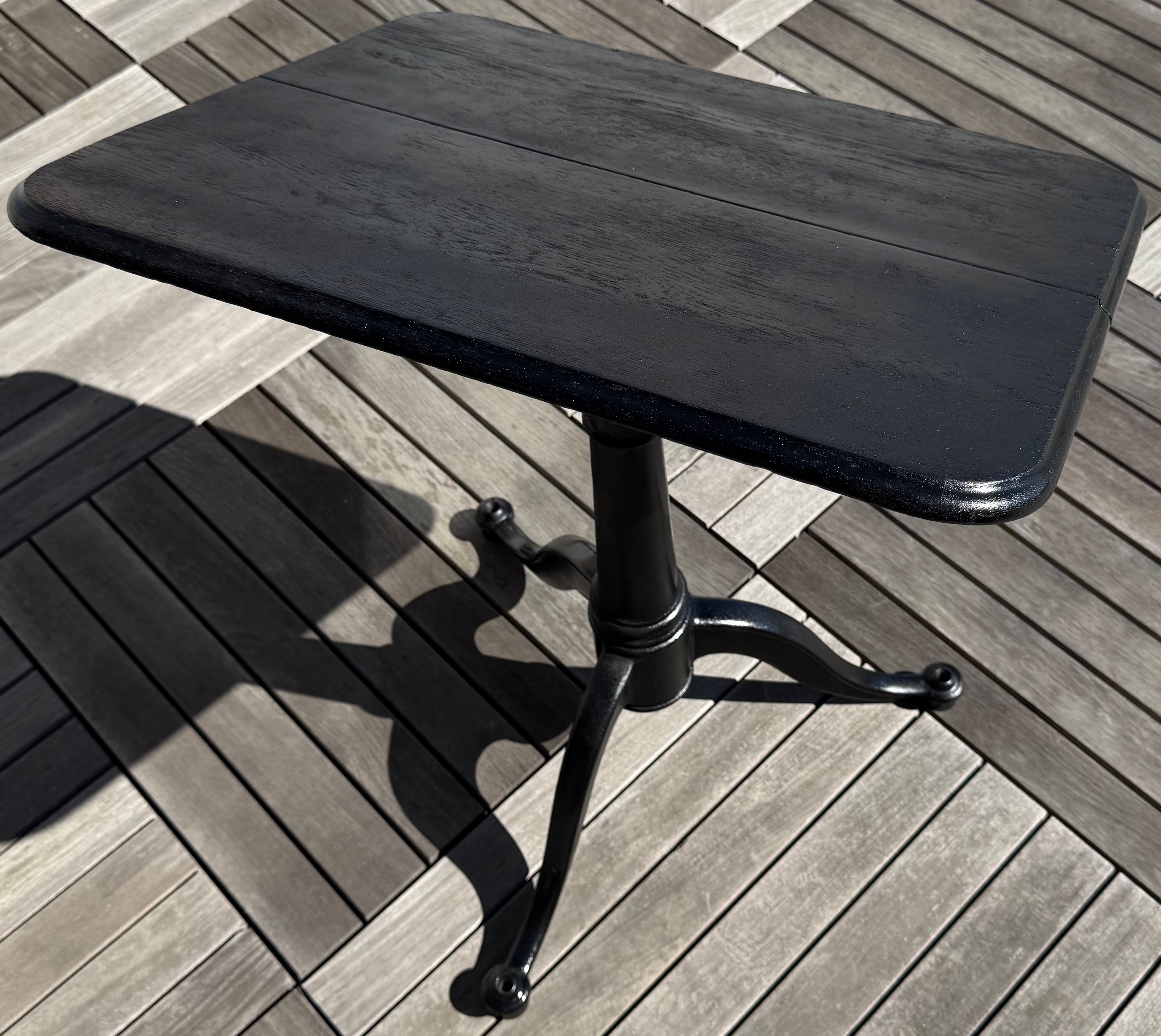
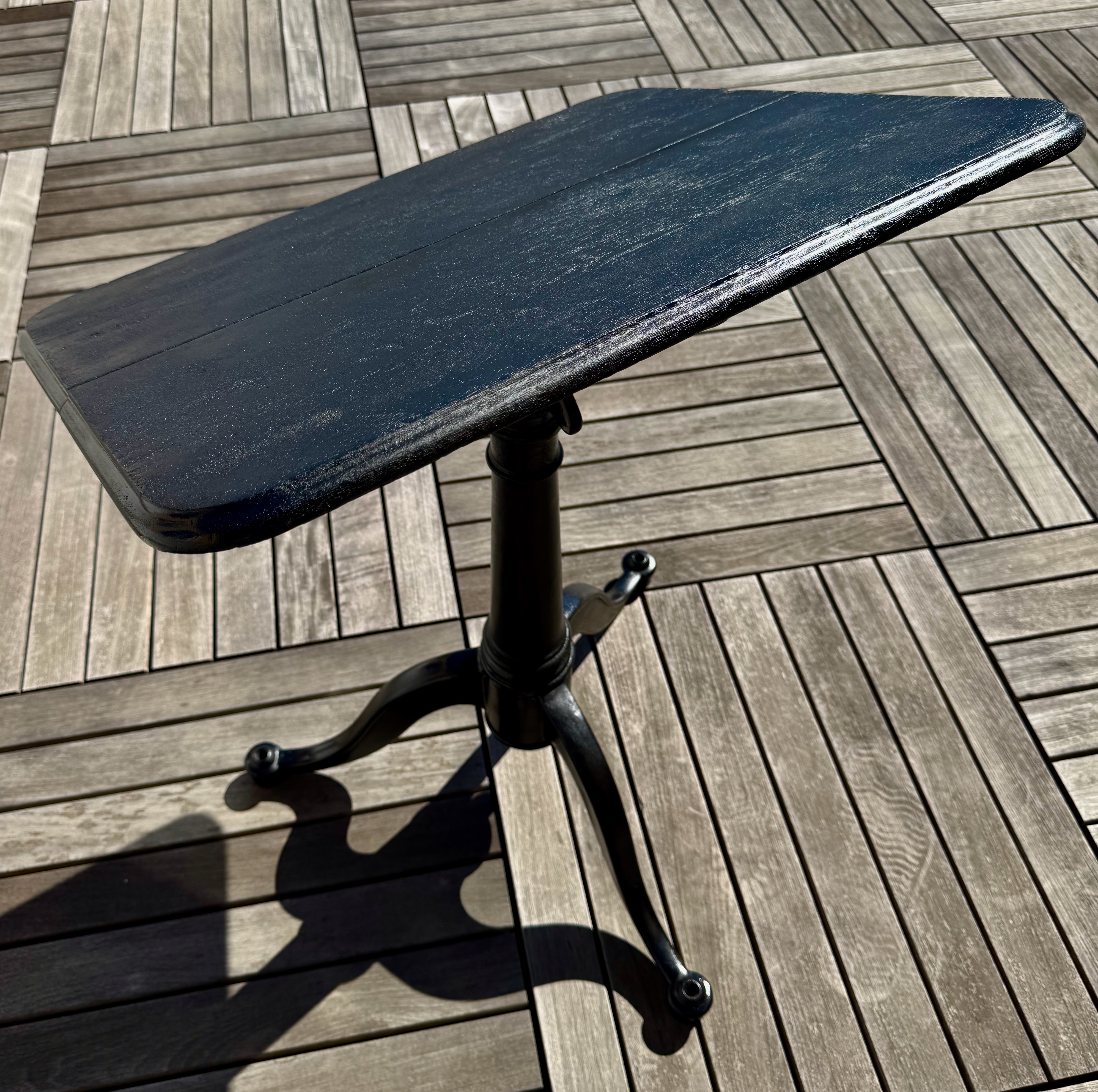
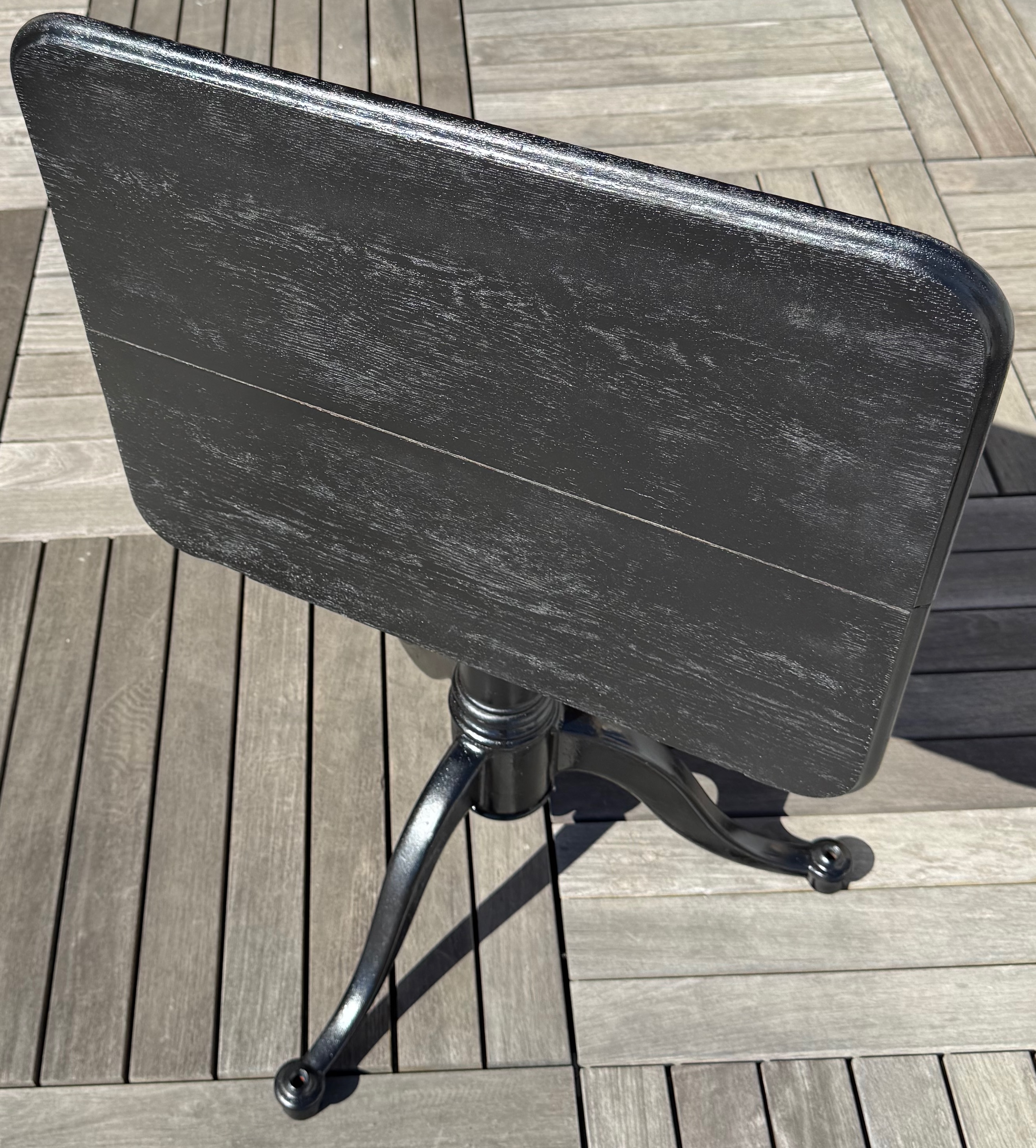
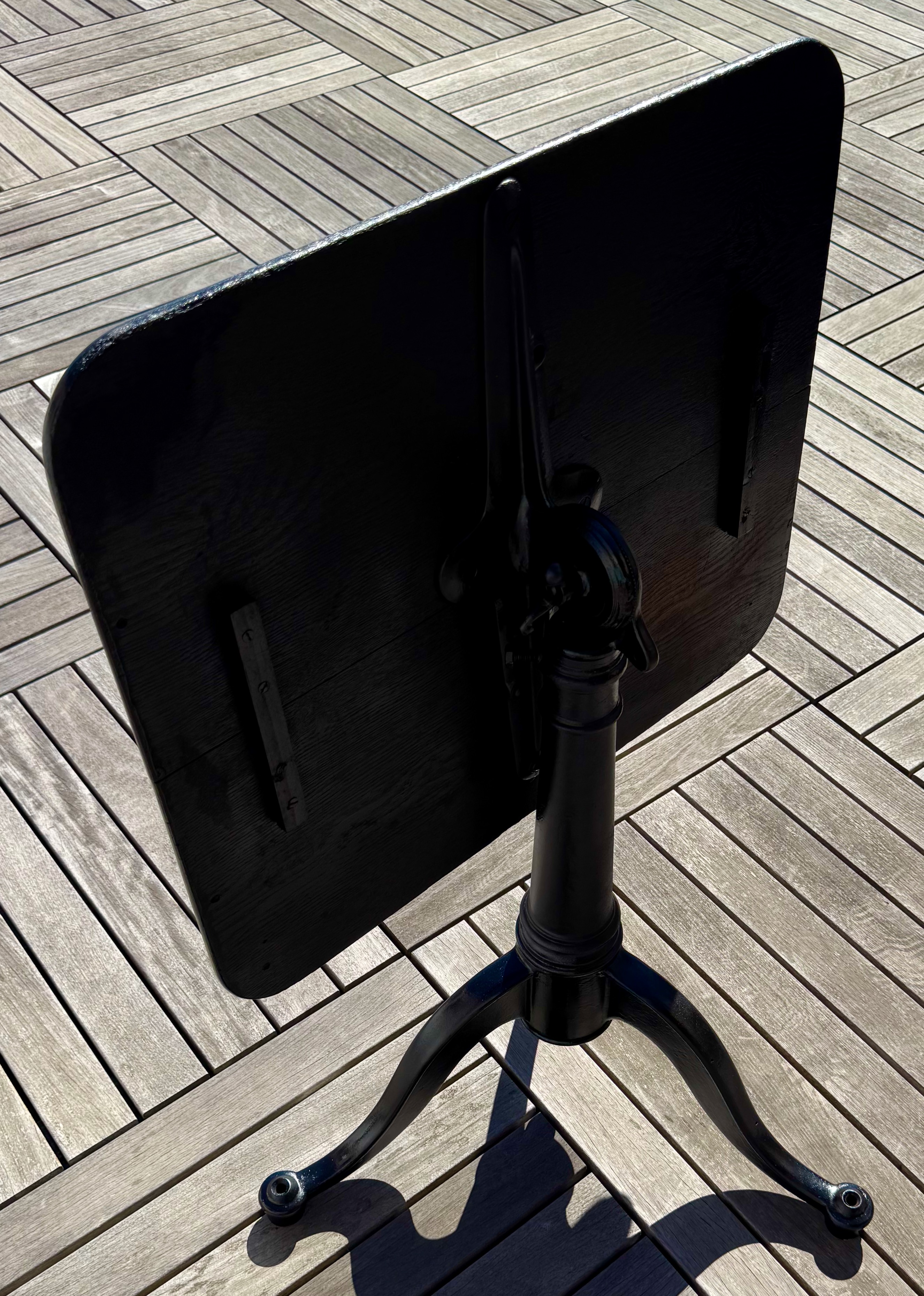
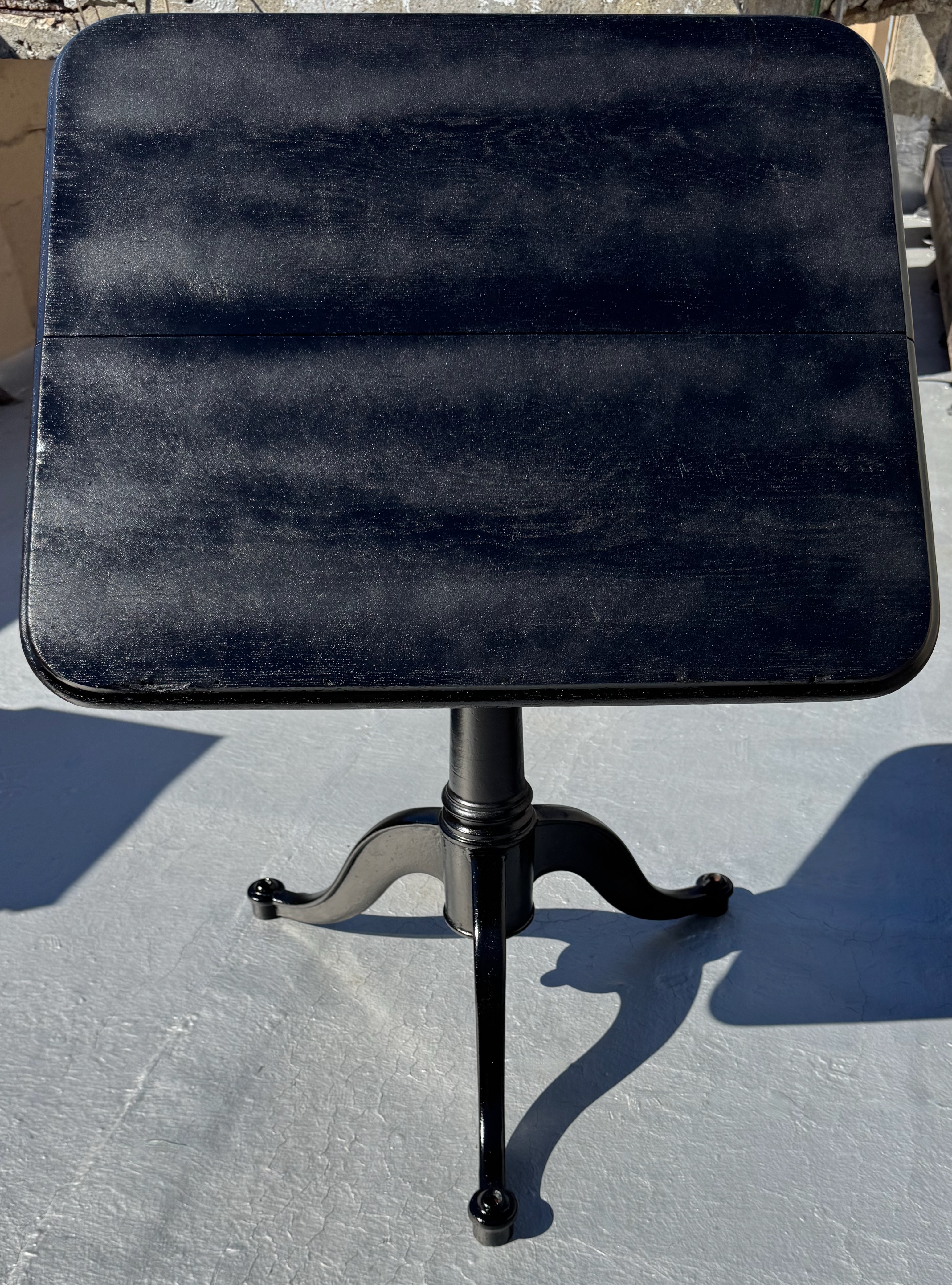
Title: Antique Cast-iron Swivel Industrial Architectural Drafting Table
Shipping: $29.00
Artist: N/A
Period: 19th Century
History: Art
Origin: North America > United States
Condition: Very Good
Item Date: N/A
Item ID: 5663
A fabulous, rare antique cast-iron swivel architectural drafting table from the 1800s. This smaller piece can be placed beneath a larger architectural table, making it ideal for holding supplies or serving as a presentation display. It rotates 180° and features a telescoping pole that extends to approximately 4½ feet in height. Highly durable and built with substantial weight, this essential industrial piece is especially valued by designers for studio use. At over 100 years old, it is highly collectible and prized by artists, craftsmen, and architects. This is a rare opportunity to acquire a true studio statement piece. Architectural cast-iron drafting tables emerged during the 19th century alongside the rise of industrialization and the formalization of architecture and engineering as professions. As cities expanded during the Industrial Revolution, there was an increasing demand for precision drawings, blueprints, and technical plans. Craftsmen and manufacturers began producing specialized furniture to support this work—tables that were adjustable, durable, and capable of holding large-format drawings.
Cast iron became the material of choice for the base because of its strength, stability, and ability to be mass-produced. These tables often featured mechanical innovations such as swiveling tops, tilting surfaces, and telescoping columns, allowing architects, engineers, and draftsmen to work comfortably for long periods. Many were paired with tools of the trade like T-squares, compasses, and early drafting machines. By the late 1800s and early 1900s, companies such as Hamilton Manufacturing Company and K&E (Keuffel & Esser) helped standardize and refine drafting equipment, elevating both functionality and design. These tables became staples in architecture firms, industrial design studios, and engineering offices. Beyond their practical use, these pieces represent a moment in history when craftsmanship met mechanical ingenuity. Today, antique cast-iron drafting tables are valued not only for their functionality but also as sculptural industrial artifacts—symbols of a pre-digital era when all design work was done by hand with precision and discipline.