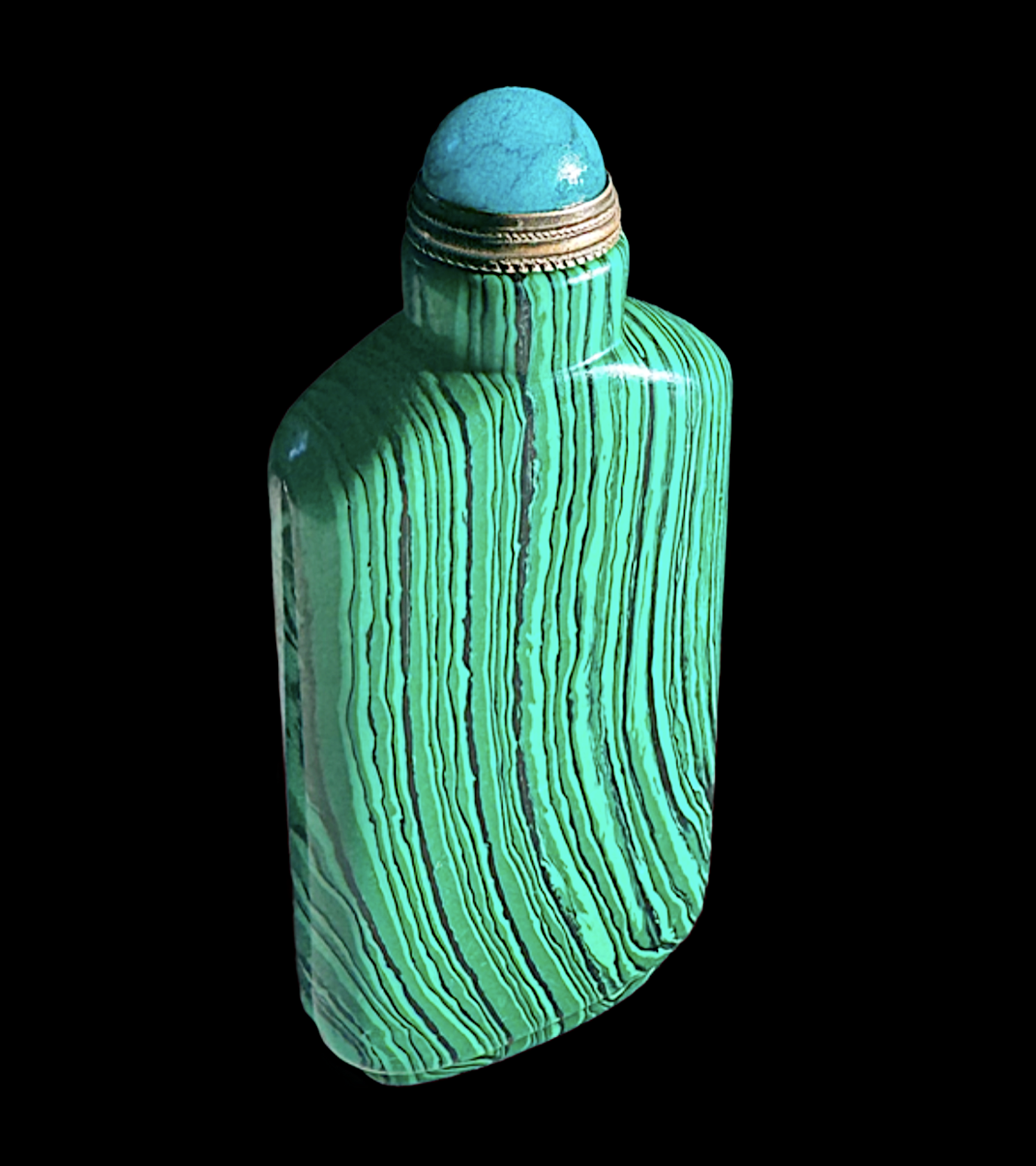


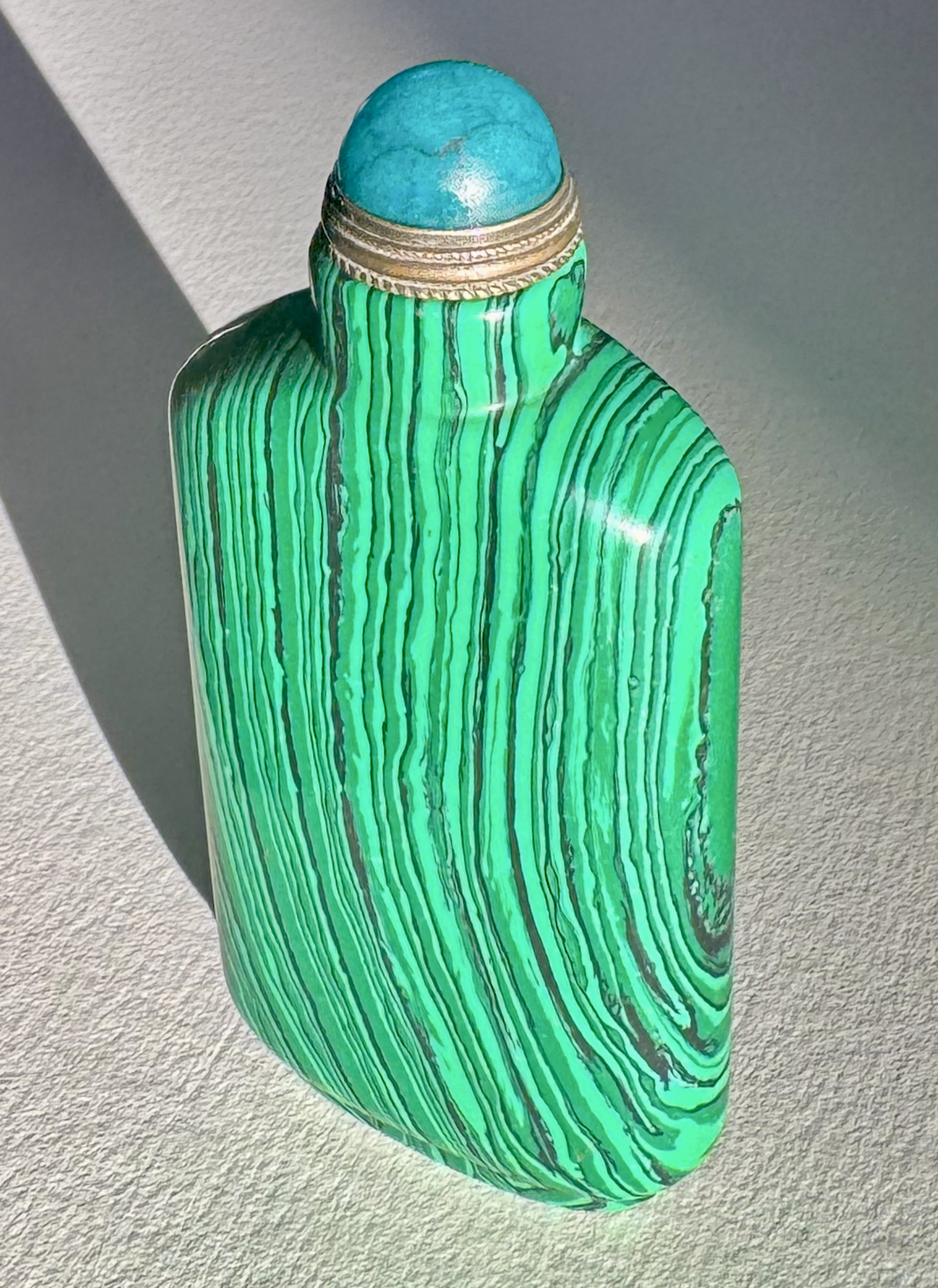
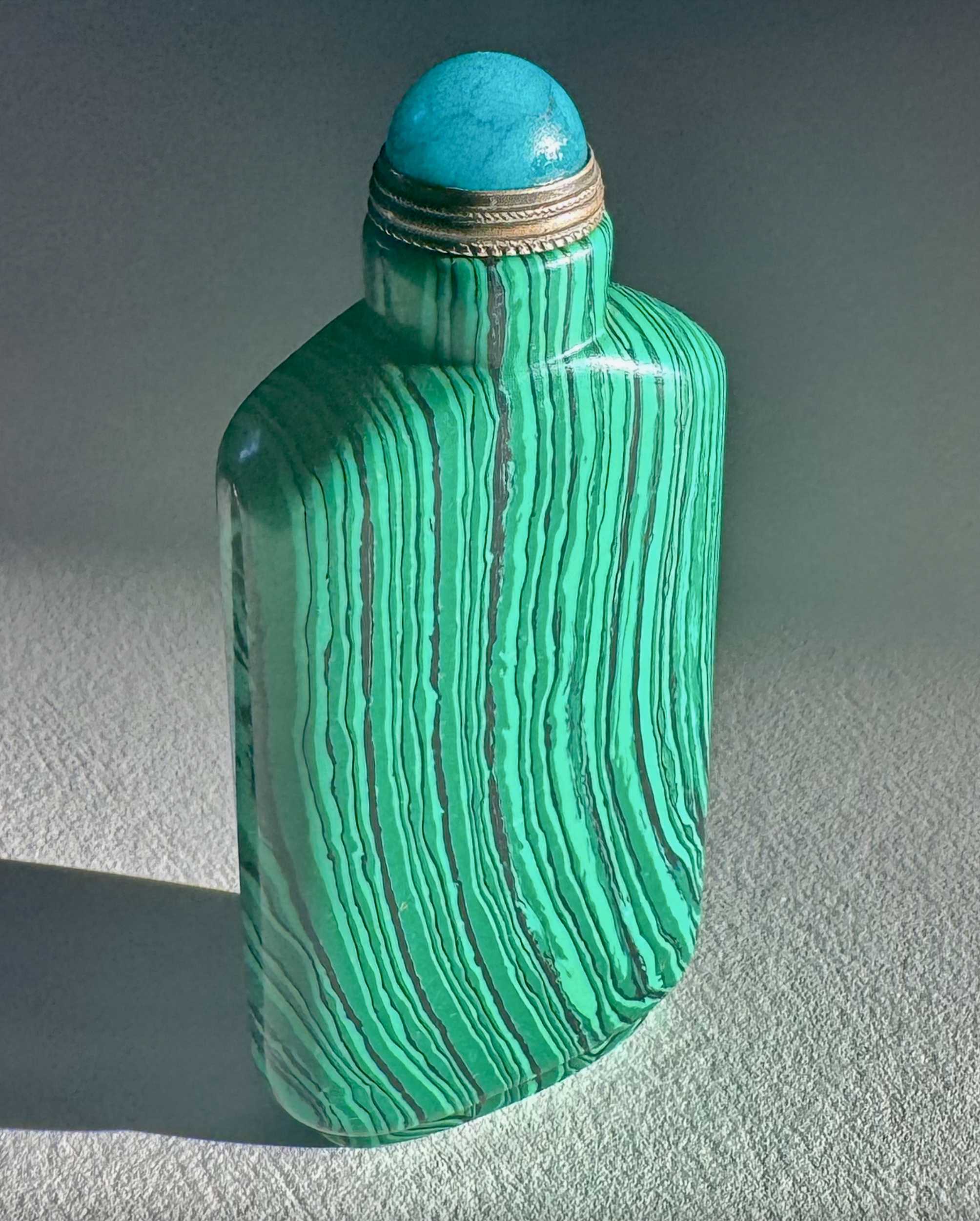
Title: Antique Chinese Snuff Bottle Carved From Semi-precious Malachite
Shipping: $29.00
Artist: N/A
Period: 20th Century
History: Art
Origin: Central Asia > China
Condition: N/A
Item Date: N/A
Item ID: 5662
A beautiful antique Chinese snuff bottle carved from semi-precious green malachite by a master craftsman. It features a decorative bluish green gemstone set in a metal frame and includes a fitted metal spoon inside. The measurements are 3 1/2 inches tall in approximately 1 1/2 inches wide. Malachite has a long, though more subtle, history in Chinese art and culture compared to materials like jade. It is a copper-based mineral known for its rich green color and natural banding, and it was valued both for its beauty and its symbolic associations. Antique Chinese snuff bottles have a fascinating history that reflects both global trade and refined Chinese craftsmanship. Snuff—powdered tobacco—was introduced to China in the late 16th century during the Age of Exploration, likely brought by European traders. By the time of the Qing Dynasty, the use of snuff had become especially popular among the imperial court and elite classes. Unlike in Europe, where snuff was often inhaled directly from boxes, the Chinese developed small, portable bottles designed to preserve the freshness and aroma of the tobacco. These snuff bottles were typically airtight, with a stopper that often included a tiny spoon for easy use.
Malachite in Chinese Culture In China, green stones have always carried deep meaning, largely influenced by the cultural importance of jade. While malachite was not as revered as jade, it was still appreciated as a semi-precious material, especially during the Qing Dynasty. Craftsmen used malachite for small decorative objects such as snuff bottles, beads, seals, and scholar’s items. The color green in Chinese culture is associated with: Renewal and life. Harmony and balance. Prosperity and growth. Malachite, with its vibrant layered patterns, was admired as a natural expression of these ideas. It was also sometimes believed to have protective or healing properties, aligning with broader traditions in Chinese mineral lore. However, unlike jade—which carried moral and philosophical significance tied to Confucian ideals—malachite was more of an aesthetic material than a deeply symbolic one. It was appreciated for its visual impact and rarity rather than its cultural “virtue.” Why Chinese Malachite Differs from Russian Malachite The differences between Chinese and Russian malachite come down to geology, scale, and artistic tradition. 1. Geological Differences Russian malachite, especially from the Ural Mountains, is famous for its bold, dramatic banding—often called “eye” or “bullseye” patterns. These deposits were unusually large and dense, allowing for bigger carvings and architectural use.