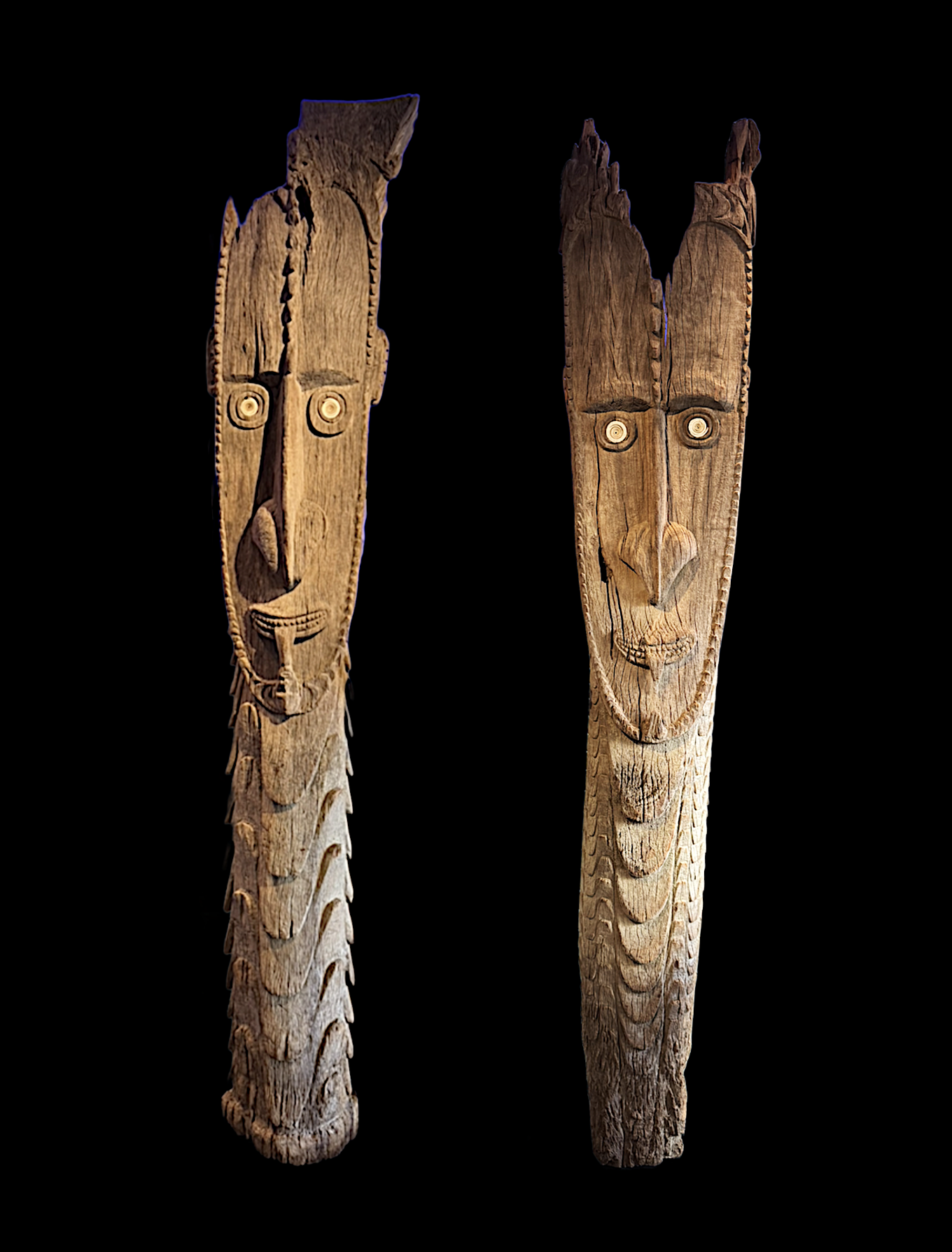


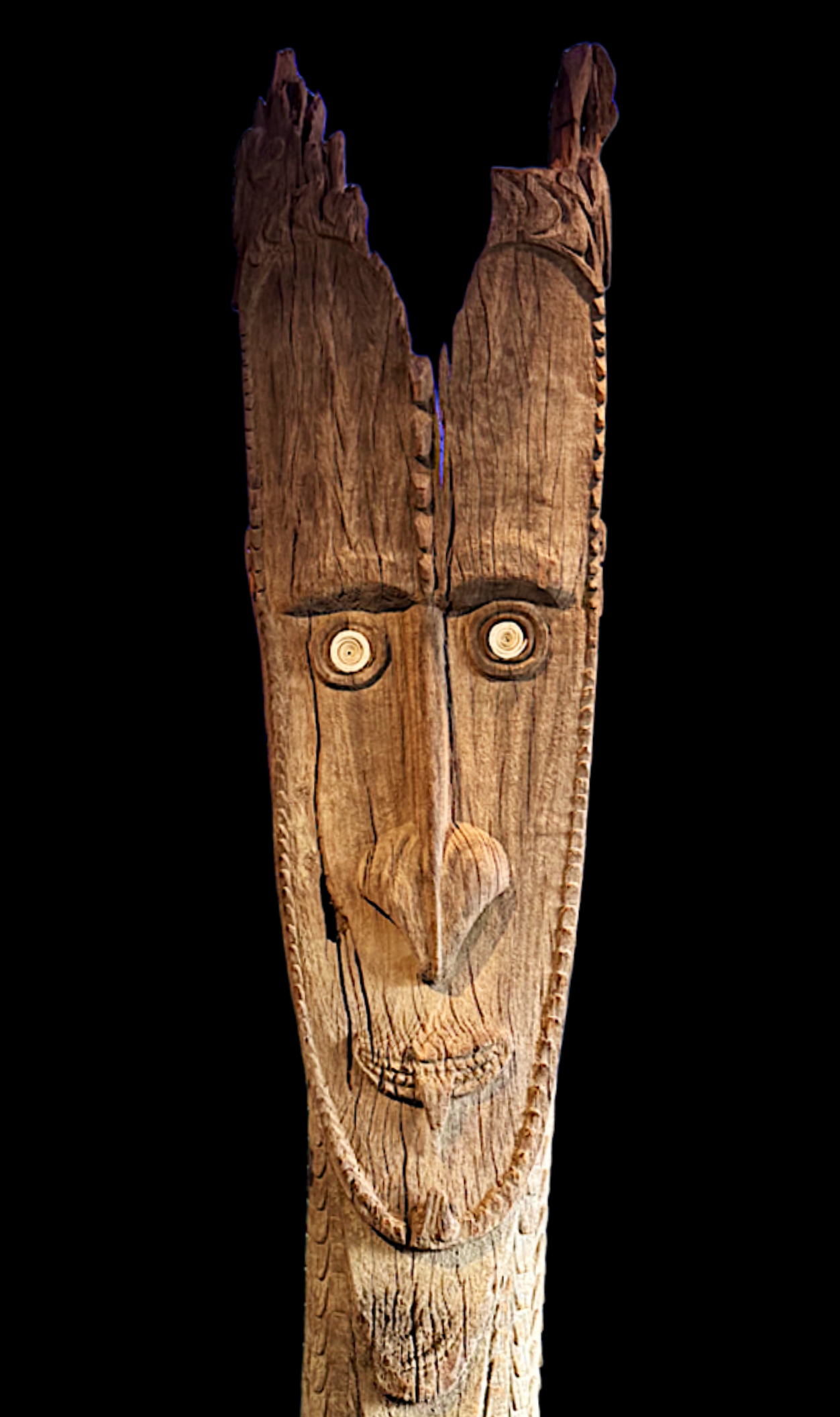
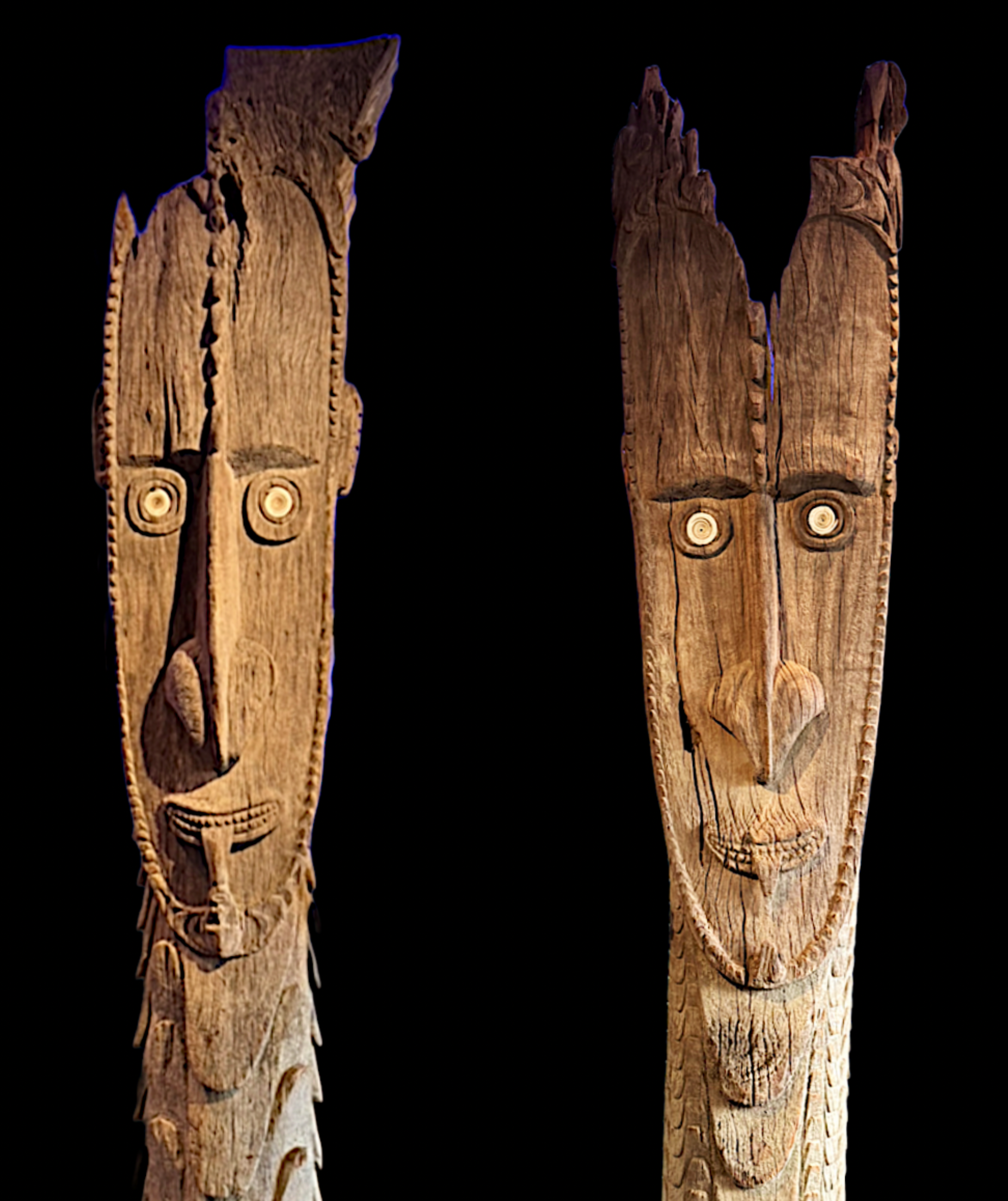
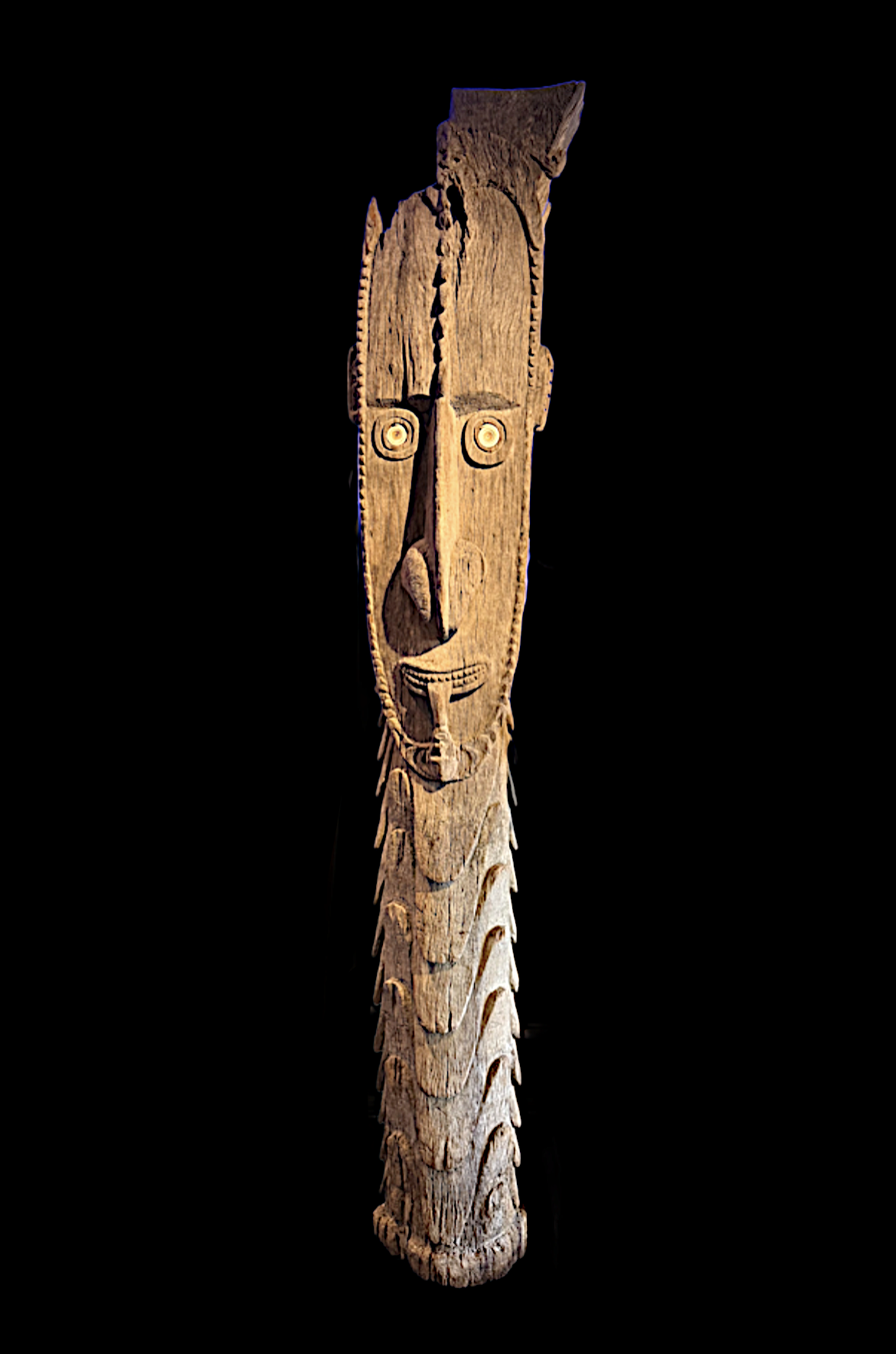
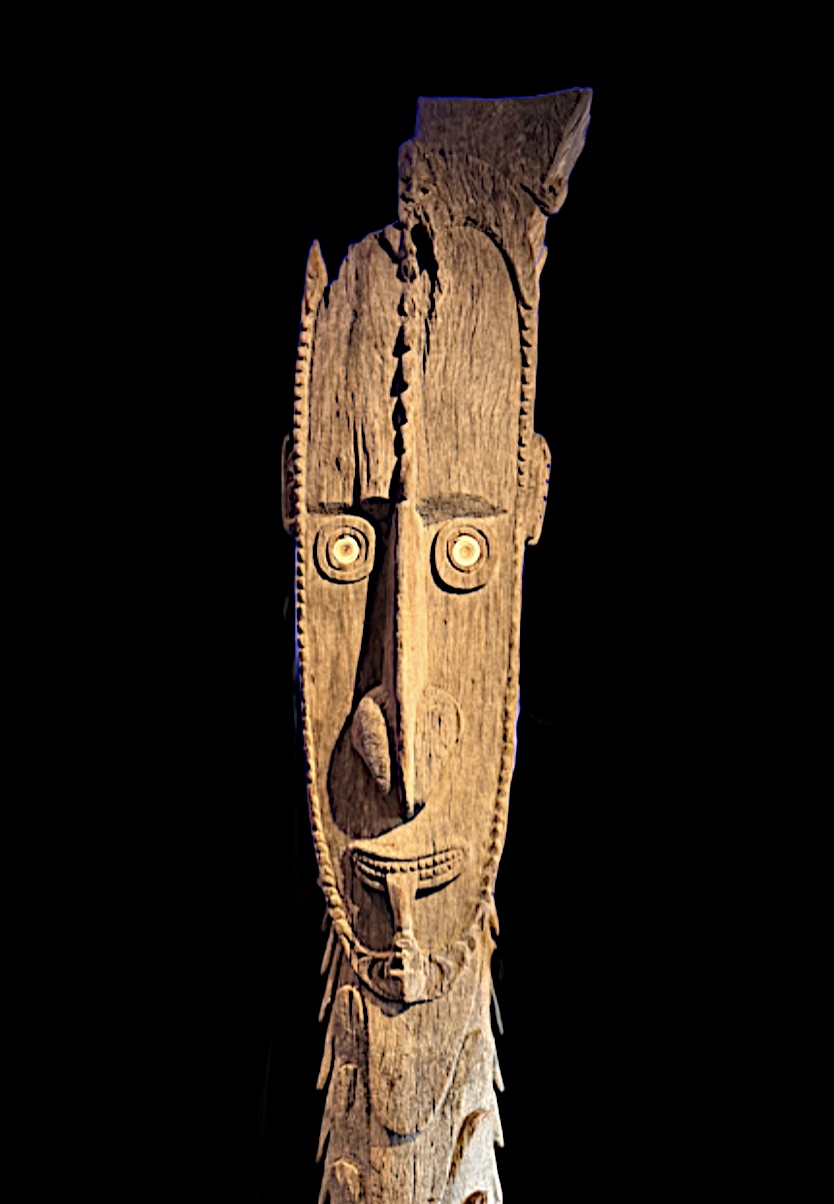
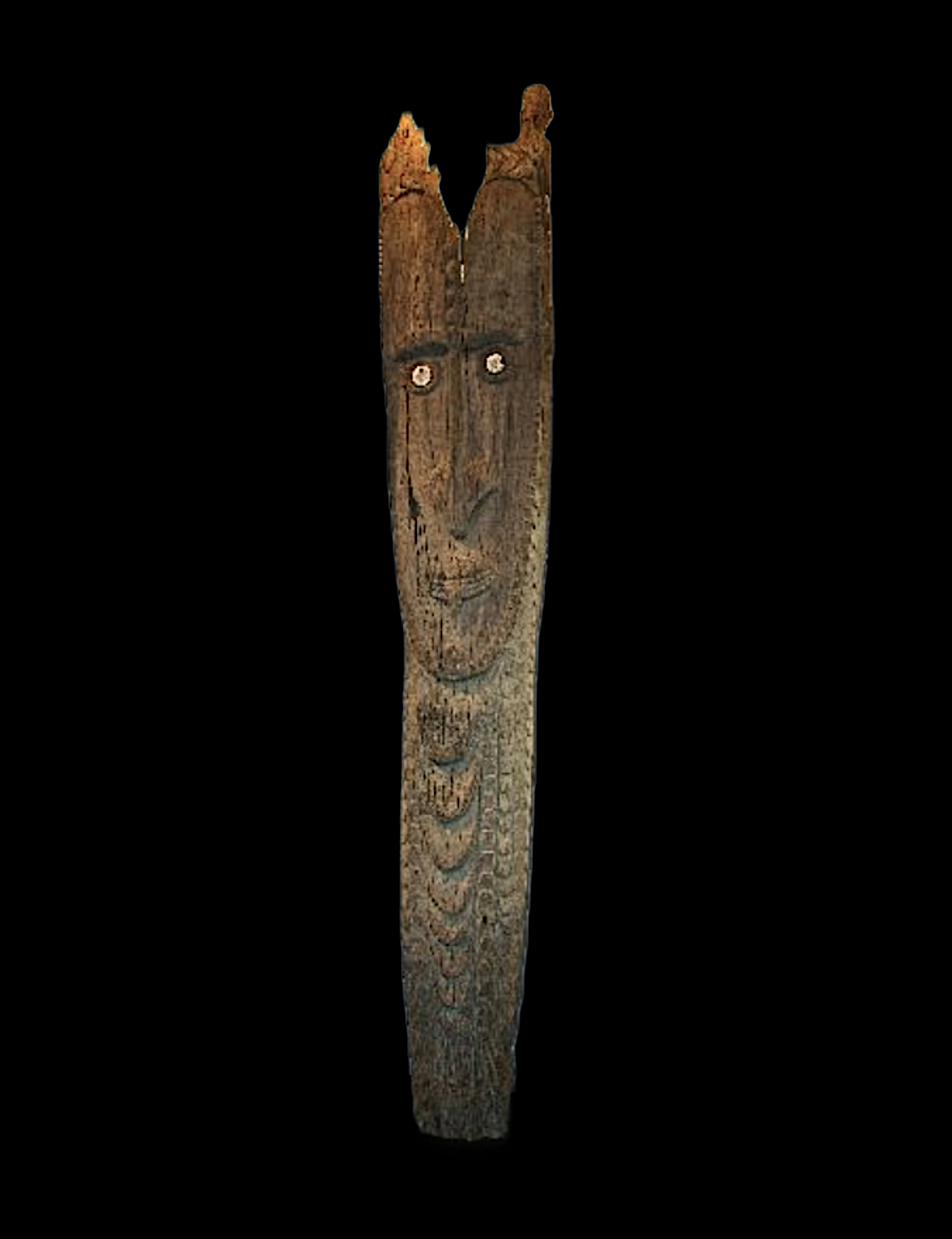
Title: Papua New Guinea Ceremonial House Hand-Carved Wooden Support Posts
Shipping: $29.00
Artist: N/A
Period: 20th Century
History: Art
Origin: North Australia & Oceana > Papua New Guniea
Condition: N/A
Item Date: N/A
Item ID: 5659
A magnificent pair of hand-carved spiritual headhunting support posts from a men’s ceremonial house, originating in Wongam Village, Watam Lagoon, Middle Sepik, Papua New Guinea. Created by the Iatmul people, these museum-quality wooden roof posts served not only as structural supports but also as powerful totemic markers representing the owning clan. Collected in 1960 and more than a century old, they embody the rich cultural and ceremonial history of the region. Crafted by village inhabitants using jade stone hatchets, the ironwood posts display intricate and highly symbolic carvings. A striking motif links the ancestor to the crocodile: a human face with a long, scaled tongue licking a severed head seamlessly transforms into a crocodile’s body, underscoring the spiritual and ancestral significance of the imagery. The posts are further distinguished by their shell eyes and masterfully carved ironwood surfaces. Mounted on custom-made metal stands, these majestic works possess a commanding sculptural presence. Today, acquiring such artifacts is extremely challenging due to strict regulations concerning insect infestation in rare woods. In the United States, concerns about invasive species damaging crops make importation difficult, often requiring a lengthy approval process of six months to a year. Ultimately, these hand-carved posts are not only architectural elements of a man’s ceremonial house but also profound, tangible links to the cultural heritage and spiritual traditions of the Iatmul people of Papua New Guinea. The Sepik River is one of the world’s largest river systems, flowing approximately 1,200 kilometers from the central spine of New Guinea to the Bismarck Sea. The river and its people offer a remarkable window into the past and are renowned for producing some of the most compelling and expressive carvings in the world of so-called primitive art. The Middle Sepik region is populated primarily by the Iatmul people, who live in small, traditional villages along the banks of the river and its tributaries. Tribal life centers on the Haus Tambaran, or Spirit House, the most important structure in the village. Some of these monumental buildings rise up to 25 meters in height, towering above the surrounding forest canopy. Within the Haus Tambaran is an extraordinary array of carvings, including masks, statues, and figures of great spiritual significance. Traditionally, only initiated warriors were permitted to enter, under penalty of death.
The history of headhunting in Papua New Guinea is intricately woven into the cultural fabric of its diverse indigenous communities. Historically, headhunting was not merely an act of violence but a practice imbued with deep spiritual meaning, symbolizing victory over enemies and the acquisition of spiritual power. Hand-carved ceremonial wooden objects played a central role in these rituals, serving both as functional tools and as powerful expressions of cultural identity. Masks, totem poles, and other ritual artifacts were often elaborately carved with ancestral figures and totemic symbols that embodied spiritual beliefs and clan heritage. As Papua New Guinea underwent social and cultural transformation, the practice of headhunting gradually diminished, and these carved objects evolved into revered cultural relics. Today, they preserve the complex history, belief systems, and spiritual traditions of the region’s tribes. The broader history of ceremonial carving in Papua New Guinea stands as a testament to the richness of its indigenous cultures. From spirit boards and masks to drums and carved wooden figures, each object carries a distinct narrative, reflecting spiritual values, social structures, and artistic traditions. These ceremonial works remain essential to storytelling, rites of passage, and cultural continuity, safeguarding and transmitting Papua New Guinea’s vibrant heritage across generations. The Sepik River is one of the world’s largest river systems, flowing approximately 1,200 kilometers from the central spine of New Guinea to the Bismarck Sea. The Sepik and its people offer a remarkable window into the past and are renowned for producing some of the most dynamic and compelling carvings in the world of so-called primitive art. The Middle Sepik region is populated primarily by the Iatmul people, who live in small, traditional villages along the banks of the river and its tributaries. Tribal life centers on the Haus Tambaran, or Spirit House, the most important structure in the village. Some of these monumental buildings rise up to 25 meters in height, towering above the surrounding forest canopy. Within the Haus Tambaran is an extraordinary array of carvings, including masks, statues, and figures of great spiritual and artistic significance. Traditionally, only initiated warriors were permitted to enter, with severe penalties imposed on those who violated this sacred restriction.
This is a fine pot for storing sake, made from clay and is very useful for getting plastered.