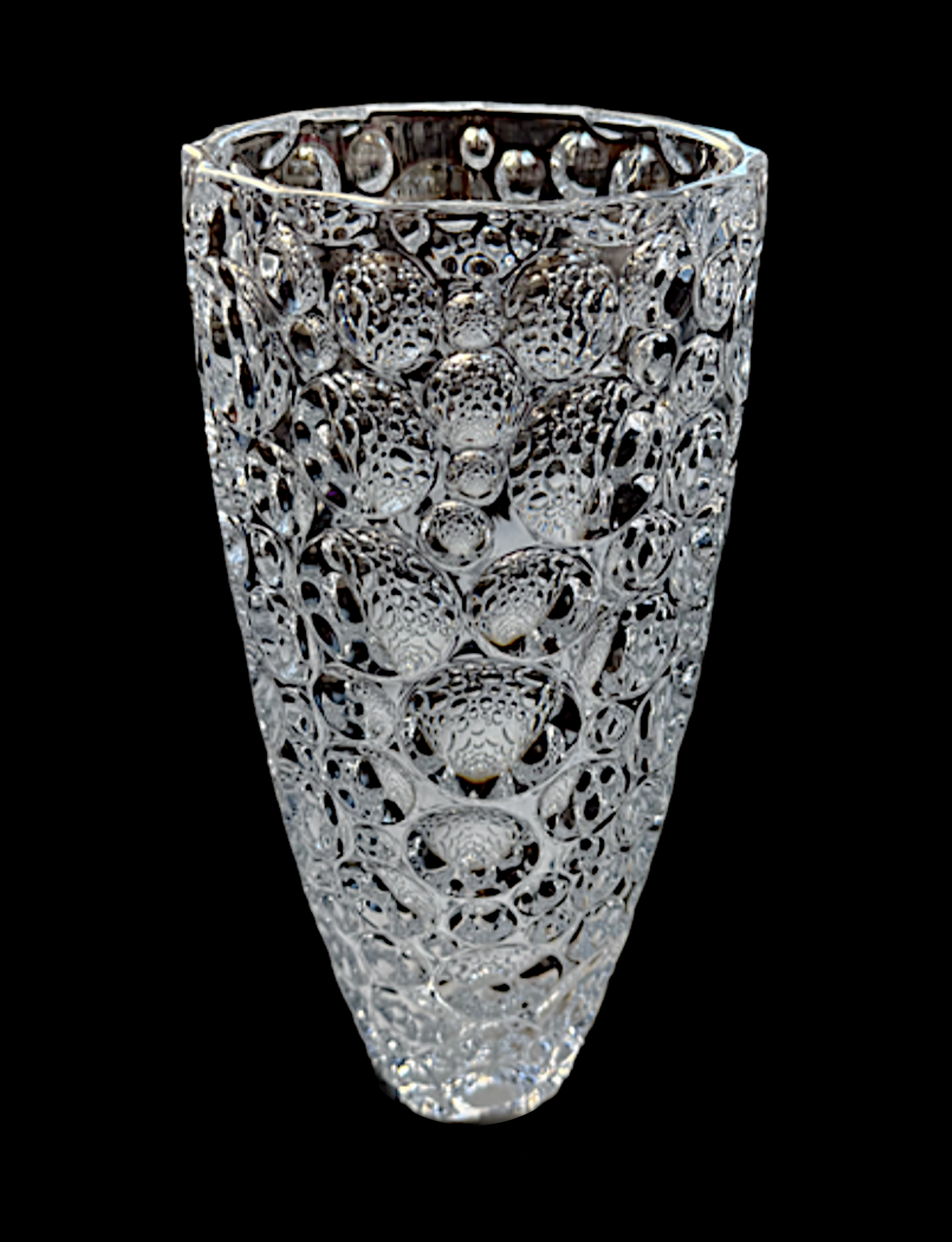


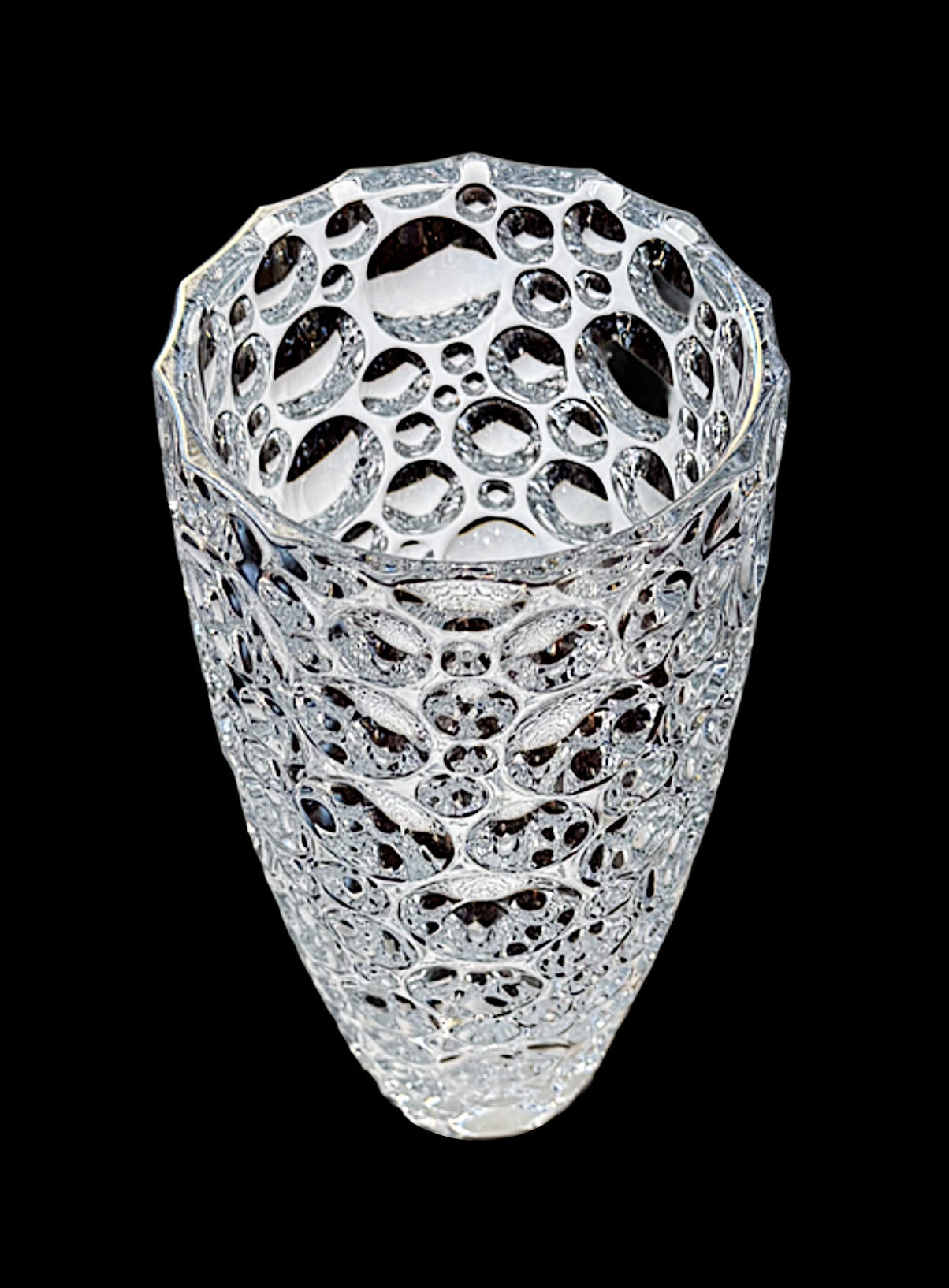
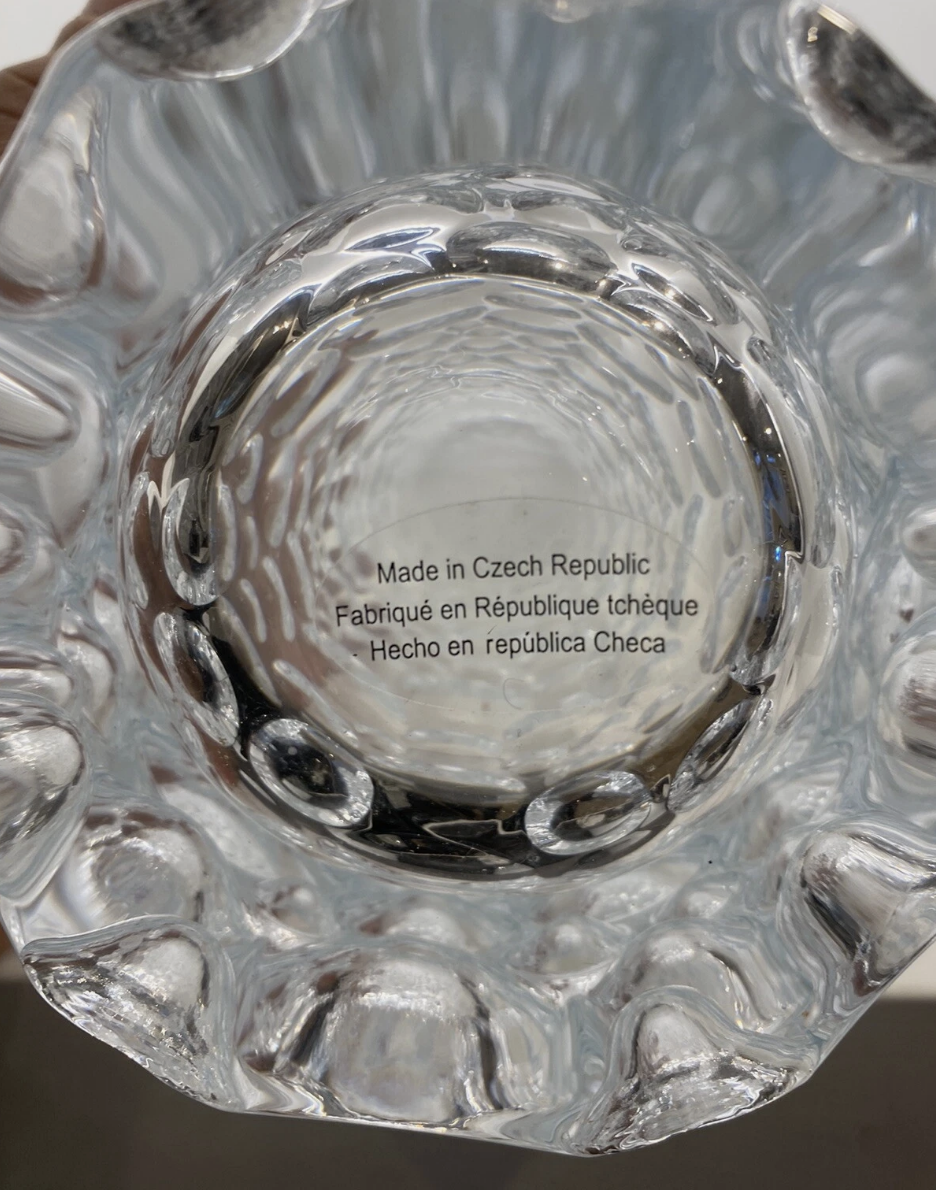
Title: Vintage Bohemian Bubble Art Glass Vase Czech Republic
Shipping: $29.00
Artist: N/A
Period: 20th Century
History: Art
Origin: Central Europe > Czech Republic
Condition: Excellent
Item Date: N/A
Item ID: 5654
This stunning Bohemian bubble art glass vase from the Czech Republic is a superb example of contemporary Czech glassmaking, a tradition celebrated for its clarity, weight, and refined craftsmanship. Bubble and button glass remains one of the most popular and sought-after styles today, admired by designers for its exceptional optical quality and reflective brilliance. Crafted in clear lead crystal, this unmarked vase from the Coin product line stands approximately 13½–14 inches tall and features a beautifully executed spherical cut design. Varying sizes of raised and recessed bubbles create a striking geometric composition, giving the vase a dynamic, shifting visual effect. When viewed through the glass, the bubbles refract light in a way that resembles delicate champagne fizz, making the piece endlessly fascinating to observe. The vase is exceptionally heavy, weighing approximately 10 pounds, with a substantial presence. Measurements include a 3⅛-inch base and a 5⅜-inch top opening, allowing it to comfortably display long-stem roses, hollyhocks, or other tall floral arrangements. It is equally captivating when used with a taper candle, as the flickering light dances across the bubble surface. This exquisite crystal vase is in perfect condition and pairs beautifully with other crystal or glass elements in both modern and classic interiors. An elegant statement piece that combines sculptural form, optical beauty, and the enduring legacy of Czech Bohemian glass. Bohemian bubble glass has its roots in the centuries-old glassmaking tradition of Czechoslovakia, a region internationally renowned for its mastery of crystal and decorative glass. Beginning in the early 20th century and gaining major popularity in the mid-century modern era, Czech glassmakers perfected techniques that combined heavy lead crystal with sculptural, optical designs. Bubble glass is created by blowing or molding molten glass and then cutting, pressing, or carving rounded “bubble” or “lens” forms into the surface. These bubbles refract and magnify light, creating a dynamic visual effect that changes with movement and illumination. Its popularity stems from this unique interaction with light, the substantial weight and clarity of Czech crystal, and its ability to bridge modern and classic design. Designers and collectors continue to value Bohemian bubble glass for its sculptural beauty, durability, and the exceptional craftsmanship that reflects the innovation and artistic legacy of Czechoslovakian glassmaking.
Designers seek out Czechoslovakian Bohemian glass because it combines sculptural presence, optical sophistication, and timeless versatility. The clarity and weight of Czech crystal allow light to refract and move through the glass in a way that adds depth, texture, and visual interest to a space without overwhelming it. Bubble and optical glass, in particular, functions as both art and design—serving as a focal object while remaining functional and adaptable to modern, mid-century, or classic interiors. Designers also value its ability to pair effortlessly with other materials such as wood, metal, stone, and textiles, creating balance and contrast. Beyond aesthetics, Bohemian glass carries a legacy of craftsmanship and authenticity, giving interiors a sense of substance, history, and refined taste that mass-produced decorative objects simply cannot replicate. Czechoslovakian glass has remained highly collectible over the years because it represents a rare combination of exceptional craftsmanship, innovative design, and consistent quality produced over centuries. Czech glassmakers perfected the use of lead crystal, achieving superior clarity, weight, and brilliance that rivaled or surpassed other European glass traditions. Throughout the 20th century—particularly during the Art Deco and mid-century modern periods—Czechoslovakia became a center for bold experimentation, introducing sculptural forms, optical effects, and functional art that appealed to both everyday households and serious collectors. Even during periods of political and economic change, glass production maintained rigorous standards, making these works both durable and artistically significant. Today, collectors value Czechoslovakian glass not only for its beauty and design influence but also for its historical continuity, affordability compared to other European glass, and its enduring ability to complement both modern and traditional interiors.