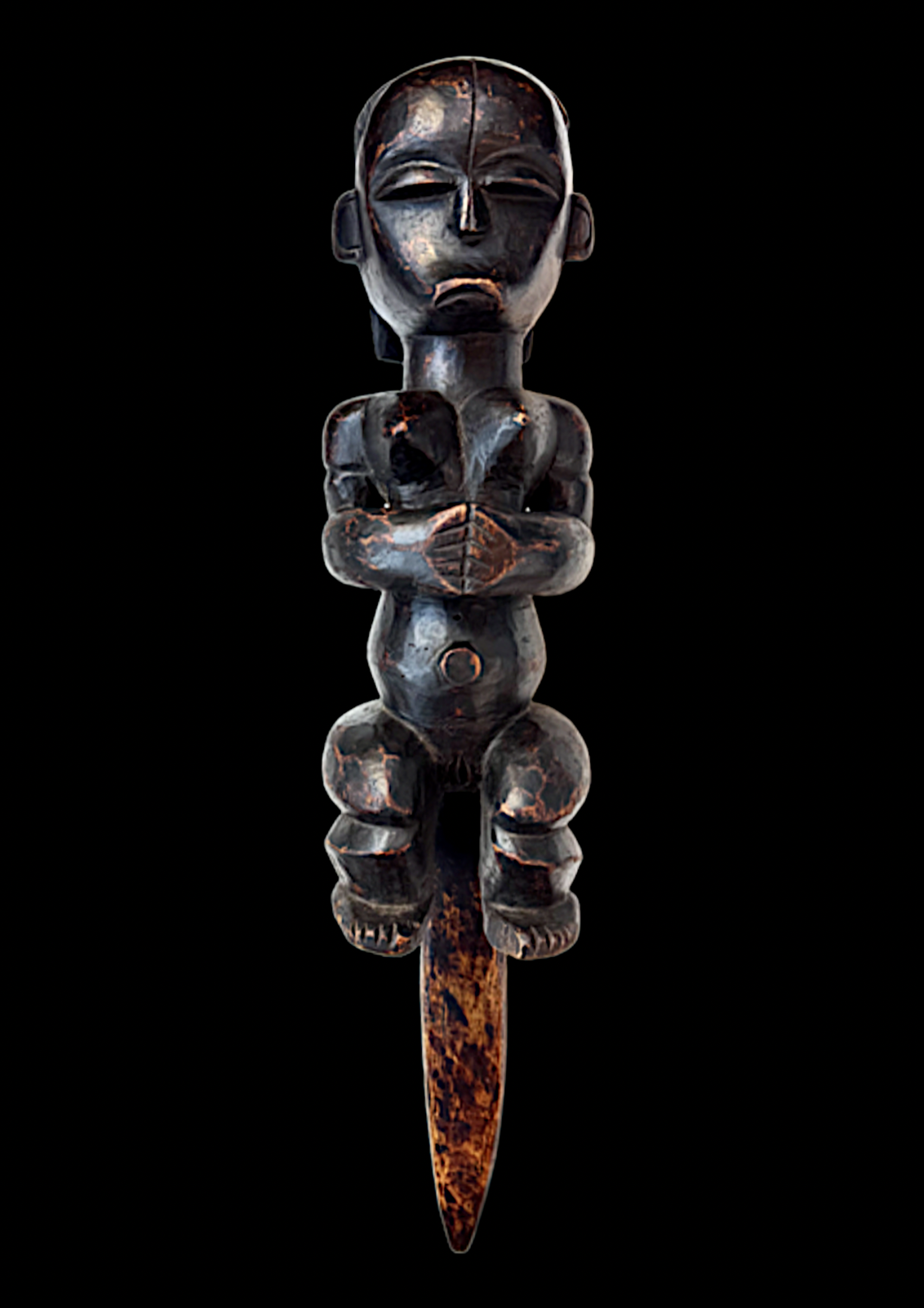


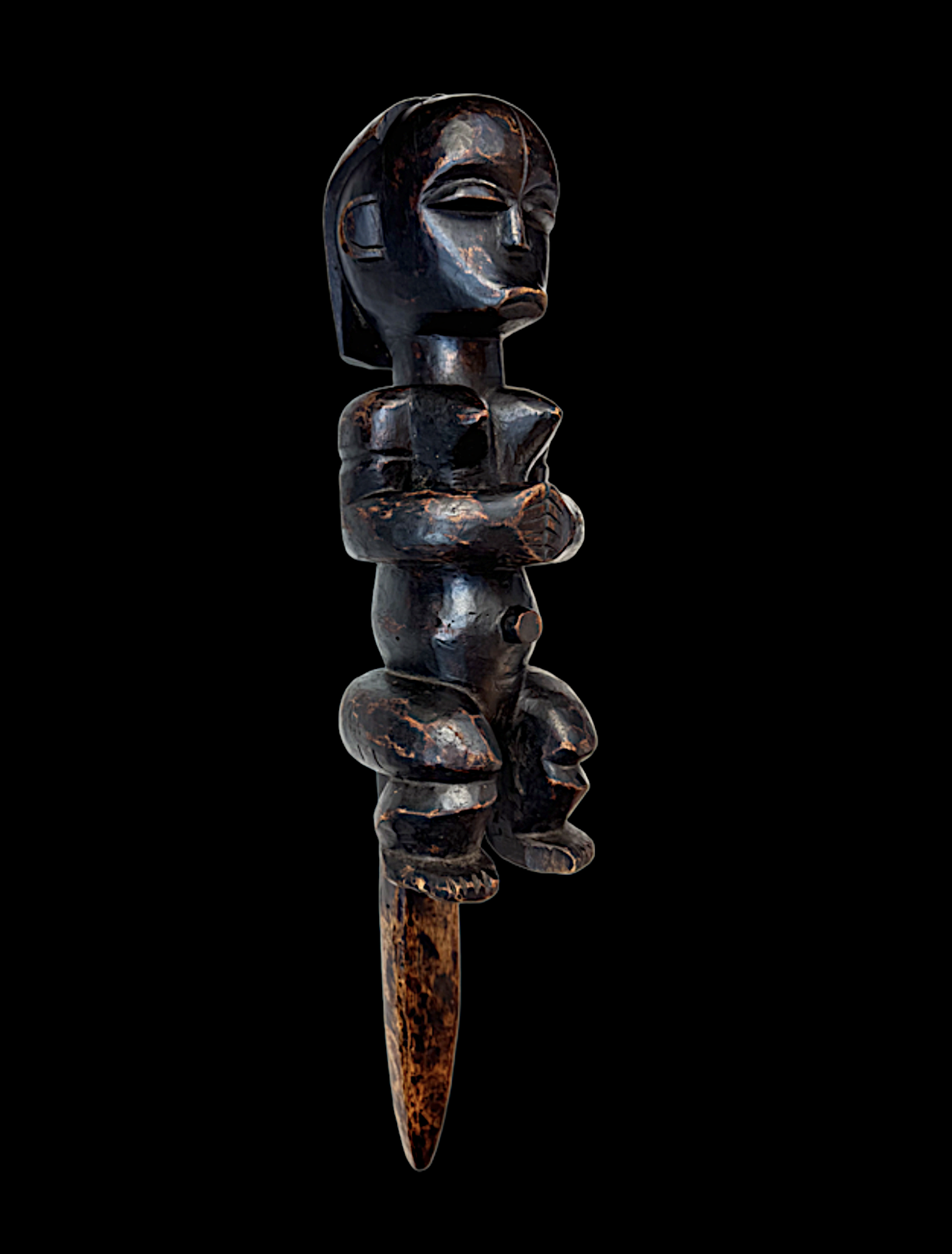
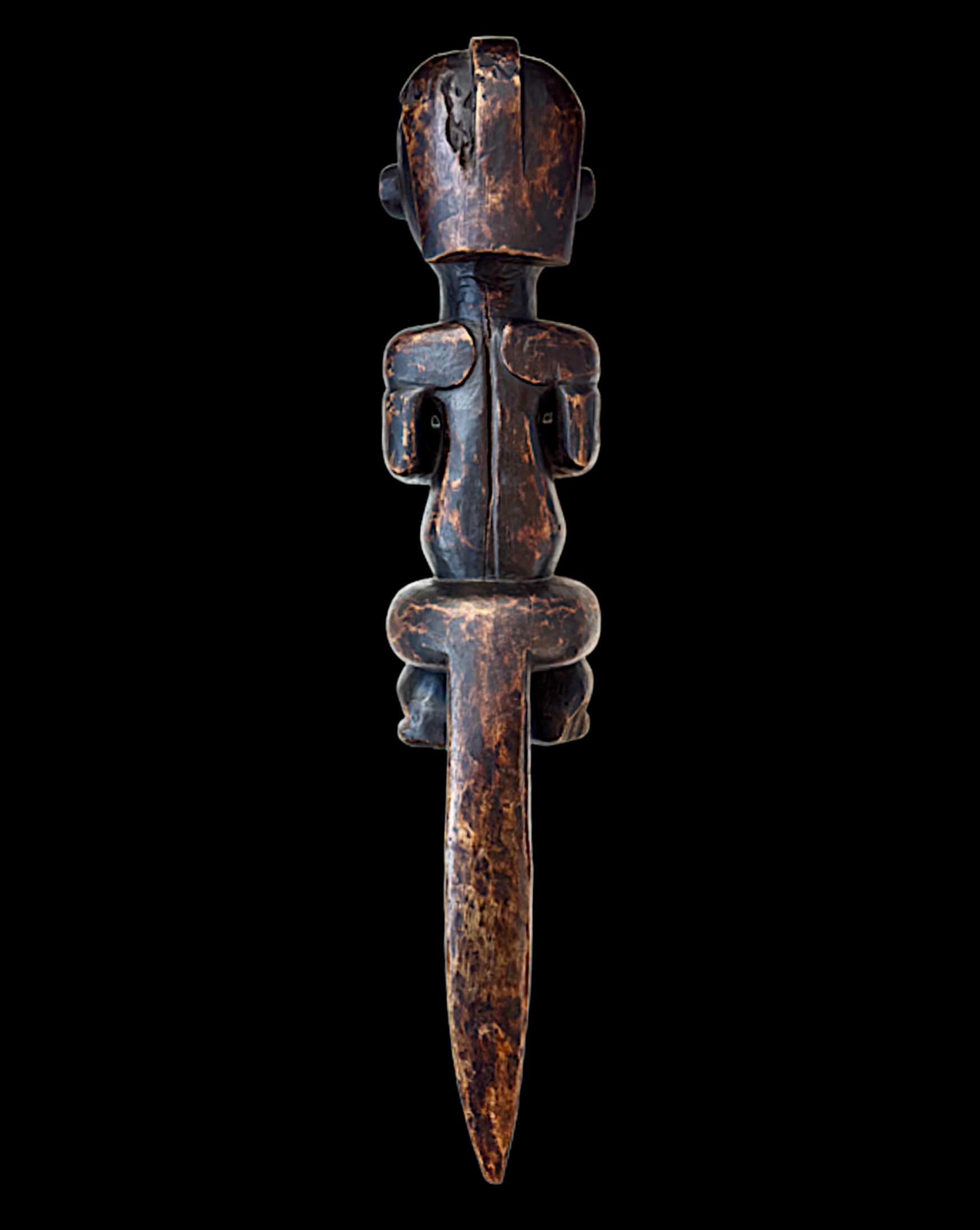
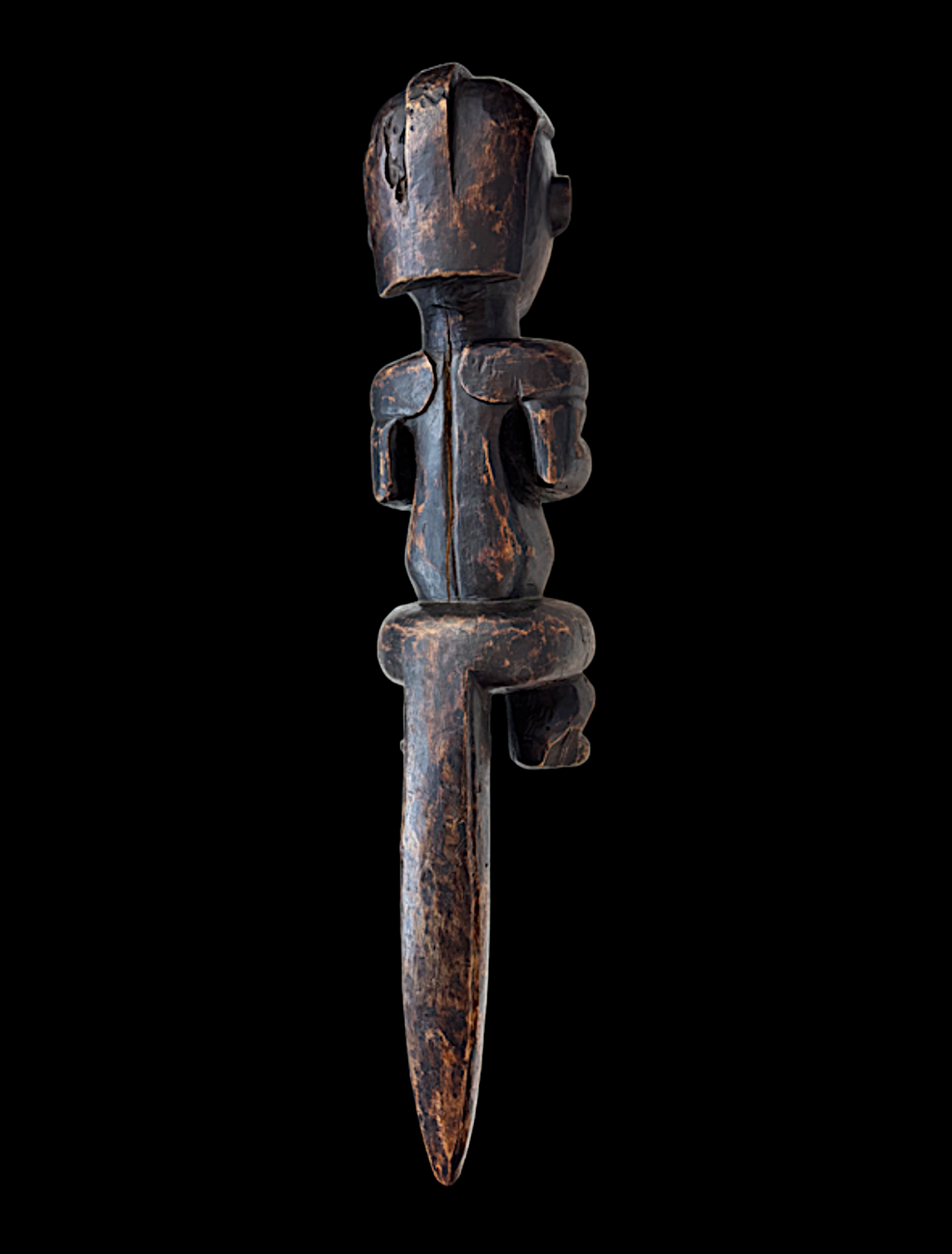
Title: Antique Tribal African Gabon Fertility Nude Sculpture
Shipping: $29.00
Artist: N/A
Period: 19th Century
History: Art
Origin: Central Africa > Congo
Condition: Good
Item Date: N/A
Item ID: 5653
You are looking at a spectacularly beautiful African wooden carved female fertility sculpture, a tribal object attributed to the Fang culture of Gabon. This is a fantastic discovery and an exceptional example of African sculpture, believed to be an authentic Fang reliquary or fertility figure. In Fang culture, reliquaries were traditionally guarded by carved wooden figures (bieri) placed atop containers holding ancestral remains; these figures were believed to offer protection, guidance, fertility, and moral authority to the community. Comparable Fang examples have sold for upwards of $20,000 at established international auction houses, while more common fertility figures—such as Luba examples—typically trade in the $1,500 to $3,000 range. This sculpture is beautifully carved in dense hardwood and exhibits a rich, dark black patina developed over time. The carving displays remarkable balance, proportion, and uniformity—qualities that distinguish the work of a master craftsman within the tribe. The sensitivity and confidence of the carving suggest it was created with great care, skill, and reverence. Cultural Importance: Recognized tribal forms such as Fang bieri figures are highly sought after by serious collectors and institutions due to their spiritual, historical, and artistic significance. Condition: The sculpture is in good condition for its age, with visible age-appropriate cracks, minor splitting, and areas of old termite activity in the wood. There are small losses and wear around the foot, consistent with a piece that has been held in collections for many years. No modern repairs are evident. Provenance: The piece was acquired approximately 20 years ago from the private estate of an old collector in the San Francisco Bay Area. It was subsequently held by a dealer who had forgotten it was stored within his collection until it was rediscovered and acquired by the current owner. Dimensions: Height: 24 inches / Width: approximately 5 inches / Depth: approximately 5 inches / Overall, this is a powerful and authentic example of Fang sculpture, distinguished by its strong presence, aged patina, and masterful craftsmanship. The Fang people of Gabon are a Bantu-speaking culture whose history is marked by migration, strong ancestral traditions, and a deep emphasis on lineage and spiritual continuity. Believed to have migrated southward into present-day Gabon, Cameroon, and Equatorial Guinea between the 17th and 19th centuries, the Fang organized their society around extended family clans guided by ancestral authority. Central to Fang belief was the veneration of ancestors, embodied in the bieri tradition—wooden guardian figures created to protect ancestral relics and ensure moral guidance, fertility, and stability within the community. Renowned for their refined sculptural forms, the Fang developed a powerful visual language characterized by abstraction, balance, and spiritual intensity, which later profoundly influenced modern European artists such as Picasso and Modigliani. Despite colonial disruption, Fang cultural identity and artistic legacy remain among the most influential in African art history. Luba refers to a major Central African ethnic group and cultural tradition originating in what is now the Democratic Republic of the Congo. The Luba people are known for their highly refined artistic heritage, particularly sculptural works associated with royal authority, fertility, memory, and spiritual continuity. Luba female figures are often carved with calm, introspective expressions and idealized bodies, symbolizing motherhood, wisdom, and the role of women as bearers of lineage and sacred knowledge. These sculptures were frequently used in ritual contexts tied to kingship, initiation, and ancestral veneration, making Luba art one of the most respected and collected traditions in African art history.
Most African sculpture was historically in wood and other natural materials that have not survived from earlier than a few centuries ago; older pottery figures can be found from a number of areas. human figures, often highly stylized and in vast variety of styles. Sculpture is most common among "groups of settled cultivators in the areas drained by the Niger and Congo rivers. Direct images of deities are relatively infrequent. These African wooden carved female fertility sculptures, particularly those from the Fang people of Gabon, were created as powerful spiritual and cultural objects rather than decorative art. They were made to honor ancestors, protect family lineage, and encourage fertility, prosperity, and continuity within the community. Often used in ritual contexts, these figures embodied idealized human forms meant to house ancestral spirits, serving as intermediaries between the living and the spiritual world. Their stylized features and deliberate abstraction conveyed strength, balance, and spiritual authority, reflecting the Fang belief that ancestral presence was essential for guidance, protection, and the well-being of future generations. These full-figured, nude female sculptures were carved this way because the human body—especially the female form—was seen as a direct symbol of fertility, life, and continuity. In many African cultures, including the Fang of Gabon, nudity was not sexualized but understood as natural and powerful, emphasizing motherhood, vitality, and the ability to sustain future generations. The exaggerated proportions—such as rounded hips, abdomen, and breasts—highlight abundance, health, and reproductive strength, qualities essential to the survival of the community. By presenting the figure unclothed and idealized, the sculptor removed social status or individuality, allowing the figure to function as a universal spiritual symbol tied to ancestry, protection, and the cycle of life rather than as a portrait of a specific person.