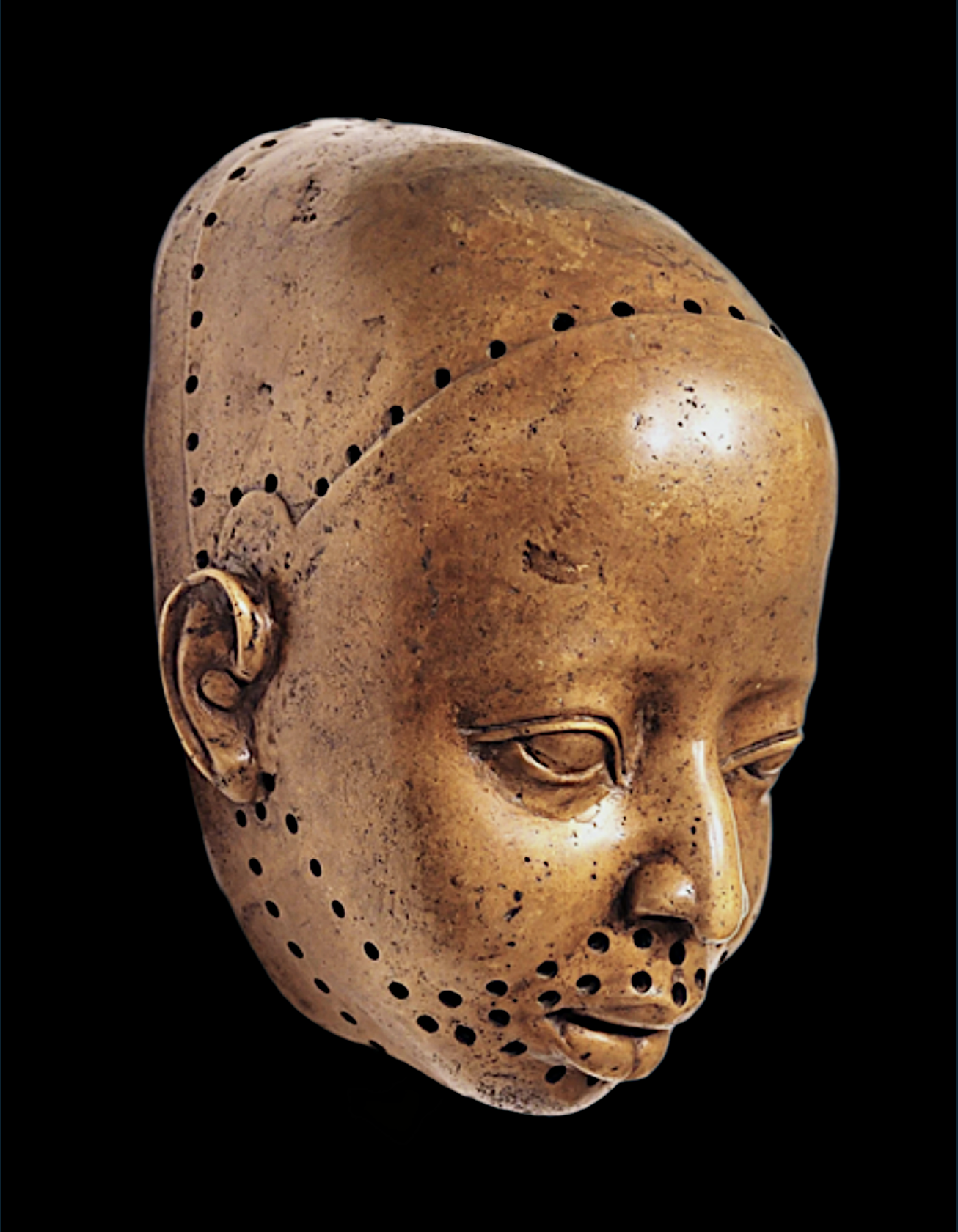


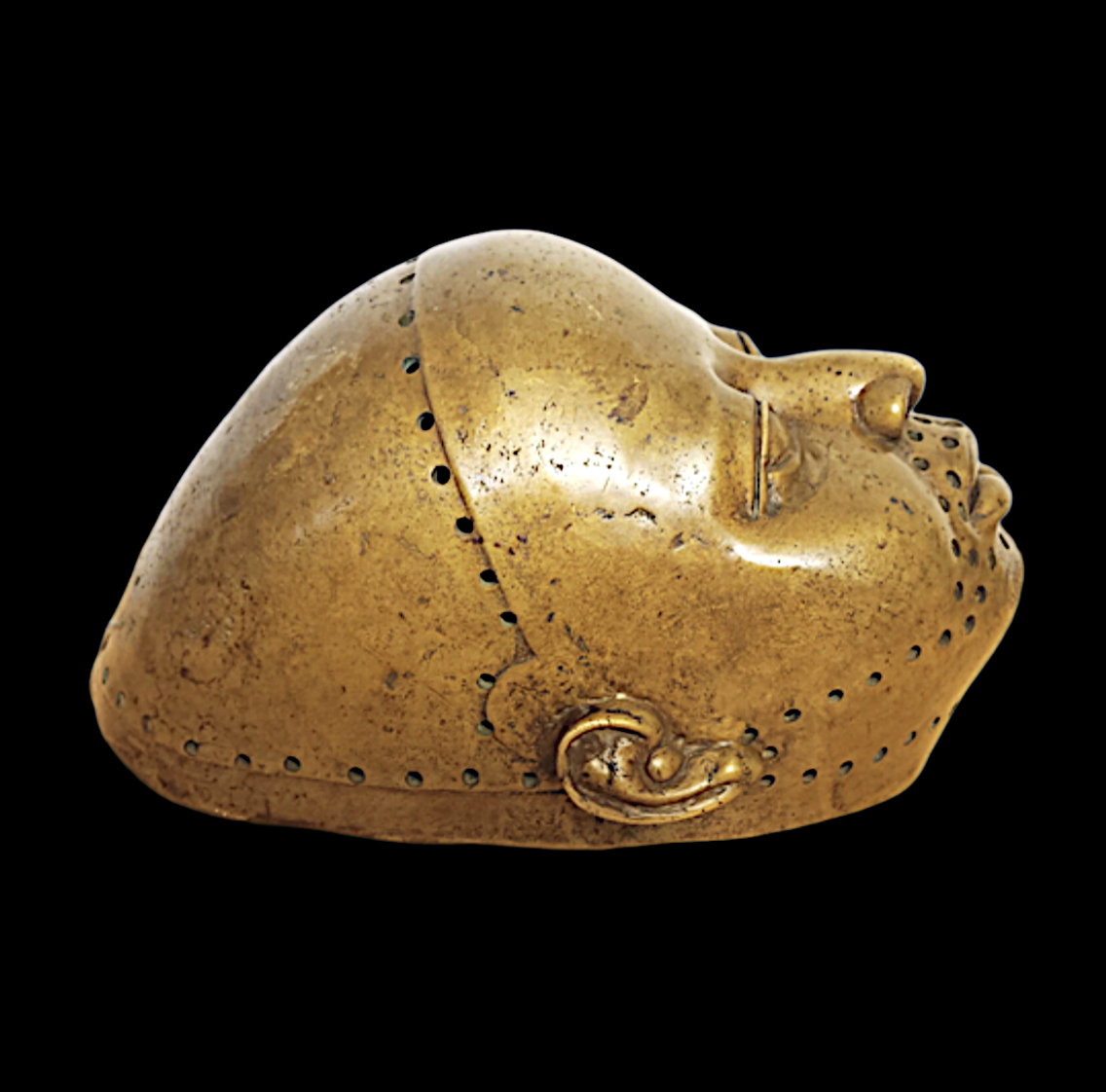
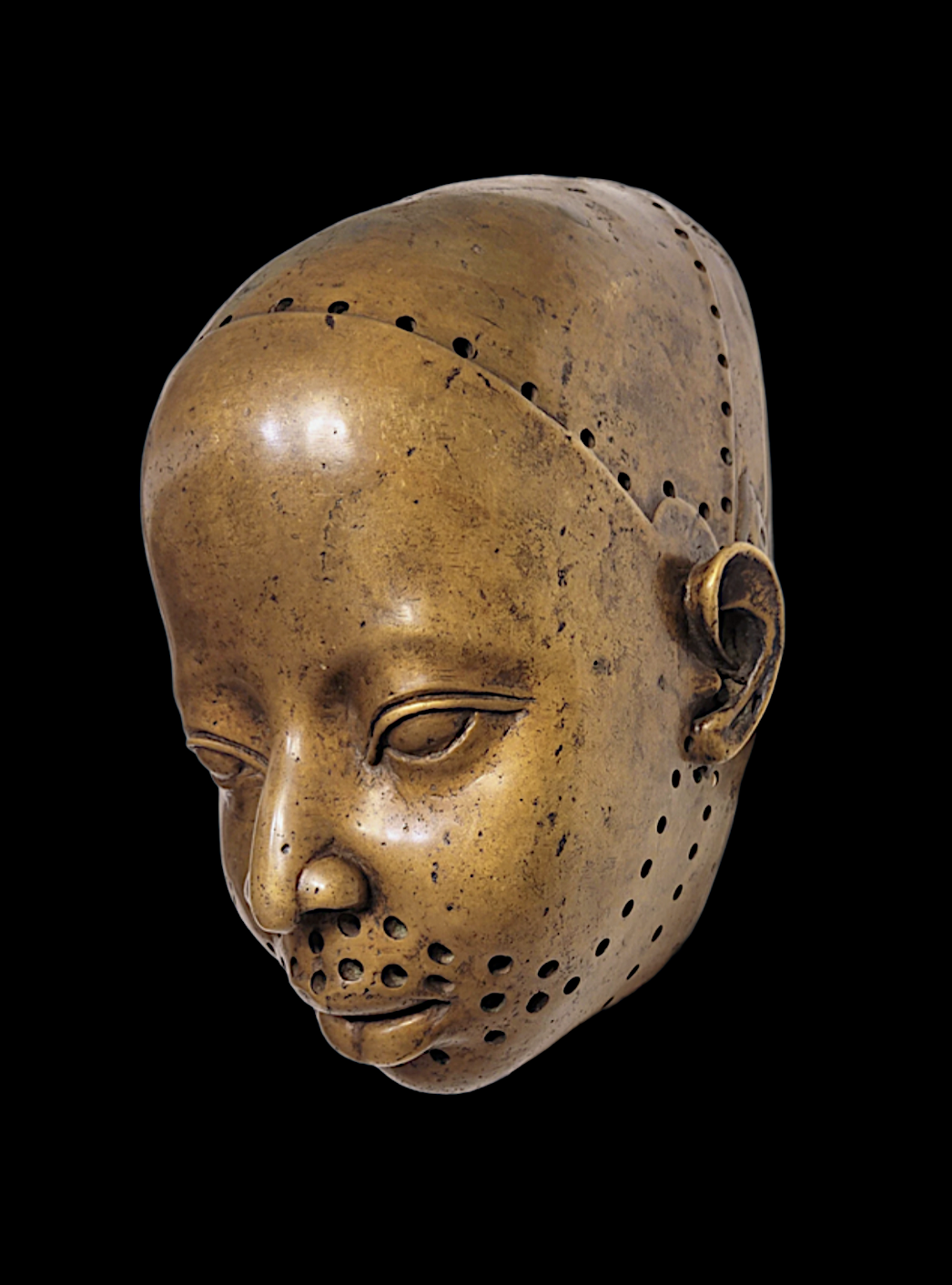
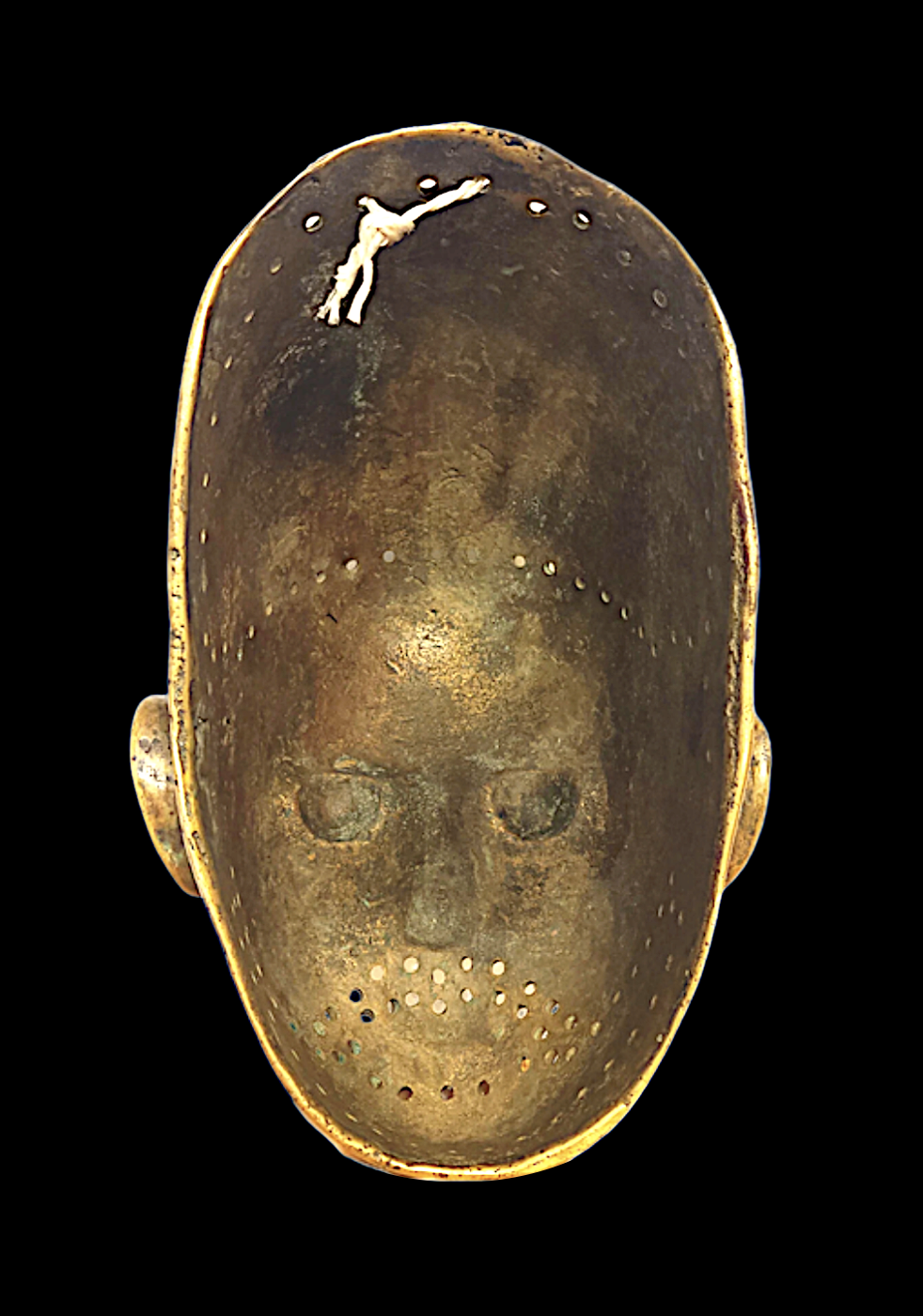
Title: Rare Vintage Bronze Yoruba Tribal Art Mask From Nigeria
Shipping: $29.00
Artist: N/A
Period: 20th Century
History: Art
Origin: Southern Africa > South Africa
Condition: Very Good
Item Date: N/A
Item ID: 5639
Contact the Gallery for Availability. This spectacular, rare, and vintage, finely cast bronze Yoruba tribal mask originates from Nigeria and dates to the early 20th century. An exceptional example of Yoruba artistry influenced by the traditions of Ife and Benin, this bronze mask reflects the sophistication and technical mastery of West African metalwork. The mask measures approximately 33 cm (13 inches) in height and weighs 11 lbs (5 kg). It features meticulously detailed facial characteristics, almond-shaped eyes, and perforations along the hairline and jaw, suggesting it may have been created for ceremonial, ritual, or elite decorative use. The rich, aged patina and refined craftsmanship indicate a high-quality casting, likely produced by artisans inspired by the historic bronzes of the Benin Kingdom. The renowned Benin Bronzes—originally created for the royal court of the Benin Empire—depict kings, warriors, and deities with extraordinary realism and detail. Drawing inspiration from these masterpieces, later Yoruba artists produced works such as this mask, blending the naturalism of Ife sculpture with the stylized casting techniques associated with Benin. Such bronzes were often associated with religious ceremonies, ancestral veneration, or served as prestigious objects for elites. This piece is offered on consignment and has not been authenticated by an expert. Please contact the gallery for availability.
Bronze masks have a long and distinguished history in West Africa, particularly among the Yoruba and Edo (Benin) peoples of present-day Nigeria, where bronze casting emerged as both a technical and spiritual achievement as early as the first millennium CE. Using the sophisticated lost-wax casting method, artisans created masks and heads that embodied ideals of leadership, ancestry, and divine authority rather than literal portraiture. In Ife, bronze and brass heads were renowned for their naturalism and refined balance, reflecting a belief in the sacred harmony between the physical and spiritual worlds. In the Benin Kingdom, bronze masks and plaques were produced for the royal court to commemorate kings (Obas), rituals, and historical events, serving as instruments of memory, power, and continuity. These objects were not merely decorative but functioned as ceremonial regalia, altar pieces, and symbols of social hierarchy, with their creation often controlled by guilds working exclusively for the elite. Over time, the visual language of Ife and Benin influenced neighboring cultures, leading to later bronze masks that blended realism with stylization, preserving a lineage of craftsmanship that continues to define African bronze artistry today.