

Title: Rare Ancient Artifact Greek Chariot Horse Bronze Bi-lateral Muzzle
Shipping: $29.00
Artist: N/A
Period: Antiquity
History: Ancient Art
Origin: Southern Europe > Greece
Condition: N/A
Item Date: N/A
Item ID: 452
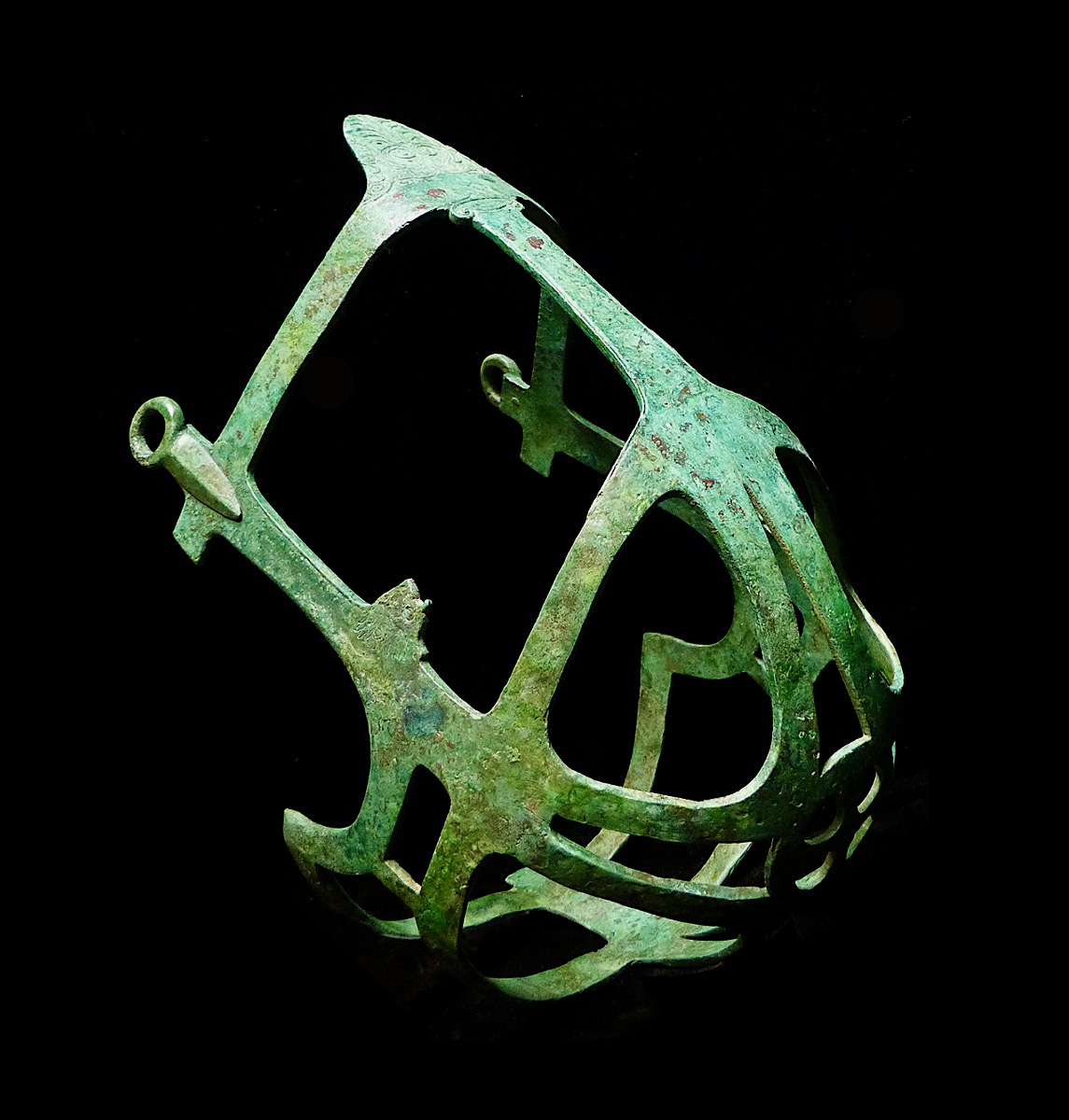
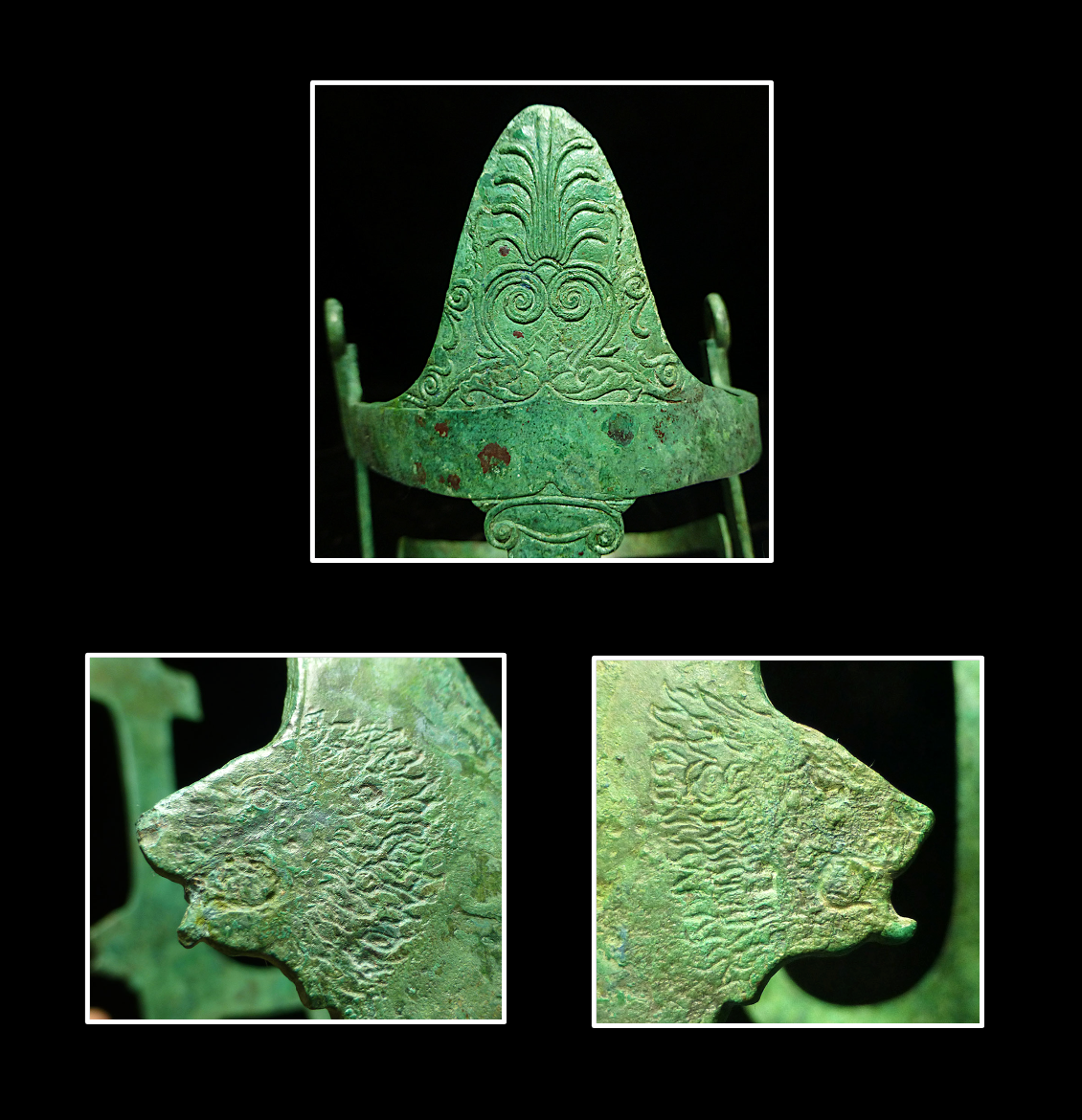
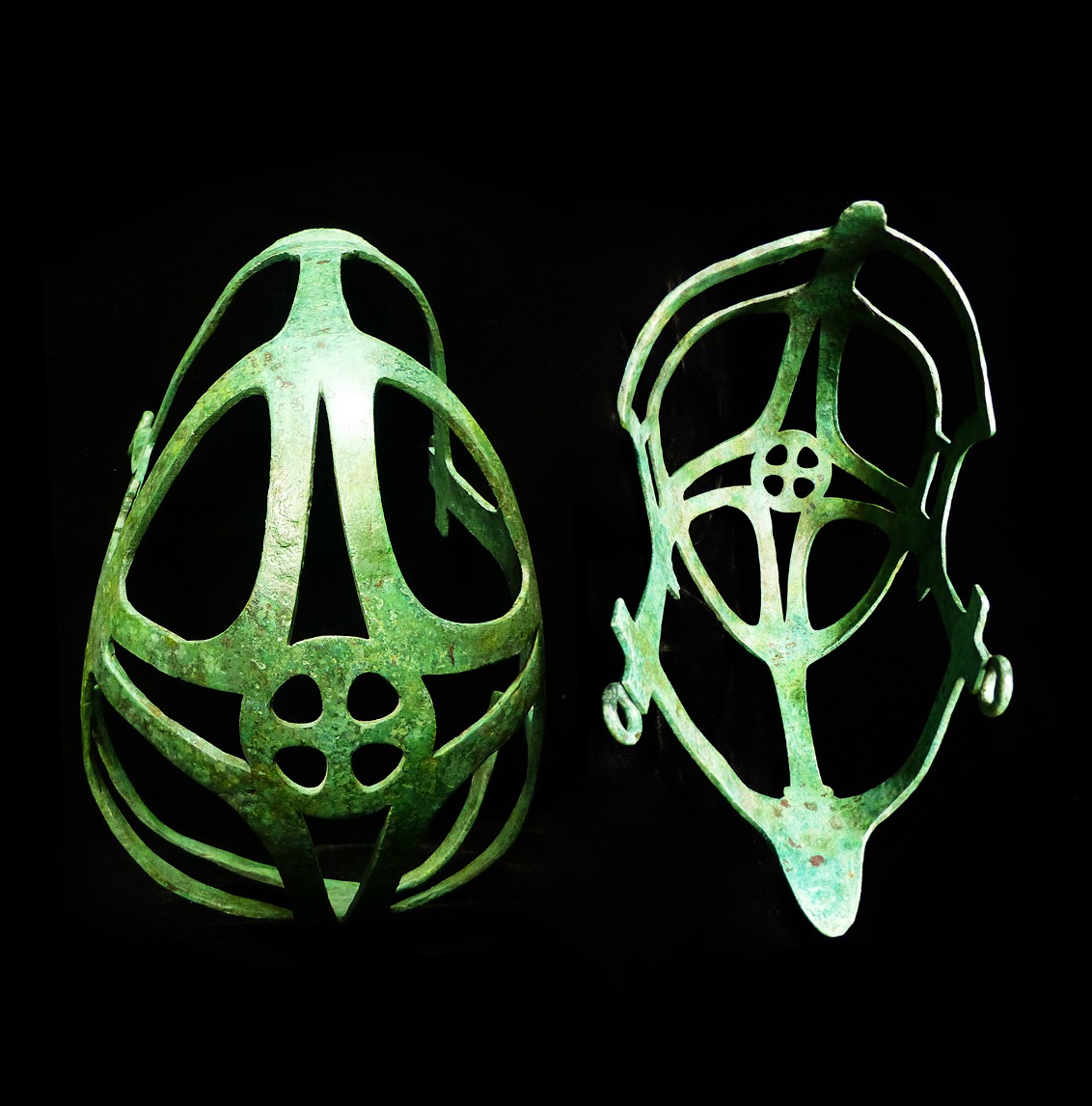
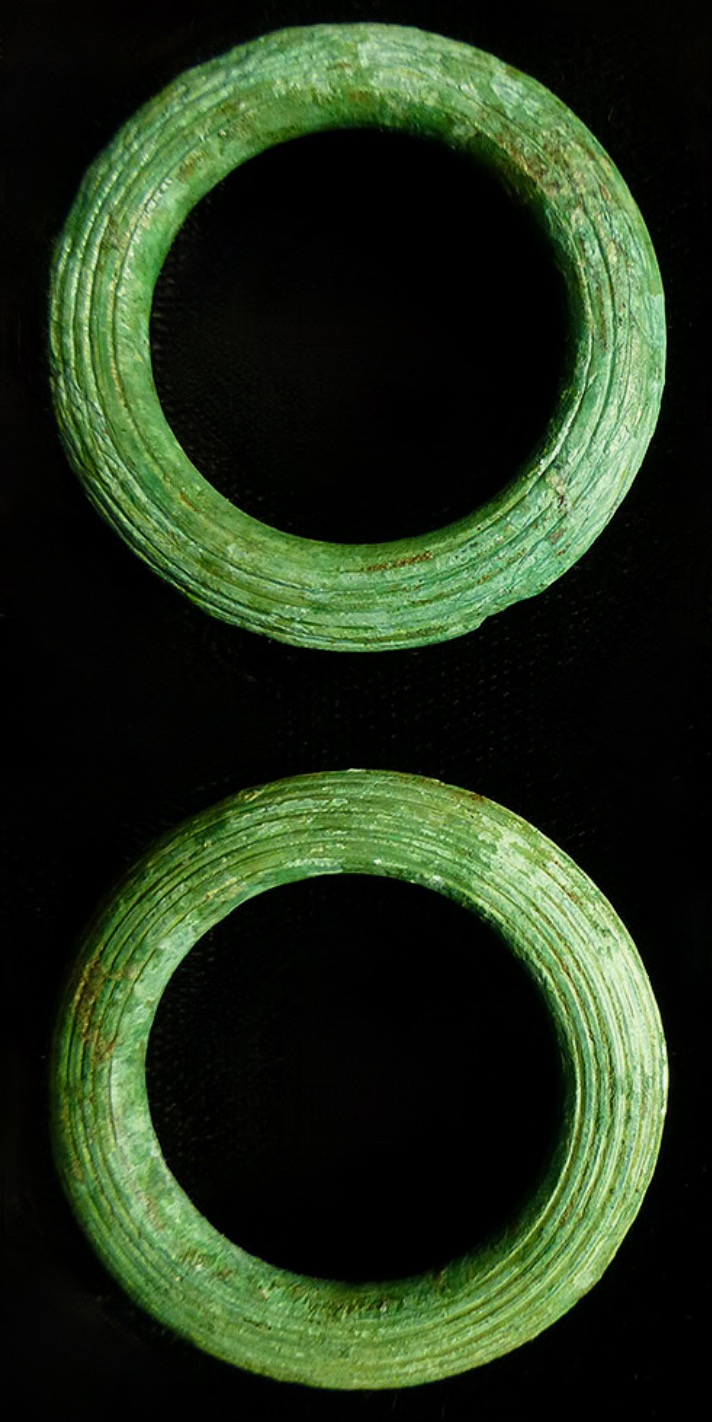
An absolutely spectacular ancient treasure. This handmade One-of-a-kind hand-forged bronze bi-lateral, muzzle tool is thousands of years old. A VERY RARE GREEK CHARIOT HORSE MUZZLE. 3rd century BC. Bronze, 9.5 x 8.5 x 6 inches. The two attachment rings are 1.5 inches in diameter. Of elegant ornate caged construction. Snarling maned lion heads incised on the two sides, a beautifully molded palmette design frontlet at the top center. Covered with a beautiful emerald-green patina. Very rare and one of the finest and most ornate of the few known examples. Some repairs but all are original. One side is slightly true. Authenticated by a leading European expert in ancient Greek militaria. Provenance: An old European family collection. The Greek kapistrion, based on pictographic sources, was used on horses pulling chariots to stop them from nipping each other. Ancient sources such as Aeschylus in his Seven against Thebes also indicate they were worn by horses used in battle. The kapistrion was slipped over the horse's muzzle and held onto its head by an adjustable leather strap that connected to the rings on each side and passed behind the horse's ears. The straps were connected to separate rings attached to a browband that went in front of the horse's ears to stop it from sliding down the horse's neck. The two large openings in the front are for the horse's nostrils. Only 10-12 Greek kapistria of this quality are known most in museums including one in the Metropolitan Museum in New York City, and one in the Getty. A scholarly discussion in pdf format illustrated with a few of the other known examples can be seen at greek-horse-muzzles.pdf.
Ancient Greek horse bridles, also known as bi-laterals, were made of bronze and were used to control and guide horses. They were designed with a simple bit and reins, and were often decorated with intricate designs and patterns. These bridles were used in both everyday life and in warfare, as horses were an important mode of transportation and were also used in battle. The use of bronze in horse bridles was likely due to its durability and resistance to corrosion, as well as its aesthetic appeal. Horse bridles from ancient Greece have been found in various archaeological sites and are now housed in museums around the world. Some examples of ancient Greek horse bridles can be found at the British Museum, the Metropolitan Museum of Art, and the National Archaeological Museum of Athens.