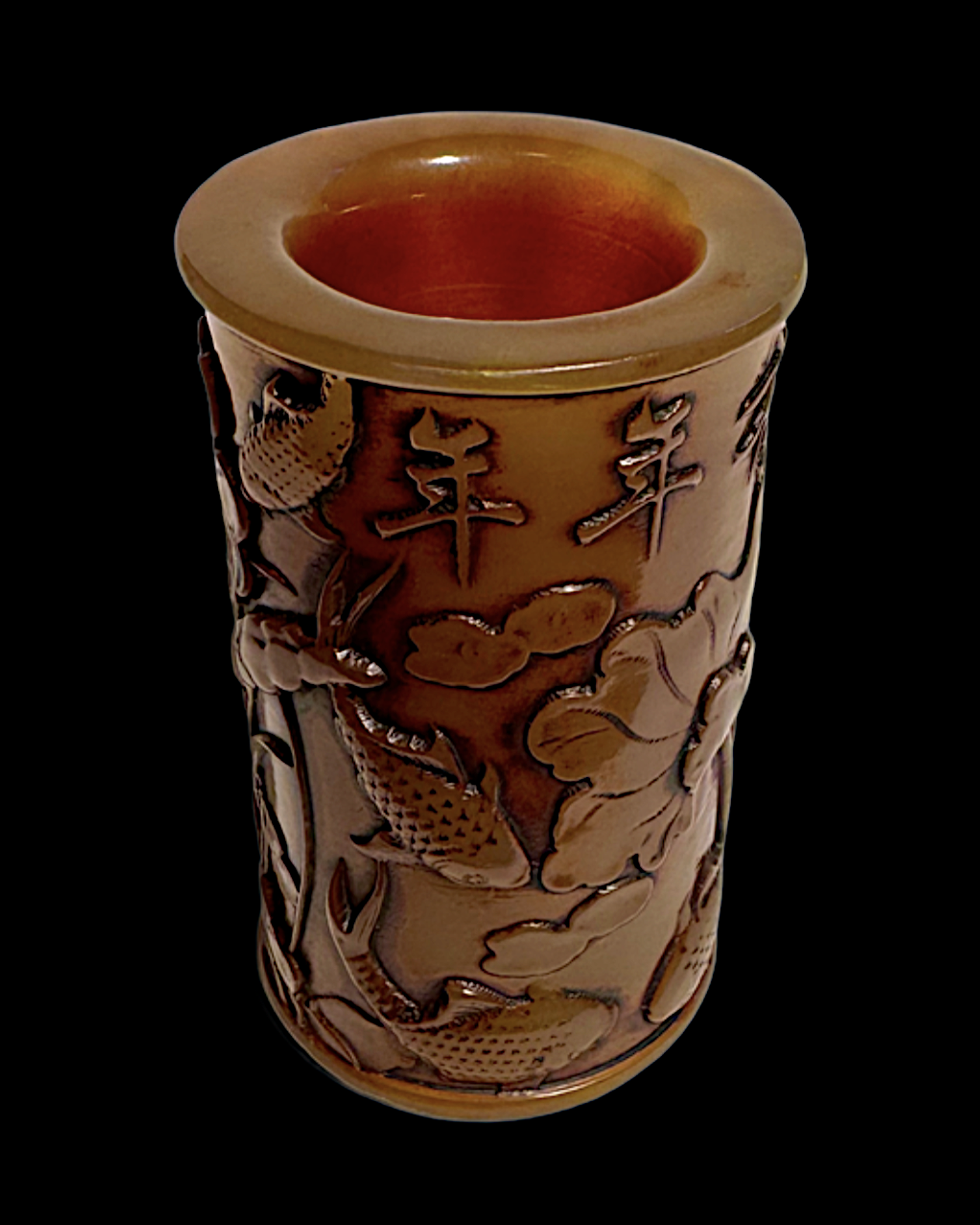


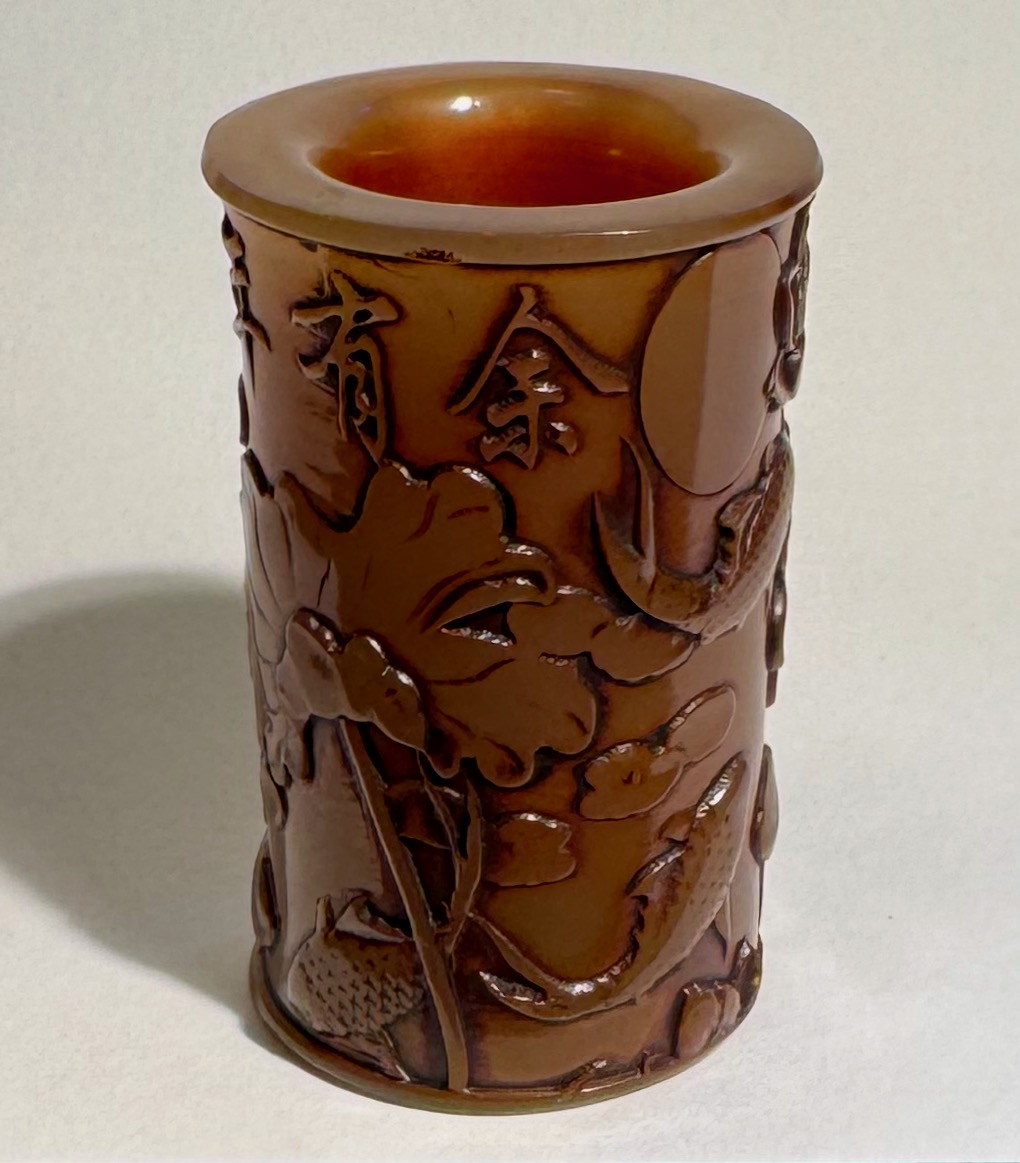
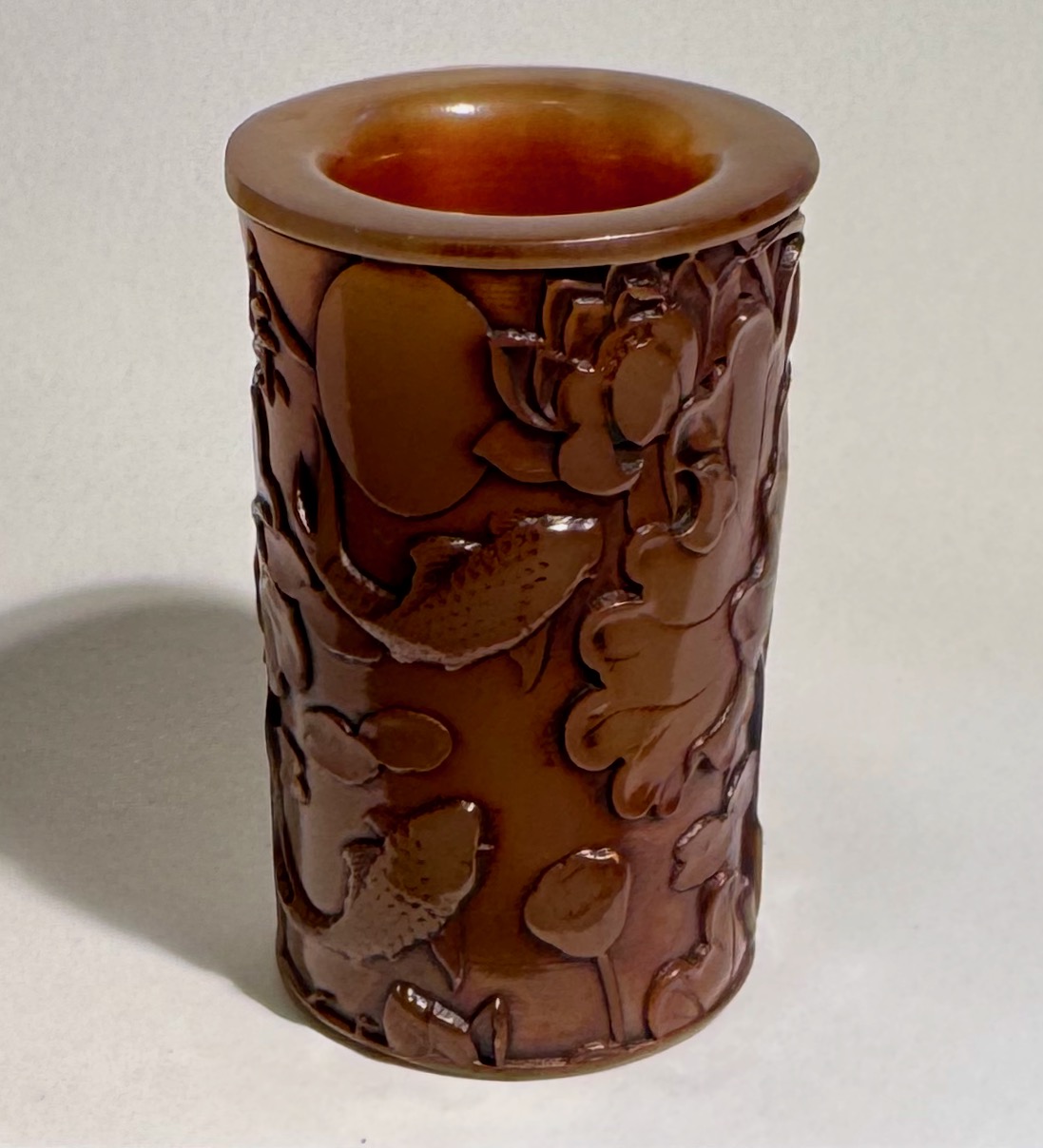
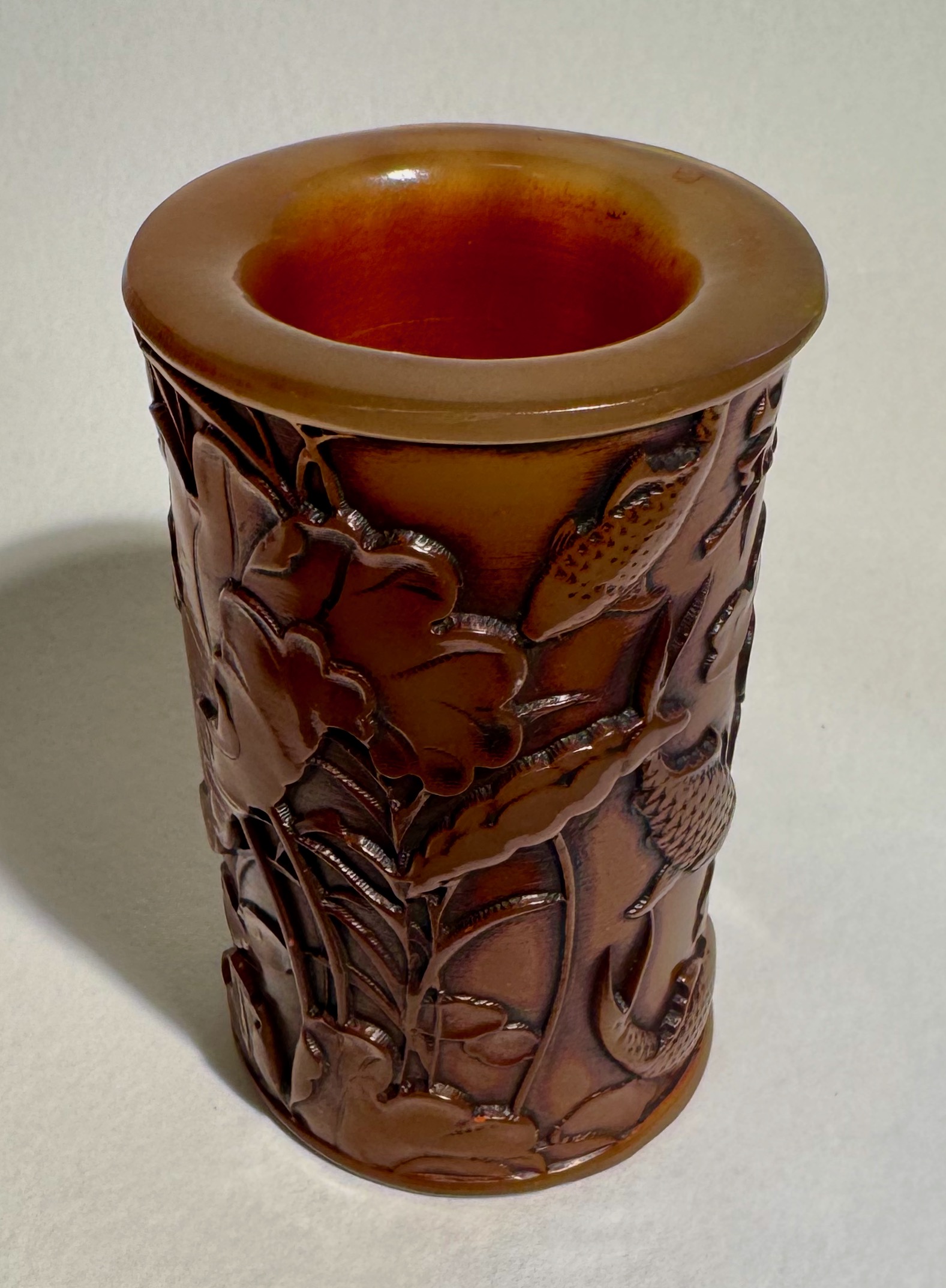
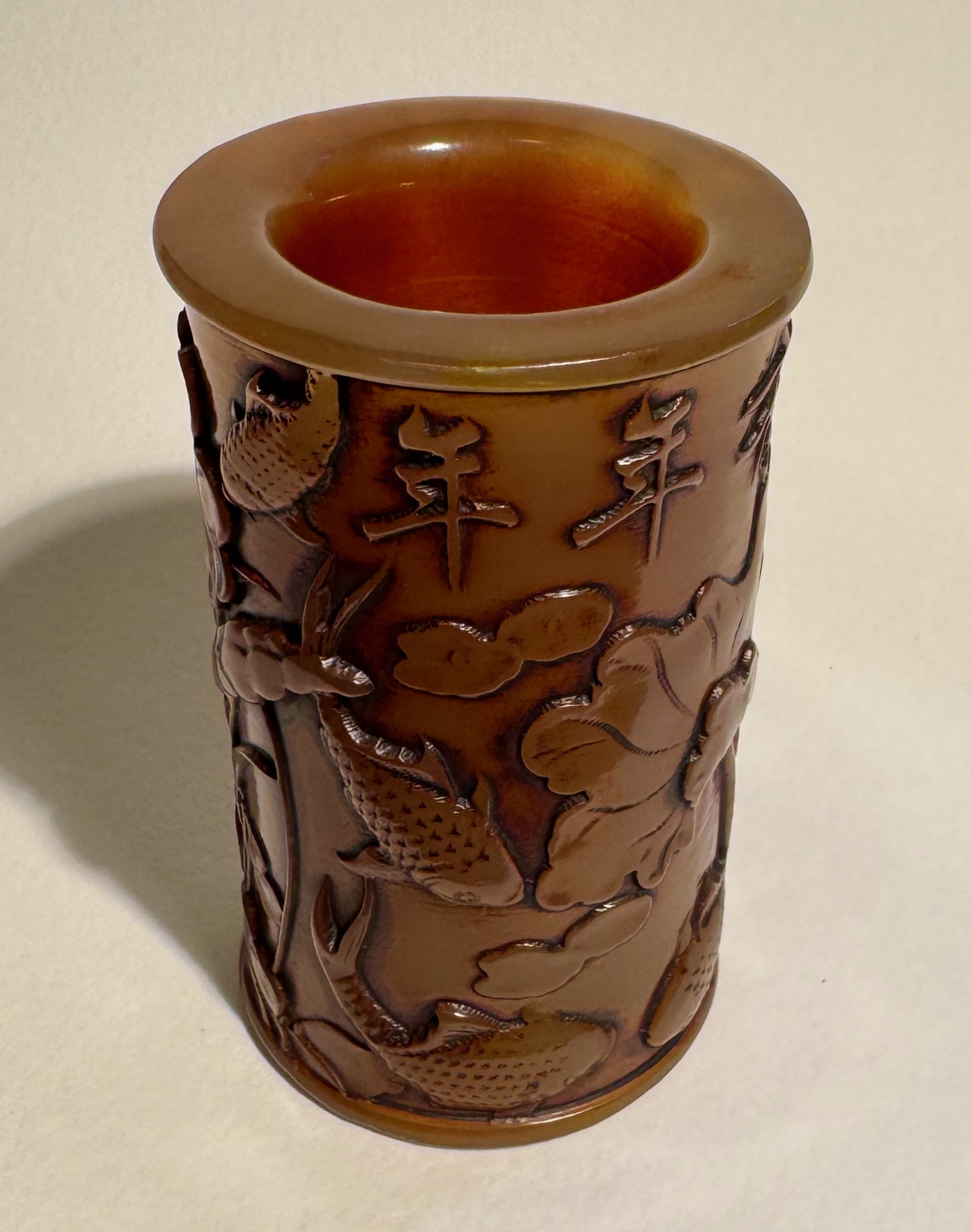
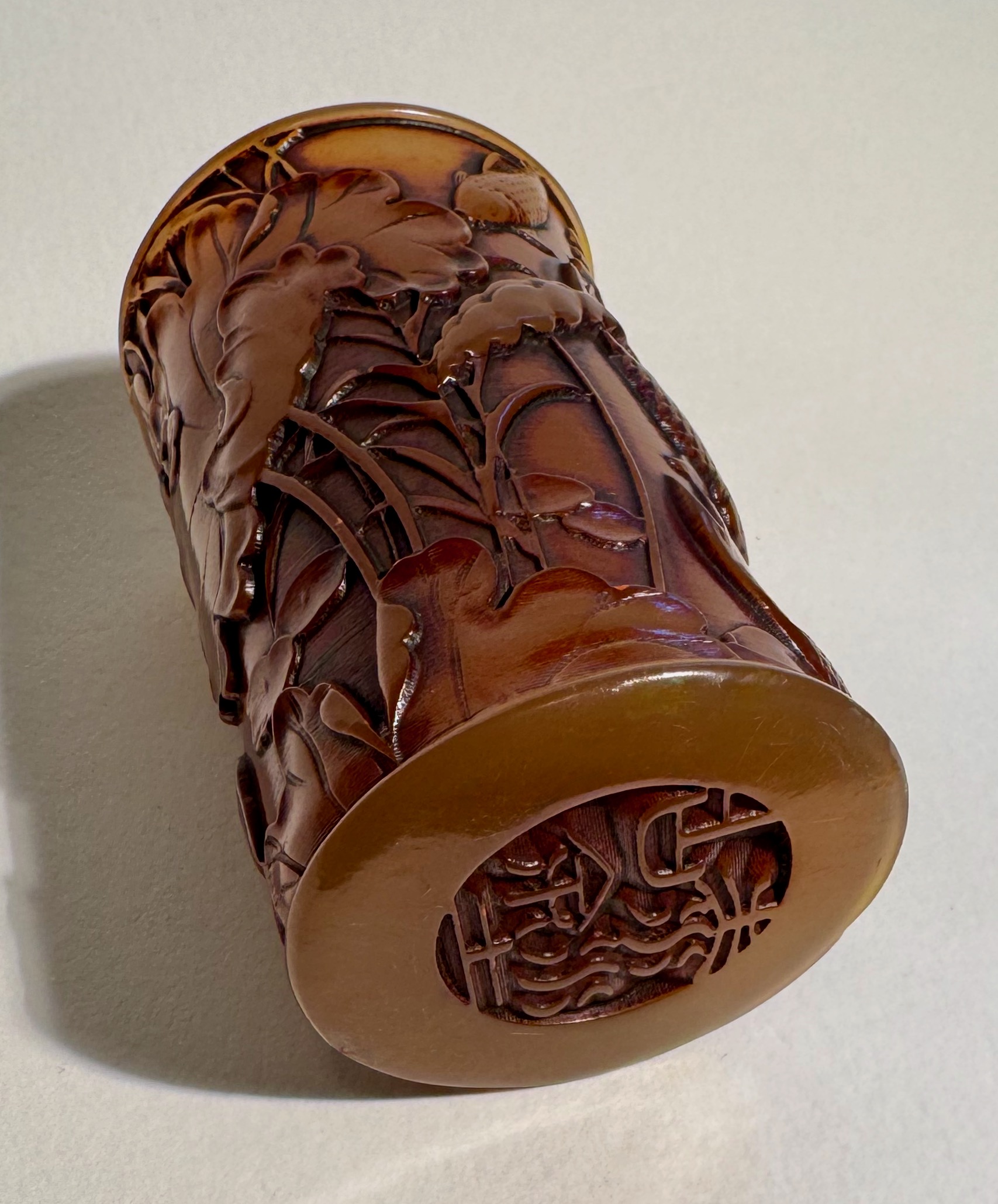
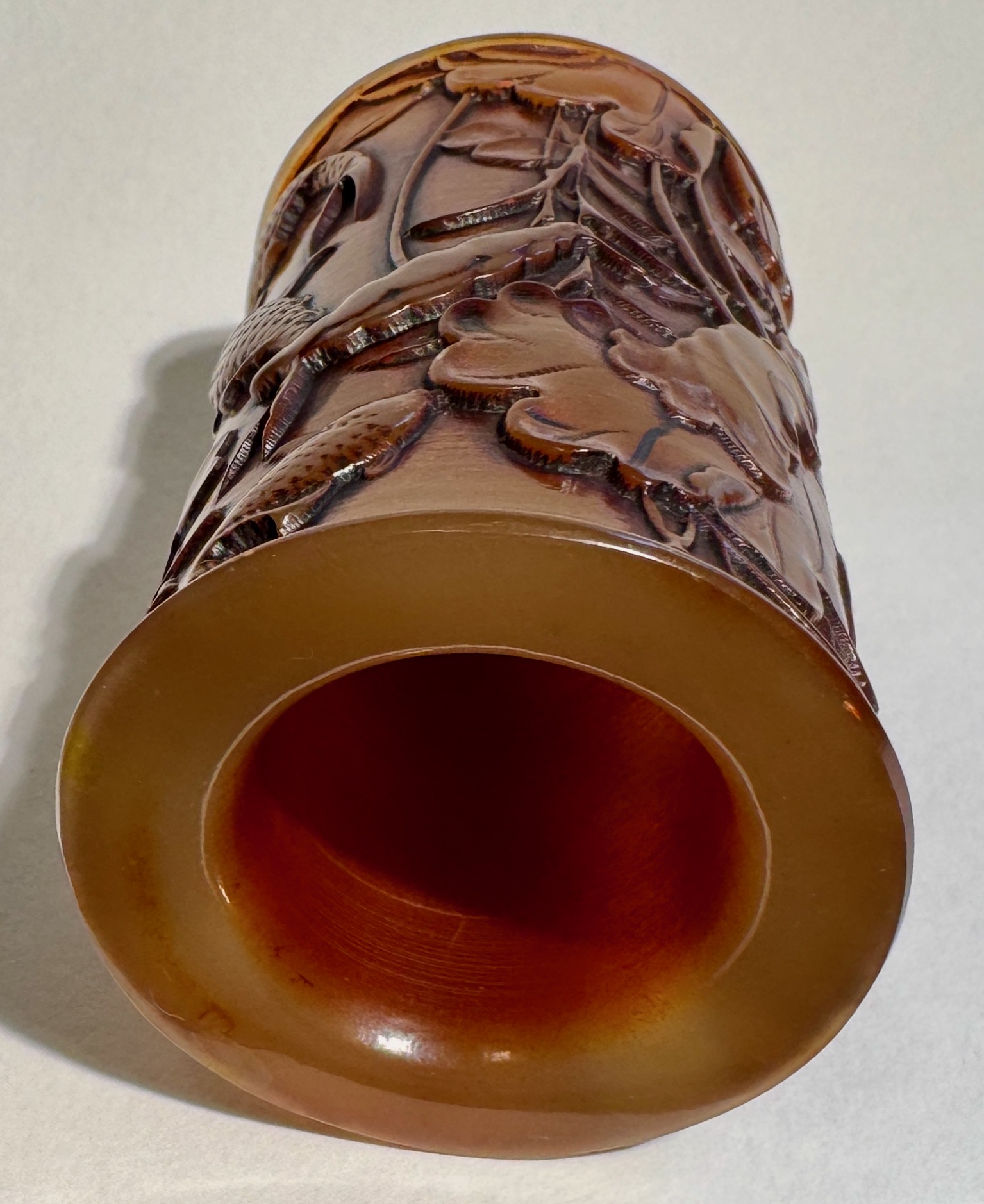
Title: Antique Carved Yellow Amber Stone Jade Brush Holder
Shipping: $29.00
Artist: N/A
Period: 17th Century
History: Art
Origin: Central Asia > China
Condition: Very Good
Item Date: N/A
Item ID: 2755
Antique hand-carved amber stone jade brush holder. This exquisite piece features finely detailed carvings by a Chinese craftsman depicting carp fish swimming through a watery, beautiful pond landscape that surrounds the container. The design is intricately carved on all five sides, showcasing exceptional artistry and craftsmanship. The stone is cold to the touch and shows natural transparency when held up to the light. Its exceptionally smooth surface indicates age and extended handling. The piece measures approximately 3 inches tall with a circumference of 1 7/8 inches. The History / For thousands of years, jade—alongside amber—has held deep cultural, spiritual, and artistic importance in China. Although true jade refers to nephrite or jadeite, many antique objects commonly described as “amber jade” are actually translucent nephrite, serpentine, or amber-toned stone prized for both beauty and symbolic meaning. As early as the Neolithic period (c. 5000–2000 BCE), jade was used in ritual objects, tools, and burial artifacts. By the time of the Ming Dynasty and later the Qing Dynasty, jade and translucent amber-toned stones became symbols of status, refinement, and moral virtue. Scholars, aristocrats, and court officials favored finely carved objects such as brush holders, seals, incense burners, and jewelry. Chinese craftsmen developed extraordinary lapidary skills, carving complex scenes—such as carp swimming in water, landscapes, clouds, and auspicious symbols—directly from solid stone. These carvings were not purely decorative; they conveyed philosophical and spiritual meaning rooted in Confucianism, Daoism, and Buddhism.
Why Antique Amber Jade Is So Desirable 1. Symbolic Meaning Carp symbolize perseverance, success, and prosperity, often associated with advancement and good fortune. Jade itself represents purity, wisdom, protection, and longevity—making these objects highly meaningful beyond their visual beauty. 2. Master-Level Hand Craftsmanship Every antique piece was entirely hand-carved, often taking months or years to complete. The depth of relief, undercutting, and fine surface polish reflect skills that are extremely difficult to reproduce today. 3. Natural Beauty & Aging True antique stone develops a soft, natural luster (“patina”) from decades or centuries of handling. The cool touch, translucency in light, and silky surface are all hallmarks collectors seek to confirm age and authenticity. 4. Rarity High-quality antique amber-toned jade objects—especially fully carved scholarly items like brush holders—are increasingly rare. Many original pieces were lost, damaged, or remain in museum and private collections. 5. Cultural and Investment Value Chinese antique jade has consistently proven to be a strong long-term collectible and investment category, with demand driven by: Global collectors Asian buyers reconnecting with cultural heritage Museums and academic institutions