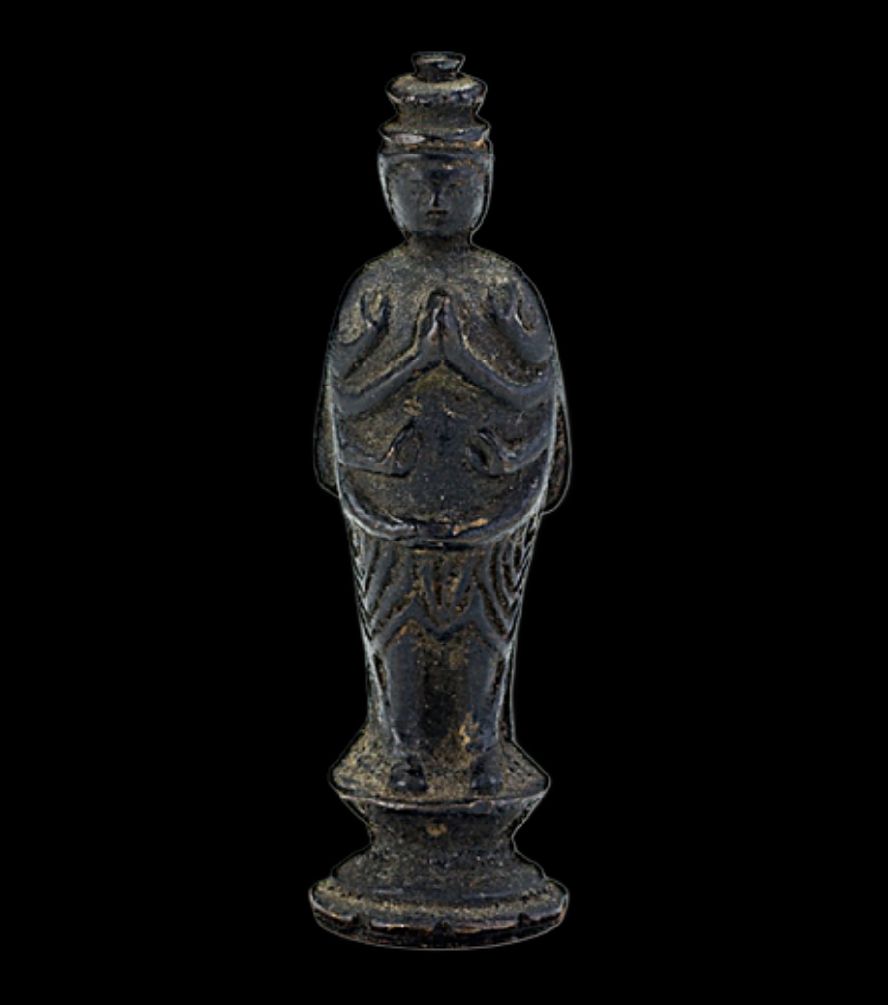









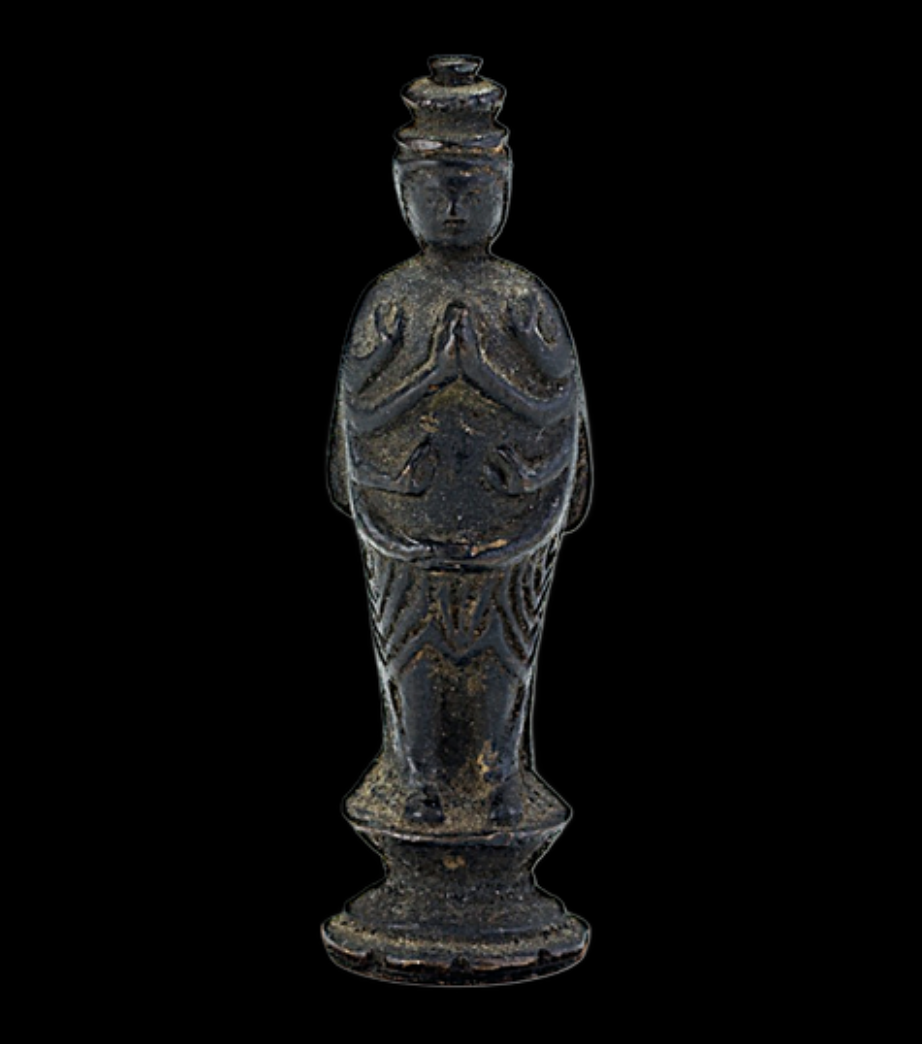
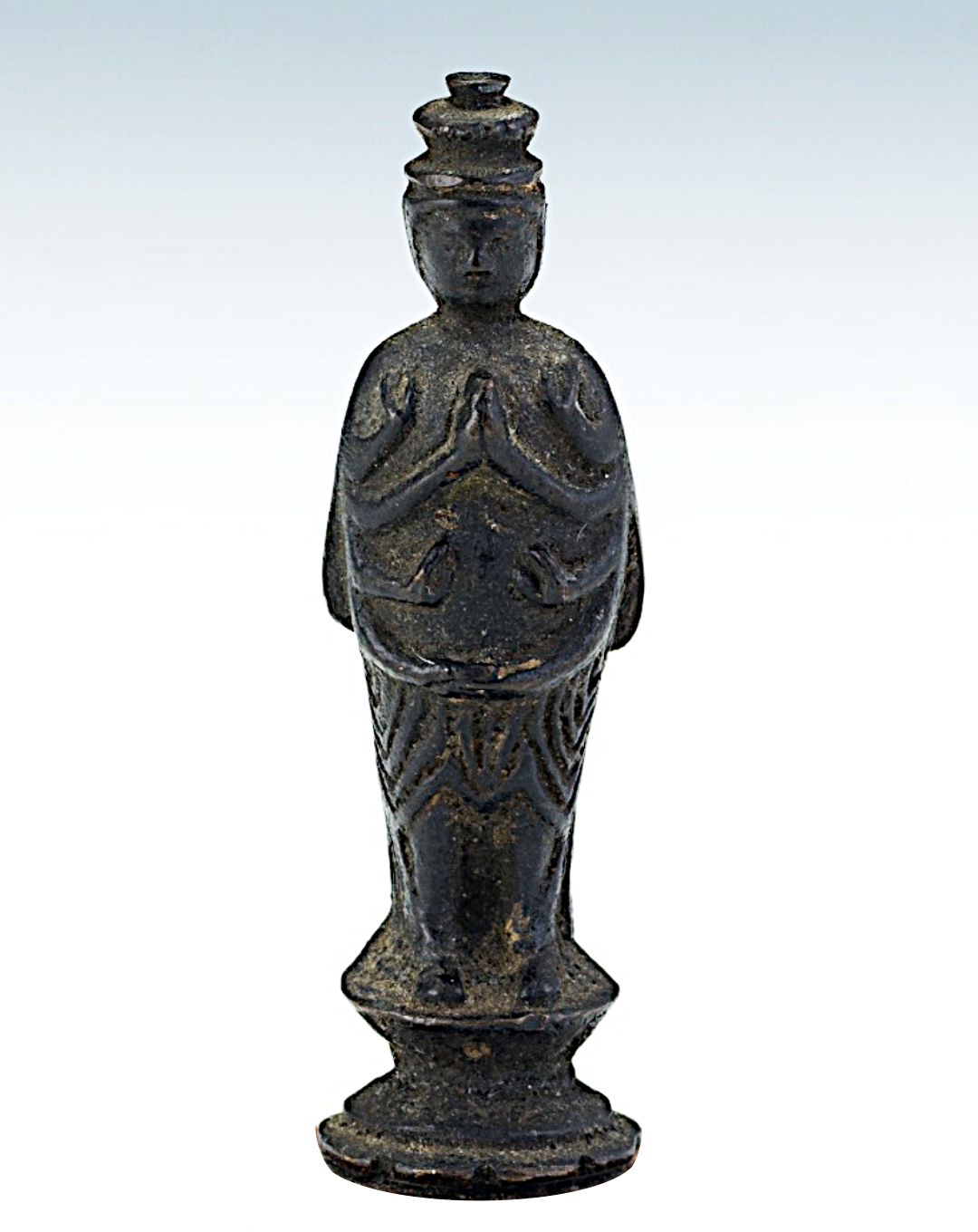
Title: Early Japanese Bronze Figure of Kamakura Period (1185–1333)
Catalog Number: 5666
Category: Metals / Ancient
Artist:
Country & Origin: Central Asia > Japan
Historical Period: N/A
Approximate Date:
Signature: Unsigned
Condition:
Size:
Height:
Width:
Depth:
Weight:
Description & Provenance: Early Japanese Bronze Figure of Senju Kannon (Thousand-Armed Kannon) Kamakura Period (1185–1333) Bronze figure: 2 in. H; overall height: 2⅝ in. H A rare miniature bronze figure likely depicting Senju Kannon, the Thousand-Armed Bodhisattva of Compassion, one of the most revered deities in medieval Japan. Standing atop a lotus pedestal, the figure displays a serene expression, crowned head, and hands joined in gassho (prayer), while additional arms emerge from the shoulders and torso. On small devotional bronzes such as this, artisans often reduced the deity's thousand arms to a symbolic number while preserving their spiritual meaning. During the Kamakura period, an era marked by the rise of the samurai and profound social change, devotion to Kannon flourished throughout Japan. The deity's many arms symbolized an infinite capacity to aid suffering beings in every direction, making Kannon a powerful symbol of mercy, protection, and compassion. Small bronzes of this type were created for personal worship, household shrines, and travel altars, allowing devotees to maintain a direct connection to their faith beyond the great temple complexes. Examples attributed to the Kamakura period are increasingly scarce, particularly those retaining their original dark patina and strong sculptural definition. Condition: Overall good condition consistent with age and use. Attractive dark patina with expected wear to high points, minor surface pitting, light accretions in recessed areas, and a visible casting seam at the back of the head. No significant losses or structural issues noted. If independently authenticated as Kamakura period: potentially $5,000–$15,000+ The key issue is not the subject matter—multi-armed Kannon figures are desirable—but whether the bronze itself can be convincingly dated to the Kamakura period. If it is genuinely Kamakura Period (1185–1333) A documented Kamakura-period bronze devotional figure of Kannon, even at only 2 inches tall, could easily bring $3,000–$15,000+ at auction, and exceptional examples with strong provenance can exceed that range. True Kamakura bronzes are scarce and actively sought by collectors of Japanese Buddhist art.
Origin, Encyclopedia & Researched Articles:
Verbal History:
Information:
Personal Story:
"This finely cast bronze figure likely depicts Senju Kannon (Thousand-Armed Avalokiteshvara), the Bodhisattva of Infinite Compassion. Although rendered on a miniature scale, the sculptor has incorporated multiple arms surrounding the principal pair joined in gassho, symbolizing Kannon's ability to assist countless beings simultaneously. Revered throughout medieval Japan, Senju Kannon was among the most important devotional figures of the Heian and Kamakura periods, embodying mercy, protection, and universal compassion. The intimate scale suggests use as a personal devotional image intended for private worship." The eight-arm arrangement is especially noteworthy because it may point toward an esoteric interpretation of Kannon rather than a standard temple-form Senju Kannon. Close-up photographs of the side arms could help determine whether they originally held attributes or mudras that would allow a more precise identification. In Japanese Buddhist bronzes, those details often distinguish between Senju Kannon, Nyoirin Kannon, and other multi-armed manifestations of compassion.

Comments are subject to review
Be the first to comment!